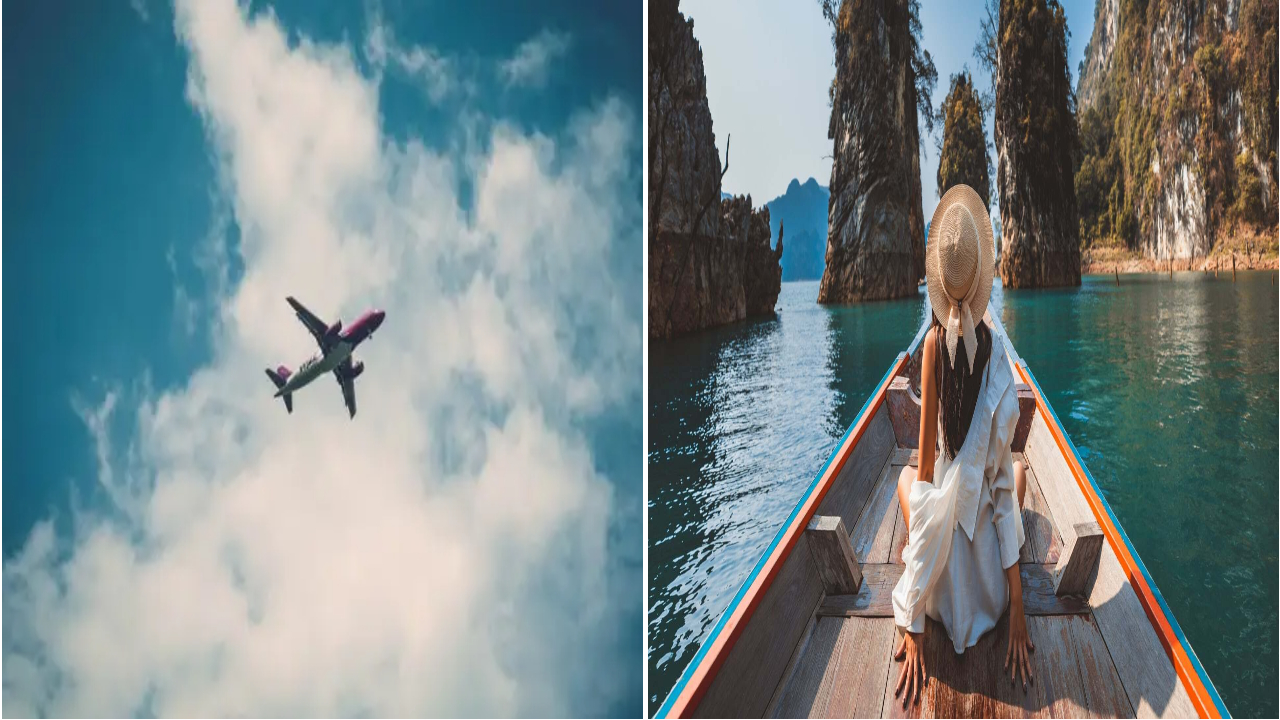
The best travel stories rarely begin with a perfect photograph. Sometimes they begin with an unfamiliar road, a delayed journey, a quiet village, or a landscape that looks completely different from anything you imagined. Long after a trip ends, those small details often remain more vivid than the famous landmarks.
Travel diaries are a way of preserving those details. They capture the atmosphere of a destination, the changes in weather, the rhythm of unfamiliar places, and the moments that make every journey feel personal. From volcanic islands in Indonesia to the lantern-lit streets of Taiwan, the world is full of places with stories worth telling.
In Travel Diaries: Stories from the Road, we explore remarkable destinations, memorable landscapes, and the experiences that make travel meaningful. These destination-inspired reflections connect different corners of the world through a shared idea: the most rewarding journeys encourage us to look beyond the obvious.


Why Stories From The Road Matter
A photograph can show where a traveler went. A travel diary can explain why the experience mattered.
The difference is often found in details that never make it onto a standard itinerary: the sound of waves before sunrise, an unexpected change in the weather, the texture of a steep mountain path, or the quiet atmosphere of a town after the day-trippers have departed.
These observations help a place become more than a collection of attractions.
They also remind us that the same destination can feel completely different depending on the person visiting, the time of year, the pace of travel, and the people encountered along the way.
A useful travel story does not need to turn every ordinary moment into an extraordinary event. Sometimes its greatest strength is simply noticing something carefully.
1. Indonesia: Where Islands Tell Different Stories
Indonesia is a country of extraordinary contrasts. Volcanic peaks rise above green farmland, traditional villages sit beside modern towns, and islands separated by relatively short stretches of water can feel remarkably different from one another.
Traveling between islands changes the rhythm of a journey. Boats, mountain roads, local markets, coastal settlements, and ferry connections become part of the experience rather than merely a way of reaching the next attraction.
That sense of movement is central to the appeal of destinations such as Flores, Komodo, Ternate, Muna, and Buton.
The Pink Beaches Of Komodo
Komodo National Park is famous for its dragons, but its coastal landscapes are just as remarkable.
At certain beaches, pale sand is mixed with reddish material, producing a subtle pink appearance. The color can look different depending on the light, the tide, and the viewing angle.
The surrounding scenery is equally striking: dry hills, turquoise water, sheltered coves, and island silhouettes that seem to change as a boat moves through the park.
A diary-style reflection from Komodo would not need to focus only on the unusual color of the sand. It might remember the journey across the water, the changing outline of the islands, or the contrast between the dry landscape above the beach and the marine environment below it.
For route planning, beach locations, and practical visitor information, explore our Komodo Pink Beaches travel guide.

Ternate: Life Beneath A Volcano
Farther east, Ternate offers a completely different Indonesian landscape.
The island is dominated by Mount Gamalama, whose volcanic slopes form a dramatic backdrop to the coastline, settlements, and surrounding sea.
Ternate also has a history closely connected with the spice trade. The island played an important role in international competition for cloves and maritime trade routes.
That mixture of landscape and history gives Ternate a distinctive character. A traveler might begin by admiring a volcano and end up learning about centuries of trade, political change, and the communities who have lived in its shadow.
Our Ternate Island travel guide explores the island’s landmarks, volcanic scenery, historical attractions, and practical travel considerations.

The Mountain Roads Of Flores
On Flores, the landscape changes again.
Mountain roads wind through valleys, farming communities, and volcanic highlands. Near Bajawa, Mount Inerie rises in an almost symmetrical cone above the surrounding countryside.
Its steep slopes are a reminder that dramatic landscapes can demand genuine effort. A mountain that looks beautifully simple from a distance may have loose rock, exposed sections, strong winds, and rapidly changing weather.
That contrast offers one of travel’s most enduring lessons: looking at a mountain and walking on it are entirely different experiences.
Our Inerie Volcano hiking guide covers the physical challenge, local setting, route preparation, and important hiking precautions.
2. Taiwan: The Lantern-Lit Streets Of Jiufen
Not every memorable travel story begins in the wilderness.
Jiufen, a hillside town in northern Taiwan, is known for its narrow lanes, stairways, old buildings, teahouses, and red lanterns.
The settlement climbs steeply above the coast, creating a layered townscape where views appear between rooftops and narrow passages.
Its popularity means that the experience changes significantly throughout the day. Busy shopping streets can feel very different from quieter corners away from the main visitor routes.
Jiufen is also frequently associated online with the animated film Spirited Away, although the claim that the town directly inspired the film should not be presented as established fact.
What makes Jiufen interesting does not depend on a movie connection. The town has its own history, local food culture, mountain setting, and atmosphere.
The most compelling story may be less about finding a particular famous staircase and more about paying attention to the town as an actual place where people live and work.
For the town’s history and the truth behind the film connection, read our Jiufen and Spirited Away guide.

3. Thailand: The Quiet Beauty Of Khao Sok
Southern Thailand is often associated with beaches, but inland landscapes offer another kind of journey.
Khao Sok National Park is known for rainforest, limestone mountains, wildlife, and the remarkable scenery around Cheow Lan Lake.
The lake’s steep limestone formations rise above calm water, with forest extending into valleys and along the surrounding slopes.
Where coastal destinations may be defined by waves and open horizons, Khao Sok is shaped by the relationship between water, forest, mountains, and changing light.
That makes it an ideal place to think about the value of slowing down.
A travel diary here might focus on the scale of the limestone cliffs, the sound of the forest, or the experience of watching the landscape change as clouds pass over the lake.
It is also a place where responsible tourism matters. Visitors enter a living ecosystem, and wildlife should be observed without feeding or disturbing animals.
For transport, boat excursions, accommodation ideas, and practical advice, see our Khao Sok National Park travel guide.

4. Greece: Finding A Slower Rhythm On Kefalonia
The Greek island of Kefalonia offers a different kind of scenery: mountain slopes, small villages, coastal roads, clear water, and beaches enclosed by dramatic terrain.
Antisamos Beach is one example of the island’s striking combination of green hills and bright Mediterranean water.
But the appeal of Kefalonia goes beyond individual beaches.
Island travel often encourages a more flexible approach to time. A road may reveal an unexpected coastal viewpoint, a village may deserve a longer stop, or changing weather may lead to a different beach than originally planned.
Those small changes are often what turn a tightly scheduled holiday into a memorable journey.
Rather than treating every viewpoint as another item to check off, Kefalonia rewards travelers who leave room for discovery.
Read our Kefalonia travel guide for beaches, attractions, routes, and practical island-travel information.

5. New Zealand: A Storybook Landscape At Hobbiton
Some destinations are famous because of their natural beauty. Others become famous through the stories people tell about them.
Hobbiton Movie Set near Matamata on New Zealand’s North Island brings those ideas together.
The rolling farmland, carefully maintained gardens, colorful doors, and small Hobbit holes were created for the screen adaptations of J.R.R. Tolkien’s Middle-earth stories.
Today, visitors can explore the movie set on an organized guided experience.
Hobbiton is an interesting reminder that imagination can transform an ordinary landscape into somewhere recognizable around the world.
Yet the surrounding Waikato countryside also has its own identity beyond the films.
A story about Hobbiton can therefore explore two perspectives: the fantasy world that visitors recognize and the real agricultural landscape in which the set exists.
The most memorable part of such a visit may not be identifying every filming location, but seeing how a carefully constructed fictional place fits into a genuine New Zealand setting.

6. Jordan: The Vast Silence Of Wadi Rum
Wadi Rum in southern Jordan is another destination where the landscape seems almost unreal.
Wide sandy valleys extend between sandstone and granite mountains. Rock formations rise dramatically above open desert, while the changing light shifts the colors of the terrain.
The area has long been home to human communities and preserves traces of earlier cultures.
Its appeal is not simply that the desert is beautiful. It offers a different sense of scale.
In a large city, attention is constantly pulled toward buildings, roads, signs, and movement. In Wadi Rum, the eye follows distant mountain outlines, open ground, and the relationship between rock and sky.
A thoughtful travel story should also recognize that Wadi Rum is not an empty landscape. It is part of a living cultural environment, with Bedouin communities, local guiding traditions, and historical connections to the desert.
That human dimension makes the place more meaningful than the familiar description of an otherworldly landscape.

7. The Road Is More Than The Destination
One of the most useful habits a traveler can develop is to notice what happens between major attractions.
Those in-between hours often contain the details that distinguish one journey from another.
Consider an island ferry crossing in Indonesia, a winding road in Greece, a walk through a busy Taiwanese market, or a quiet morning beside a rainforest lake.
None of those moments necessarily requires a famous landmark.
They become memorable because of the environment, the people involved, and the way the traveler experiences them.
There is also value in remembering that travel does not always go smoothly.
Bad weather, transport delays, tiring hikes, and changing plans are real parts of a journey. A meaningful account can describe those experiences without exaggerating them or pretending every inconvenience becomes a life-changing lesson.
A travel diary feels more believable when it includes ordinary details alongside the extraordinary ones.
What Makes A Great Travel Diary?
A strong travel diary does more than name a destination and describe it as beautiful.
It helps the reader understand a specific moment.
Useful details might include the weather that day, the route taken, the time a journey began, a meal, a local interaction, or something surprising about the landscape.
The details should be accurate and come from the traveler’s own observations whenever a story is presented as a firsthand account.
A good story can also acknowledge uncertainty. Not every cultural tradition can be understood during a short visit, and not every local explanation should be treated as a universal fact.
Being observant, respectful, and precise usually produces better storytelling than trying to make every destination sound mysterious.
How To Keep A Travel Journal On The Road
You do not need expensive equipment or professional writing experience to keep a useful travel journal.
A small notebook or a notes app is enough.
Try recording a few basic details at the end of each day:
- Where you went and how you got there.
- The weather and overall conditions.
- The most memorable thing you saw.
- A conversation or local detail you found meaningful.
- Something that surprised you.
- A mistake or practical lesson.
- What you would do differently on a return visit.
Short notes often become more useful than a long entry written several weeks later.
If photographs are part of your journal, keep them organized by location and date so that you can accurately identify places and recall what happened.
Travel Photography And The Stories Behind Images
Travel photographs are often strongest when they provide context rather than simply showing a famous attraction.
A wide landscape image can establish a destination’s setting, while a smaller detail can reveal architecture, vegetation, transportation, or everyday life.
For example, a photograph of Mount Gamalama shows Ternate’s volcanic landscape. A second photograph of the waterfront or a local street could help explain how that landscape relates to the island’s communities.
The same applies to Jiufen, where lantern photographs are recognizable but cannot tell the town’s entire story by themselves.
Try combining:
- wide environmental photographs;
- details that establish local character;
- transportation and journey photographs;
- landmarks with enough context to identify their setting;
- images of everyday activities when photography is welcome and appropriate.
Always respect privacy, local customs, protected-area regulations, and photography restrictions.
How Travel Changes The Way We See Places
The most lasting effect of travel is sometimes a change in perspective.
Seeing a landscape in photographs is different from understanding its geography. Reading about a community is different from listening carefully to people who live there.
Travel also challenges assumptions about what makes a destination worth visiting.
A famous beach may be beautiful, but the journey to it can be equally interesting. A popular town may have a history that deserves more attention than its social-media reputation.
And a demanding hike may turn out to be meaningful not because of the summit photograph, but because of the preparation, patience, and respect required along the way.
These are the sorts of ideas that turn travel notes into stories people want to read.
More Travel Stories And Guides From Aoqira
If these destinations have inspired your next journey, explore more detailed travel information from Aoqira.
| Destination | Explore The Guide |
|---|---|
| Komodo, Indonesia | Pink Beaches in Komodo |
| Ternate, Indonesia | Ternate Island Travel |
| Flores, Indonesia | Inerie Volcano Hike |
| Jiufen, Taiwan | Jiufen and Spirited Away |
| Khao Sok, Thailand | Khao Sok National Park |
| Kefalonia, Greece | Kefalonia Travel Guide |
| Santa Ana, El Salvador | Santa Ana Volcano Hike |
Frequently Asked Questions
What is a travel diary?
A travel diary is a personal record of a journey. It may include destinations visited, daily experiences, photographs, observations, conversations, and reflections about the trip.
What is the difference between a travel diary and a travel guide?
A travel diary focuses on experiences and observations, while a travel guide primarily helps readers plan their own trip through practical information such as transportation, accommodation, costs, and attractions.
How do you make a travel story interesting?
Focus on specific, truthful details rather than broad descriptions. Explain the setting, describe what happened, and give the reader a reason to care about the moment.
Should a travel diary include photographs?
Photographs can help readers understand the scenery and atmosphere, but they work best when accompanied by accurate captions and a meaningful story.
Can travel diaries help people plan trips?
Yes. Although they are more personal than traditional guides, well-written travel diaries can provide useful insight into routes, unexpected challenges, destination atmosphere, and practical lessons.
Do travel diaries have to be written every day?
No. Some travelers write daily, while others record only important experiences. Consistency helps preserve details, but the quality of observation matters more than the number of entries.
Final Thoughts
Every destination has more than one story.
Indonesia’s islands reveal the relationship between geography, culture, and movement. Jiufen shows how history and popular imagination can shape the way a town is seen. Khao Sok draws attention to the natural environment, while Kefalonia encourages travelers to enjoy the spaces between famous attractions.
Hobbiton demonstrates the power of storytelling itself, and Wadi Rum shows how a remarkable landscape becomes even more meaningful when understood alongside its human history.
Ultimately, travel diaries are about remembering the journey with curiosity and care. The best stories preserve what actually happened, acknowledge the people and places involved, and encourage readers to look more closely at the world around them.
Wherever the next road leads, there will always be more to discover than a photograph can show.
Sources & Image Credits
These reflections are editorial, destination-inspired writing rather than a documented firsthand travel diary. Destination planning details can be found in the linked Aoqira guides. Photographs below are independently credited to their creators.
Komodo Pink Beach — Wikimedia Commons
Jakub Hałun, CC BY 4.0.
Jiufen Lanterns — Wikimedia Commons
Lishuilynn, CC BY-SA 4.0.
Ternate and Mount Gamalama — Wikimedia Commons
Fabio Achilli, CC BY 2.0.
Cheow Lan Lake — Wikimedia Commons
Christophe95, CC BY-SA 4.0.
Kefalonia Beach — Wikimedia Commons
Kefalonia 2017, CC BY-SA 4.0.
Hobbiton Movie Set — Wikimedia Commons
Joe Ross, CC BY-SA 2.0.
Wadi Rum Desert — Wikimedia Commons
Peter Chisholm, CC0.
Editorial note: Travel access, activities, transportation, and local conditions can change. Check the appropriate destination guides and official authorities when planning an actual trip.