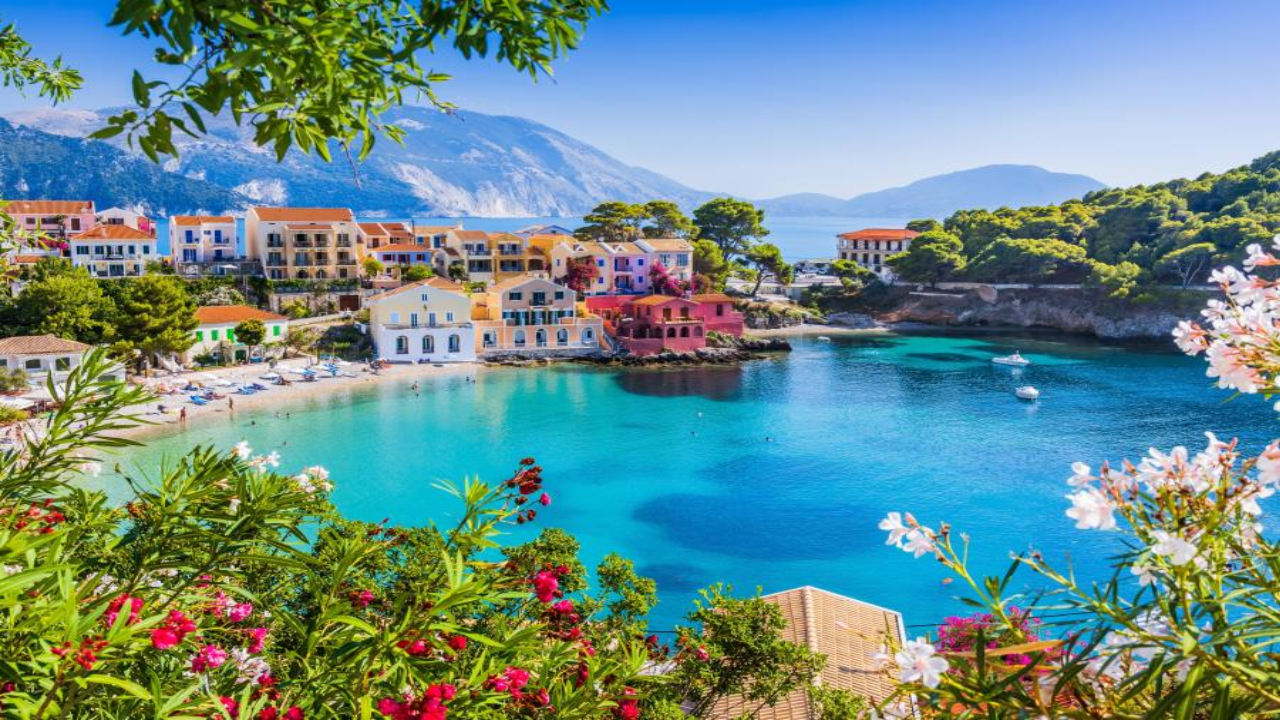
Kefalonia is one of the most beautiful Greek islands in the Ionian Sea, where dramatic limestone cliffs meet turquoise beaches, colorful fishing villages sit beside sheltered harbors, and forested mountains rise above an extraordinary coastline. Unlike destinations famous mainly for nightlife, Kefalonia rewards travelers who enjoy scenic road trips, quiet coves, traditional Greek food, boat excursions and relaxed seaside towns.
The island is larger than many visitors expect. Famous places such as Myrtos Beach, Assos, Fiskardo, Melissani Cave and Mount Ainos are spread across different regions, making thoughtful itinerary planning important. Renting a car gives you the greatest freedom, although parts of Kefalonia can also be explored using local buses, taxis and organized excursions.
This complete Kefalonia Greece travel guide covers the best beaches, villages, caves, mountain scenery, transport options, ferry connections, where to stay, three recommended hotels with room details, a practical five-day itinerary, food, travel costs, safety information and the best time to visit.

Wikimedia Commons, CC BY 2.0.

Wikimedia Commons, CC BY-SA 4.0.

Wikimedia Commons, CC BY 2.0.
Kefalonia Greece At A Glance
| Travel Detail | Information |
|---|---|
| Location | Ionian Islands, western Greece |
| Also called | Cephalonia / Kefallonia |
| Capital | Argostoli |
| Main airport | Kefalonia International Airport (EFL) |
| Currency | Euro (€) |
| Language | Greek; English commonly used in tourist areas |
| Best months | May–June and September for many travelers |
| Recommended stay | 4–7 nights |
| Best way around | Rental car |
| Famous places | Myrtos, Assos, Fiskardo, Melissani, Antisamos, Mount Ainos |
Where Is Kefalonia?
Kefalonia lies off the western coast of mainland Greece in the Ionian Sea. It is the largest island in the Ionian Islands group and sits close to Ithaca, Lefkada and Zakynthos.
The island has an unusually varied landscape. There are forested mountains, deep natural bays, sheltered fishing harbors, olive groves, coastal cliffs, limestone caves and beaches ranging from fine sand to white pebbles.
Argostoli, on the western side, is the main town and administrative center. Sami is an important eastern port, Poros provides another major ferry gateway, and Fiskardo occupies the northern tip.
Map Of Kefalonia Greece
Use the map to understand the distance between Kefalonia’s main destinations. Plan your days around geographic clusters rather than driving repeatedly across the island.
Best Things To Do In Kefalonia
1. Visit Myrtos Beach
Myrtos is Kefalonia’s most famous beach, and the landscape explains why. A sweeping curve of pale pebbles sits beneath enormous green and white cliffs, while the water changes from transparent blue near shore to deep turquoise farther out.
The famous elevated viewpoints along the road are ideal for photographs. The beach itself is beautiful, but conditions can be very different from how they appear above.
Important: Myrtos is exposed to the open sea. Waves, currents and a steep seabed can make swimming dangerous, especially when the wind increases. Never assume it is safe simply because the water looks calm from the viewpoint.
Bring suitable footwear for the pebbles, drinking water and sun protection. Check road and beach access following storms or rockfall.

2. Explore Assos Village
Assos is a small waterfront settlement on a narrow peninsula surrounded by steep green hills. Pastel-colored houses cluster beside the harbor, while a Venetian fortress occupies the higher headland.
The village is best experienced slowly. Walk around the waterfront, photograph the fishing boats, have lunch at a local taverna and explore the lanes behind the shore.
The walk toward Assos Castle adds panoramic scenery but involves an uphill route. Allow extra time if you want to continue beyond the village and examine the fortifications.
Parking can be limited in busy summer periods, so an early arrival is sensible.

3. Spend An Afternoon In Fiskardo
Fiskardo is Kefalonia’s best-known northern harbor village. Colorful Venetian-style buildings line the waterfront, where fishing boats and visiting yachts moor beside restaurants and cafés.
Much of Kefalonia was devastated by the 1953 earthquakes, but Fiskardo preserved considerably more of its older architecture than many other settlements.
It is an attractive place for a waterfront lunch, evening walk or a stay of several nights. Nearby Foki and Emplisi beaches provide opportunities to explore sheltered coves beyond the harbor.

4. Take A Boat Ride In Melissani Cave
Melissani is one of Kefalonia’s most remarkable natural attractions. The lake occupies an underground cavern with an opening in the roof through which sunlight can illuminate the water.
Visitors enter through a designated passage and take a short guided boat trip across the lake. The remarkable blue color is produced by the combination of water clarity, surrounding rock and sunlight.
The cave lies near Karavomilos, not far from Sami, making it easy to pair with Drogarati Cave and Antisamos Beach.
Current official admission: €10 for a standard individual adult ticket on the Municipality of Sami website.
The municipality announced revised autumn hours on October 6, 2026: 9:30 AM–4:00 PM, last entrance 3:30 PM. Hours change seasonally, so verify the current schedule rather than relying on summer blog posts.
Midday can be particularly photogenic when sunlight enters the opening, but it may also attract longer queues.

5. Explore Drogarati Cave
Drogarati is a large limestone cave known for its stalactites, stalagmites and impressive underground chamber.
Visit Greece describes its main chamber, the Hall of Apotheosis, as reaching approximately 20 meters in height. The cave also has notable acoustics and has hosted musical performances.
The internal temperature remains around 18°C, making it feel cooler than the summer air outside.
Current official adult ticket: €6.
The cave contains steps and sometimes damp surfaces. Wear shoes with proper grip and allow roughly 30–45 minutes for your visit, excluding queues.

6. Swim At Antisamos Beach
Antisamos lies near Sami, where densely vegetated hills surround a sheltered bay with brilliant blue-green water.
Its landscape is very different from the exposed west coast around Myrtos. Some sections offer organized beach facilities, while the setting remains naturally scenic.
Antisamos is a strong choice for spending several hours by the water after visiting Melissani and Drogarati.
Check current wind and sea conditions before swimming, and bring water shoes if you find pebble beaches uncomfortable.

7. Walk Around Argostoli
Argostoli is Kefalonia’s capital and the most practical base for travelers who want restaurants, shops, evening activity and transport connections.
Walk along the waterfront, explore the Lithostroto pedestrian shopping street and stop at one of the cafés near the central square.
Loggerhead sea turtles are sometimes observed around the harbor, particularly in areas associated with fishing boats. Keep your distance and never attempt to touch or feed them.
The town is also a useful base for nearby Lassi beaches, including Makris Gialos and Platis Gialos.

8. Hike In Mount Ainos National Park
Mount Ainos provides a dramatic contrast to the island’s beaches. The national park protects the distinctive Cephalonian fir forest and the mountain landscape around the island’s highest peak.
The summit, Megas Soros, rises to approximately 1,628 meters.
Official Visit Greece information describes several trails, including:
- Environmental Centre–Chionistra: approximately 6.2 km circular route.
- Vlachata–Environmental Centre: approximately 2 km moderate trail.
- Digaleto–Megas Soros: approximately 6.6 km, with an estimated 4.5-hour hike.
The mountain can be windy and considerably cooler than the coast. Bring water, appropriate shoes and a layer for changing weather.
If mountain landscapes are your favorite part of traveling, Aoqira also has a detailed Inerie Volcano hiking guide covering a very different, demanding volcanic adventure in Indonesia.
9. Discover The Paliki Peninsula
The western peninsula around Lixouri is worth an entire day if you have sufficient time.
Petani Beach offers enormous cliffs, striking blue water and west-facing views. Xi Beach is distinctive for its reddish sand and pale clay cliffs.
Visit Greece also highlights other quieter western beaches, making Paliki attractive to travelers looking beyond Kefalonia’s most photographed locations.
From Argostoli, the Lixouri ferry can be a convenient alternative to driving the longer land route, although sailing frequency changes with the season.
10. Take A Day Trip To Ithaca
Ithaca is Kefalonia’s close neighbor, famously associated with Odysseus in Greek literature.
Depending on the current ferry timetable, a day trip can include Vathy, Kioni or another part of Ithaca.
Check actual boat schedules carefully: different services use different ports, and a day trip is only practical when outbound and return departures leave enough sightseeing time.
Best Beaches In Kefalonia
Kefalonia has beaches for many different travel styles. Some are sheltered and relatively easy to access, while others are remote, exposed or reachable only by boat or hiking trail.
| Beach | Area | Highlights |
|---|---|---|
| Myrtos | Northwest | Cliffs, turquoise water, viewpoints |
| Antisamos | Sami | Green hills, organized facilities |
| Petani | Paliki | Dramatic cliffs and sunset |
| Xi | Paliki | Red sand and clay cliffs |
| Makris Gialos | Lassi | Sandy beach and visitor facilities |
| Emplisi | Fiskardo | Clear water and sheltered cove |
| Foki | Fiskardo | Tree-lined bay and calmer atmosphere |
| Skala | Southeast | Long beach, family holidays |
| Fteri | Northwest | Remote scenery, boat or trail access |
For another extraordinary island coastline, read Aoqira’s Komodo Pink Beaches travel guide, which covers a very different beach landscape in Indonesia.
How To Get To Kefalonia
By Plane
Kefalonia International Airport (EFL), also named after Anna Pollatou, is approximately 8 km from Argostoli.
Domestic connections from Athens are an important way to reach the island, while seasonal international services connect Kefalonia with several European cities.
The Athens flight takes roughly one hour in the air, although total travel time also includes airport procedures and ground transfers.
Check flights on the official Kefalonia Airport website.
By Ferry
Kefalonia has several ports, and choosing the correct one depends on your departure point.
One of the principal mainland routes connects Kyllini and Poros. Levante Ferries publishes current timetables for this route, with a typical crossing of around 90 minutes.
Other connections can involve Sami, Fiskardo, Ithaca, Lefkada, Zakynthos and mainland Greek ports, depending on season and operator.
Not every route runs daily or year-round. Always verify the exact departure date, departure port and vehicle availability directly with the ferry operator.
From Athens Without Flying
You can travel overland from Athens and connect to a ferry toward Kefalonia.
KTEL Kefalonias also publishes scheduled coach routes connecting the island with Athens and Patras through coordinated road-and-ferry journeys.
These routes take considerably longer than flying, but can suit travelers exploring the Peloponnese or other parts of mainland Greece.
Getting Around Kefalonia
Rental Car
A rental car is the most flexible option for a first visit.
Kefalonia’s landscape is mountainous, and many beaches and villages are reached by winding roads with frequent elevation changes. A short distance on the map may take longer than expected.
Choose a reasonably sized car, especially if you are not comfortable driving on narrow mountain roads. Avoid stopping in unsafe places for photographs and take extra care after heavy rain.
Local Buses
KTEL Kefalonias provides local routes linking Argostoli with locations such as Sami, Fiskardo, Lassi and other settlements.
Bus services are highly seasonal. For example, the timetable effective from October 10 through December 23, 2026 lists far fewer departures toward Fiskardo than the earlier peak-season pattern.
If you rely on buses, stay in Argostoli and plan each excursion around both the outbound and return service.
Check the official KTEL local timetable before traveling.
Taxis And Organized Tours
Taxis work well for airport transfers and occasional point-to-point journeys, but they can become expensive when used repeatedly across a large island.
Organized excursions are useful if you want to visit Melissani, Drogarati, Myrtos or Fiskardo without driving.
Where To Stay In Kefalonia
The best accommodation area depends on how you want to spend your days.
Argostoli: Best for restaurants, transport connections and first-time convenience.
Sami/Karavomilos: Best for Melissani, Drogarati, Antisamos and east-coast sightseeing.
Fiskardo: Best for couples, scenic harbors and quiet northern holidays.
Lassi: Useful for sandy beaches close to Argostoli.
Skala: A strong choice for a classic beach-resort stay on the southern coast.
3 Recommended Hotels In Kefalonia
These three real hotels cover different styles and areas of the island. Room categories and amenities below are based on the hotels’ own descriptions; prices have not been estimated because nightly rates depend on dates, availability and the number of guests.
| Hotel | Location | Best For |
|---|---|---|
| Mouikis Hotel | Argostoli | Central location, couples and families |
| Sami Beach Hotel | Karavomilos / Sami | Seafront stay, caves and east coast |
| Fiscardo Bay Hotel | Fiskardo | Couples, harbor views and northern scenery |
1. Mouikis Hotel — Best For Argostoli

Location: Vironos Street 3, Argostoli.
Mouikis Hotel is a centrally located three-star hotel, particularly convenient for travelers who want to explore Argostoli on foot and drive to different island attractions during the day.
The hotel lists a rooftop lounge, mini gym, massage facilities, breakfast services and a selection of city- and sea-view rooms.
Room choices:
- Compact Double or Twin — 18 m².
- Double or Twin with Sea View — 20 m².
- Triple with Sea View — 22 m².
- Family Room with Sea View — 25 m².
- Two-Bedroom Family Room — 35 m².
Sea-view triple rooms have a furnished balcony, air conditioning, minibar, television, Wi-Fi and private bathroom amenities.
Why choose it? A convenient central location, evening restaurants nearby and several room categories for couples and families.
View Mouikis Hotel Rooms & Official Photos
2. Sami Beach Hotel — Best For The East Coast

Location: Karavomilos, near Sami.
Sami Beach Hotel is a family-run seafront property near the eastern side of Kefalonia. According to its official website, the hotel is approximately 10 meters from the sea and near the road connecting Sami with Agia Efimia.
Its location is particularly useful for visiting Melissani Cave, Drogarati Cave, Antisamos Beach and Sami Harbor.
Room choices:
- Sea View Room — 18 m², double or twin beds.
- Side Sea View Room — 18 m².
- Mountain View Room — 18 m².
- Garden/Economy Room — 18 m².
- Ianos Garden Suite — 42 m² with separate bedroom and kitchen-living space.
Listed hotel facilities include a swimming pool, pool bar, breakfast, beach loungers, tennis facilities, parking and outdoor recreation areas.
Sea-view rooms include a balcony, air conditioning, private bathroom, mini-fridge, satellite television, and tea- and coffee-making facilities.
Why choose it? A seafront setting, nearby caves and beaches, and practical accommodation options for relaxed holidays.
View Sami Beach Hotel Rooms & Official Photos
3. Fiscardo Bay Hotel — Best For Couples

Location: Fiskardo, northern Kefalonia.
Fiscardo Bay Hotel is a small boutique-style property close to Fiskardo’s harbor. Its official accommodation information lists a selection of double rooms, twin rooms and a larger suite.
The hotel is especially attractive if you want to enjoy the harbor in the evening without driving back to Argostoli.
Room choices:
- Top-Floor Double Room — 19 m², queen bed and furnished balcony with sea views.
- Top-Floor Twin Room — 19 m².
- Ground-Floor Twin Room — 19 m² with harbor view.
- Accessible Twin Room — 21 m².
- Suite — 50 m² with living room and balcony.
Room amenities include air conditioning, Wi-Fi, minibar, television, safe, hair dryer and tea- and coffee-making facilities.
The hotel also lists a swimming pool, lounge bar, pool towels and nearby parking.
Why choose it? Intimate accommodation near a beautiful northern harbor, well suited to couples and travelers prioritizing scenery.
View Fiscardo Bay Hotel Rooms & Official Photos
5-Day Kefalonia Itinerary
Day 1 — Arrive And Explore Argostoli
Arrive at Kefalonia Airport or your ferry port, collect your rental car if needed and check into your accommodation.
Spend the rest of the day walking around Argostoli, exploring the waterfront and enjoying a traditional Greek dinner. If you arrive early enough, add a nearby Lassi beach.
Day 2 — Myrtos Beach, Assos And Fiskardo
Start with the Myrtos viewpoints, then drive to Assos for a village walk and lunch.
Continue north toward Fiskardo, stopping at the waterfront or one of the neighboring coves. Return to your base in the evening or stay overnight in northern Kefalonia.
Allow considerable time for the scenic mountain roads; do not plan this as a quick two-hour outing.
Day 3 — Melissani, Drogarati And Antisamos
Spend the morning around the Sami region. Visit Melissani Cave during its published operating hours, then explore Drogarati Cave.
After lunch, spend the afternoon at Antisamos Beach. This is one of the easiest days to organize geographically because all three attractions are in the same part of Kefalonia.
Day 4 — Mount Ainos Or The Paliki Peninsula
Choose according to your interests.
Nature and hiking: Visit Mount Ainos National Park, explore a trail suited to your fitness and enjoy elevated island scenery.
Beaches and road trip: Travel toward Lixouri, Petani Beach and Xi Beach. Consider the ferry from Argostoli if the timetable works with your route.
Day 5 — Relax And Depart
Leave the last morning relatively open. Enjoy a nearby beach, have breakfast by the water and return your rental car with enough time before your flight or ferry.
If you have additional days, add an Ithaca boat excursion, a longer stay in Fiskardo or more time on the southern beaches.
How Much Does Kefalonia Cost?
Kefalonia can suit different budgets, but it is important to distinguish fixed official admission prices from the variable cost of accommodation, transport and food.
| Expense | Planning Advice |
|---|---|
| Melissani Cave | Official individual adult admission €10 |
| Drogarati Cave | Official general admission €6 |
| Hotel | Check live rates for dates and occupancy |
| Rental car | Compare insurance, fuel, deposits and seasonal rates |
| Ferry | Price depends on route, traveler category and vehicle |
| Food | Allow for café breakfasts, tavernas and occasional beach meals |
| Boat excursions | Compare route, duration, group size and included equipment |
For better value, consider shoulder-season travel, book accommodation early for busy periods and avoid assuming that a cheaper hotel far from your planned activities will save money once transport is included.
Best Time To Visit Kefalonia
April And May
Spring brings greener scenery, comfortable hiking conditions and quieter towns. The sea may still feel cool for longer swims, and some seasonal tourism businesses may not yet be fully operating.
June
June is one of the strongest months for travelers seeking warm weather, open seasonal services and relatively manageable crowds.
July And August
These are the busiest summer months. Expect busier beaches, greater demand for rental cars and accommodation, and hot midday conditions.
September
September often offers warm sea temperatures and a slower atmosphere than peak summer, making it particularly attractive for combining beaches with sightseeing.
October To March
Autumn and winter are quieter, with more rain and fewer seasonal services. Outdoor sightseeing remains possible, but ferry and bus schedules can be reduced, and some attractions have limited or changing hours.
What To Eat In Kefalonia
Kefalonian cuisine reflects the island’s agricultural traditions and its cultural connections with the wider Ionian region.
- Kefalonian meat pie: A traditional savory pie associated with local cooking.
- Robola wine: A well-known white wine produced from local vineyards.
- Local cheeses: Try products from island dairies and shops.
- Fresh seafood: Commonly found in harbor tavernas.
- Greek salads and seasonal produce: Simple meals featuring olives, vegetables and local ingredients.
- Traditional sweets: Look for almond-based cakes and other island specialties.
For a more local experience, visit a village taverna away from the busiest waterfronts and ask what is prepared that day.
Kefalonia History And Culture
Kefalonia’s location in the Ionian Sea made it part of several important Mediterranean political and trading networks.
The island’s cultural landscape reflects ancient Greek, Byzantine and Venetian influences, among others.
One defining event in modern Kefalonian history was the devastating earthquake sequence of August 1953. Much of the island’s built environment was destroyed or severely damaged, forcing communities to rebuild.
This explains why Argostoli and many other settlements look relatively modern, while Fiskardo retains a greater concentration of older buildings.
Kefalonia also became internationally familiar through the story and film adaptation of Captain Corelli’s Mandolin, which is set against the island’s Second World War history.
Kefalonia Safety And Practical Travel Tips
Driving
Allow extra time on mountain roads, be cautious around sharp bends and watch for vehicles or animals entering the road unexpectedly. Avoid parking on narrow roads where you obstruct traffic.
Swimming
Sea conditions vary greatly between beaches. Myrtos and Petani can experience strong waves and currents, while other coves may be more sheltered. Follow posted warnings and local advice.
Sun And Heat
Carry drinking water, wear sunscreen and avoid strenuous exposed hikes during very hot afternoons.
Sea Turtles And Wildlife
Never feed, touch, chase or crowd sea turtles. Keep beaches free from litter and avoid disturbing marked nesting areas.
Boat Trips
Confirm weather forecasts and departure details with operators. Do not assume isolated beaches have facilities or reliable mobile reception.
Emergency Help
Greece uses 112 as the general European emergency number.
What To Pack For Kefalonia
- Comfortable walking shoes for villages and viewpoints.
- Water shoes for pebbly beaches.
- Swimwear and beach towel.
- Sunscreen, sunglasses and a hat.
- Refillable water bottle.
- Light jacket for mountains or cooler evenings.
- Phone charger and power bank.
- Offline maps for remote drives.
- Valid driving documents if renting a vehicle.
- Small daypack for beaches and cave excursions.
More Island And Nature Guides From Aoqira
If Kefalonia’s beaches and sea cliffs appeal to you, Aoqira’s Komodo Pink Beaches guide explores another remarkable island coastline.
For rainforest landscapes, lakes and limestone mountains, see the Khao Sok National Park travel guide.
If you enjoy lesser-known island destinations, the Ternate Island travel guide introduces a different combination of coastal scenery, culture and volcanic landscapes.
For more challenging hiking inspiration, read Aoqira’s Inerie Volcano Hike.
Frequently Asked Questions
Is Kefalonia worth visiting?
Yes. Kefalonia is an excellent choice for travelers who enjoy beaches, scenery, mountain drives, traditional villages, caves and a quieter atmosphere than some of Greece’s busiest island destinations.
How many days do you need in Kefalonia?
Four to five days is a useful minimum for the main highlights. Seven days allows time for slower beach visits, the Paliki Peninsula and additional excursions.
What is the best area to stay in Kefalonia?
Argostoli is the most practical overall base. Sami is convenient for caves and eastern beaches, while Fiskardo suits couples and travelers who want a scenic northern harbor.
Do you need a car in Kefalonia?
Not absolutely, but a car makes exploring different regions much easier. Public buses exist, although schedules are limited on some routes, particularly outside peak summer.
What is the most famous beach in Kefalonia?
Myrtos is the island’s most famous beach because of its cliffs, pale shoreline and turquoise sea.
Is Melissani Cave worth visiting?
Yes. The short boat trip through an underground lake is one of Kefalonia’s most distinctive experiences. The effect of light on the water makes it especially memorable.
How much is the Melissani Cave ticket?
The Municipality of Sami currently lists the standard individual adult ticket at €10. Check current prices and hours before visiting.
Is Kefalonia good for families?
Yes. Families can choose resort areas and organized beaches, although individual beaches differ in depth, wave exposure and available facilities.
Can you fly from Athens to Kefalonia?
Yes. Air connections between Athens and Kefalonia operate, with flight availability depending on travel dates and airline schedules.
Can you visit Ithaca from Kefalonia?
Yes, when ferry or excursion schedules permit. Verify both outward and return crossings before planning a same-day visit.
What is the best month to visit Kefalonia?
June and September are particularly good choices for travelers who want warm weather without the peak crowds associated with July and August.
Are there luxury hotels in Kefalonia?
Yes. Kefalonia offers everything from small guesthouses and boutique hotels to higher-end resorts and villas. Availability and services vary by location and season.
Final Thoughts
Kefalonia combines some of the best elements of a Greek island holiday: beautiful water, mountain scenery, picturesque harbors, welcoming villages and enough natural attractions to keep an active traveler interested for a week or longer.
Myrtos is the iconic beach, Assos provides one of the island’s most photogenic village settings, Fiskardo is ideal for a relaxed harbor afternoon, and the caves near Sami add an unusual underground landscape to the trip.
The best way to enjoy Kefalonia is not to rush from one viewpoint to another. Plan each day around one part of the island, leave time for spontaneous swimming stops and choose accommodation that works with your route.
Whether you stay in Argostoli for convenience, Sami for east-coast exploration or Fiskardo for a peaceful northern retreat, Kefalonia is a destination that rewards a little more time and a slower pace.
Sources & Further Reading
Visit Greece — Kefalonia
Official destination information about villages, landscapes, culture, beaches and transport.
Visit Greece — Beaches Of Kefalonia
Official descriptions of Myrtos, Petani, Antisamos, Xi, Foki and other beaches.
Municipality Of Sami — Melissani & Drogarati
Official cave information, admission fees and operating details.
Visit Greece — Drogarati Cave
Geology, cave features, visitor information and admission.
Visit Greece — Mount Ainos National Park
Protected-area information, summit elevation and official hiking routes.
Kefalonia International Airport
Official flight and airport passenger information.
KTEL Kefalonias — Local Bus Routes
Current local bus schedules and seasonal transport changes.
Levante Ferries — Kyllini To Poros
Official ferry timetables for the mainland-to-Kefalonia route.
Mouikis Hotel — Official Rooms
Room sizes, accommodation categories and facilities.
Sami Beach Hotel — Official Rooms
Room categories, hotel location and accommodation descriptions.
Fiscardo Bay Hotel — Official Accommodation
Room sizes, balcony options and facilities.
Travel photography and licences:
Myrtos,
Assos,
Melissani,
Fiskardo,
Antisamos,
Drogarati,
Argostoli.
Photographer credits and licences are identified with their respective images.
Information reviewed: October 2026. Accommodation availability, transportation, site opening hours, beach access and prices can change. Confirm current details with official operators before visiting.