Santa Ana Volcano Hike The Ultimate Guide to El Salvador’s Emerald Crater Lake
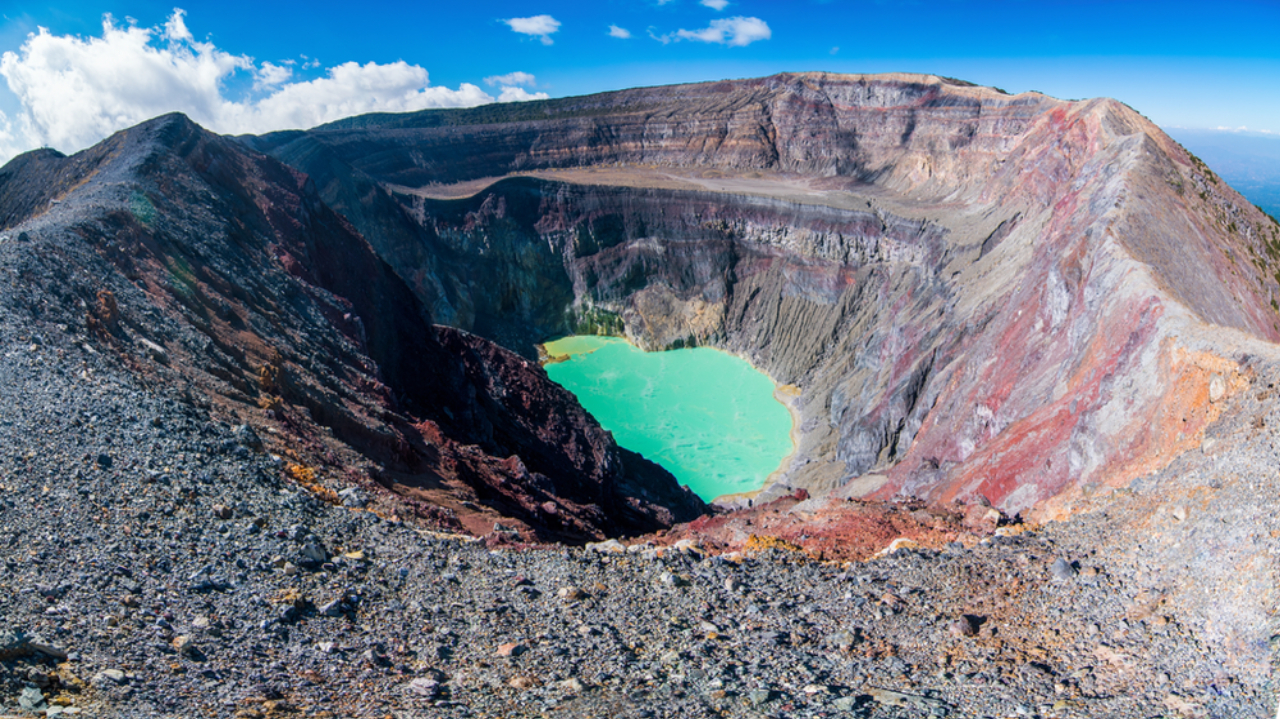
The moment you finally crest the last steep step and catch your breath, the world falls away. Below you, cradled inside a perfect volcanic cone, is a lake so brilliantly green it looks like a pool of molten emerald. Wisps of sulfurous steam drift across its surface, and the sharp, eggy smell of the earth’s deep breath fills your nostrils. On one side, the deep blue expanse of Lake Coatepeque shimmers in the distance. On the other, the perfectly symmetrical cone of Izalco Volcano rises from the forest like a black pyramid. This is the payoff of the Santa Ana Volcano Hike, also known as Ilamatepec, the highest volcano in El Salvador and one of the most spectacular day hikes in all of Central America.
The Santa Ana Volcano Hike is not one of those grueling, multi-day ordeals that requires months of training. It is a perfectly achievable half-day adventure that delivers a world-class summit view in return for just a couple of hours of steady effort. You do not need ropes, crampons, or a tent. You just need a sturdy pair of shoes, a good hat, and the will to climb a lot of stairs. This guide will walk you through everything you need to know to plan your own hike to this fiery, beautiful giant in Cerro Verde National Park.
Where Is the Santa Ana Volcano and How Do You Get There?
The Santa Ana Volcano is located in western El Salvador, within the Complejo Los Volcanes (Volcanoes Complex) of Cerro Verde National Park. The mountain rises to an elevation of 2,381 meters above sea level, making it the country’s tallest volcano. The starting point for the hike is the Cerro Verde park entrance, a cool, pine-scented national park that sits on the saddle between the Santa Ana, Izalco, and Cerro Verde volcanoes.
The nearest major city is Santa Ana, El Salvador’s second-largest city, which is about an hour and a half by bus from the capital, San Salvador. From the city of Santa Ana, you take a local chicken bus (Route 248) from the La Vencedora bus terminal directly to the Cerro Verde park gate. The bus ride itself is an experience, winding steeply up through coffee plantations and lush cloud forest, with the temperature dropping pleasantly as you gain altitude. The journey takes just over an hour and costs only a few dollars.
Many travelers prefer to base themselves in the beautiful colonial town of Santa Ana itself, which has excellent hostels and restaurants. Others visit as a long day trip from San Salvador or the popular Ruta de las Flores. If you are short on time or prefer not to navigate buses, organized tours from both Santa Ana and San Salvador are widely available and affordable, including round-trip transport and a guide.
The Hike Experience From Cloud Forest to a Smoking Crater
The Santa Ana Volcano Hike officially begins at the ranger station within Cerro Verde National Park. Since early 2023, hiking the volcano independently is no longer permitted. You must join a guided group, which is escorted by armed tourism police (POLITUR) for safety and conservation reasons. This might sound intimidating, but in practice, it is well-organized, welcoming, and adds a reassuring layer of security.
The guided groups depart at a set time, typically once in the early morning, around 11 AM, making early arrival essential. You gather at the trailhead, pay your entrance fee, and set off as a large, cheerful group. The trail begins gently, winding through a beautiful and often misty cloud forest of twisted, moss-covered trees and vibrant wildflowers. The air is cool and fresh, a welcome escape from the tropical heat of the lowlands. You might spot hummingbirds, colorful motmots, and curious coatis rustling in the undergrowth.
After about 30 minutes of relatively flat walking, the real climb begins. The forest thins out, and you are met with a long, relentless staircase of packed earth and volcanic rock that climbs the steep upper cone. The higher you go, the more the landscape transforms. The trees give way to hardy, low-lying shrubs and then to bare, wind-scoured volcanic soil. The views open up dramatically. Stop often, catch your breath, and look behind you. You will see the deep blue waters of Lago de Coatepeque, one of the most beautiful crater lakes in the world, perfectly framed by the hillsides. To your right, the jet-black cone of Izalco Volcano, which was born in 1770 and erupted almost continuously for nearly 200 years, looks like a child’s drawing of a volcano come to life.
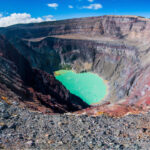
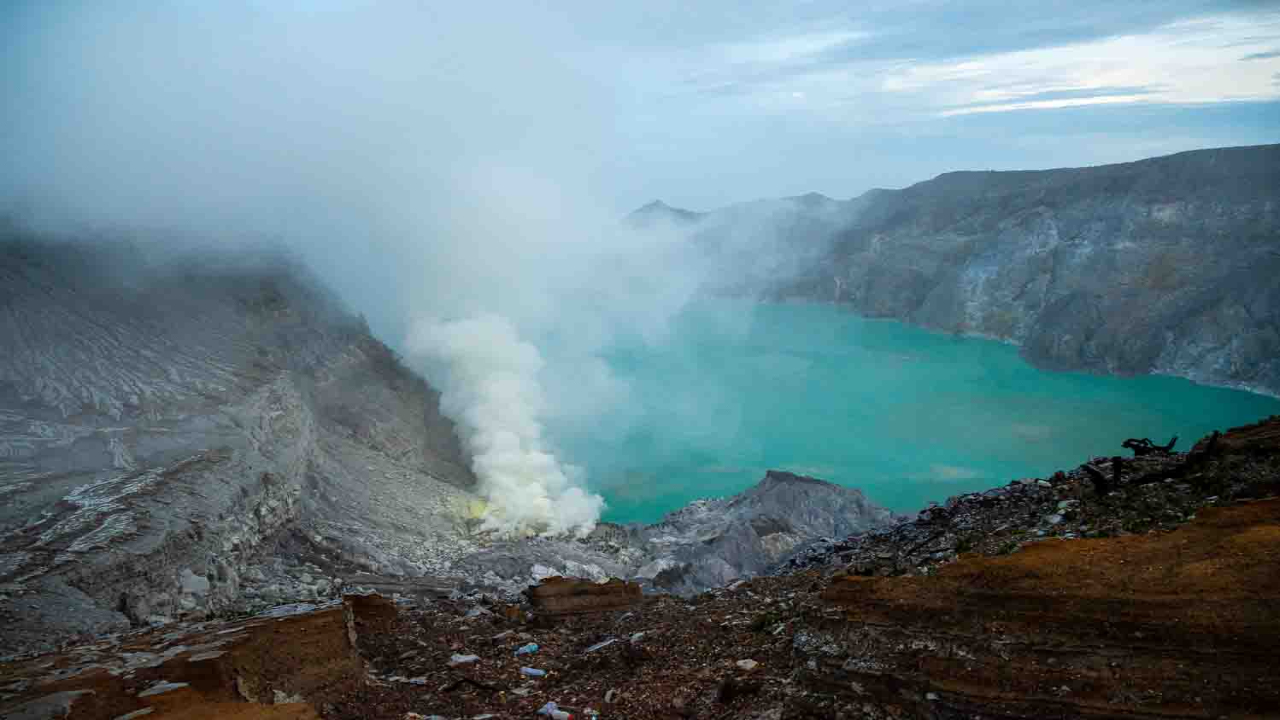
The final push is the steepest, a short scramble on loose rock. Then, suddenly, you are at the summit ridge. The crater opens up before you like a colossal amphitheater. The lake in the center is a shade of acid green and sulfur yellow that looks utterly surreal, almost toxic. The walls of the crater are layered in streaks of white, yellow, and rust-red, painted by mineral deposits and volcanic gases. The fumaroles hiss and steam, a dramatic reminder that this mountain is very much alive. The entire circumference of the crater rim offers staggering 360-degree views: the Pacific Ocean can be seen on a very clear day, the rolling green hills of the coffee region, and the entire chain of volcanoes stretching into Guatemala.
The wind is fierce and cold at the top, so a jacket is essential, but the sense of standing on the edge of a living, breathing geological powerhouse is so exhilarating you will barely notice. You spend about 30 to 40 minutes at the summit, taking photographs, eating a well-deserved snack, and simply staring in awe at the boiling green lake below.
The Best Time to Hike the Santa Ana Volcano
Timing is critical for a safe and visually rewarding Santa Ana Volcano Hike. The dry season, which runs from November to April, is hands-down the best time to climb. During these months, the skies are generally clear in the early morning, and the trails are dry and stable. The absolute best months are January and February, when the air is crisper and the panoramic views are at their most expansive.
The rainy season, from May to October, makes the trail treacherously slippery and muddy. More importantly, thick cloud cover often rolls in by late morning, completely obscuring the crater and the surrounding views. There is nothing more disappointing than climbing all that way to stare at a wall of white fog. Regardless of the season, a very early start is crucial. The gates open early, and the guided hikes leave in the morning. By early afternoon, clouds often begin to gather around the summit, and the heat of the sun on the exposed upper cone can be punishing.
Practical Tips, Costs, and What to Bring
The entrance fee to Cerro Verde National Park and the Santa Ana Volcano Hike includes the mandatory guide and police escort. As of 2024, the total cost is approximately $6 USD for foreign tourists and $3 USD for Salvadoran nationals, payable in cash at the trailhead. This is an incredible bargain for a world-class hiking experience.
You must bring your own water and food, as there are no vendors or facilities on the trail. At least 2 liters of water per person is essential, as the climb is exposed and dehydrating. High-energy snacks like nuts, fruit, and a sandwich will keep you fueled. Wear sturdy, closed-toe hiking shoes or trail runners with excellent grip. The volcanic rock is sharp and the loose soil can be slippery. A sun hat, sunscreen, and sunglasses are vital for the exposed upper section. A windproof jacket or fleece is necessary for the cold, windy summit, even on a sunny day. A lightweight rain jacket is a wise backup, as mountain weather can change quickly.
Safety and Volcanic Activity
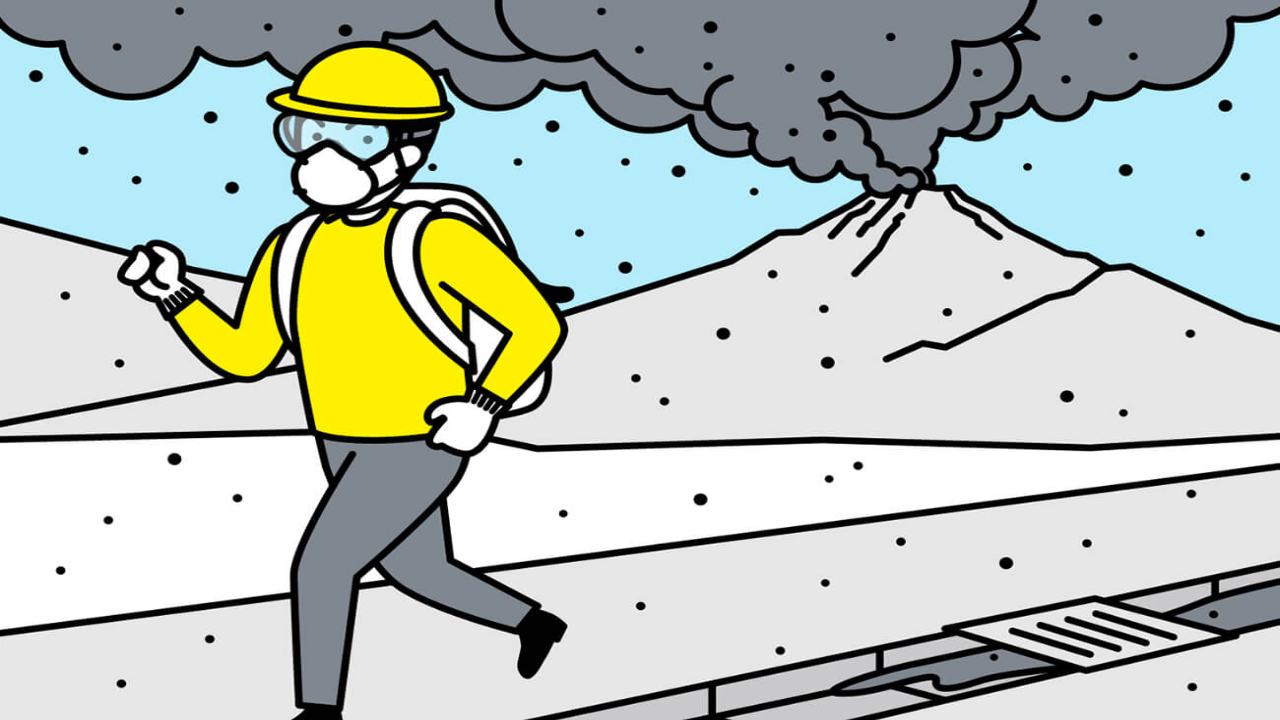
The Santa Ana Volcano is an active stratovolcano. Its last significant eruption was in October 2005, when it spewed ash and rocks, tragically killing two people. The volcano is now under constant monitoring by El Salvador’s Ministry of Environment and Natural Resources. The park authorities will close the trail immediately if there is any sign of unusual seismic or gas activity. When the trail is open, it is considered safe to hike under the supervision of the mandatory guides. You must never attempt to descend into the crater. The rocks are unstable, the sulfur fumes can be dangerously concentrated, and the lake water is highly acidic and boiling hot in places. The guided path stays strictly on the safe, designated rim.
Frequently Asked Questions (FAQ) About the Santa Ana Volcano Hike
Q1: Is the Santa Ana Volcano Hike suitable for beginners?
The hike is considered moderate. It is a relatively short trek in terms of distance, but the steep elevation gain, the high altitude, and the many stairs make it physically demanding. It is absolutely doable for a fit beginner who is prepared for a workout, but it is not a casual stroll. If you have serious knee problems, respiratory issues, or are very unfit, the steep ascent and descent will be very challenging.
Q2: Can I hike the Santa Ana Volcano without a guide?
No. Since early 2023, hiking without a guide is strictly prohibited. All hikers must join the official guided group that departs from the Cerro Verde park ranger station. This rule is enforced by armed tourism police and is in place for your safety, to prevent robberies that occurred on the trail in years past, and to protect the fragile volcanic environment. The guide and escort are included in your small entrance fee.
Q3: How long does the hike take from start to finish?
The total round-trip hike, including the time spent at the summit, takes approximately 4 to 5 hours. The ascent is usually 2 to 2.5 hours of steady climbing, depending on the group’s pace. You spend about 30 to 40 minutes enjoying the crater views. The descent is much faster, typically around 1.5 hours. Add travel time from Santa Ana or San Salvador for a full day trip.
Q4: What wildlife might I see on the hike?
The lower slopes of the trail, within the cloud forest, are a haven for birdwatchers. You will likely see emerald toucanets, blue-crowned motmots, and several species of hummingbird. Coatis, a member of the raccoon family, are frequently seen digging in the soil. Lizards and interesting insects abound on the warmer, exposed upper slopes. You are extremely unlikely to see any dangerous snakes if you stay on the trail.
Q5: Is it safe to visit El Salvador and do this hike?
Yes. El Salvador has undergone a dramatic and widely publicized transformation in terms of safety and security. The tourism infrastructure is rapidly growing, and areas like Cerro Verde National Park, the Ruta de las Flores, and Santa Ana town are very well-policed and safe for tourists. The presence of armed tourism police on the volcano hike itself is an added measure of protection. Thousands of visitors now enjoy this hike safely each year.
Q6: Can I combine the Santa Ana Volcano Hike with the Izalco Volcano?
Yes. If you are a very strong hiker with abundant energy, it is possible to hike the nearby Izalco Volcano on the same trip, but it must be done on a separate day or as part of a special combined tour. The standard Santa Ana guided hike does not include Izalco. Izalco is a separate, shorter but extremely steep and exposed climb on loose volcanic gravel, and it also requires its own guided entry. Cerro Verde National Park also has beautiful, gentle nature trails that can be enjoyed on the same day as your Santa Ana hike, making a full day of mountain exploration.
Q7: What toilet facilities are available on the trail?
There are basic but clean toilet facilities at the Cerro Verde park entrance. Once you begin the hike, there are absolutely no toilets on the trail or at the summit. You must be prepared for a wilderness experience. Use the facilities at the start, and pack any tissues and a small sealable bag to carry out your own waste if necessary.