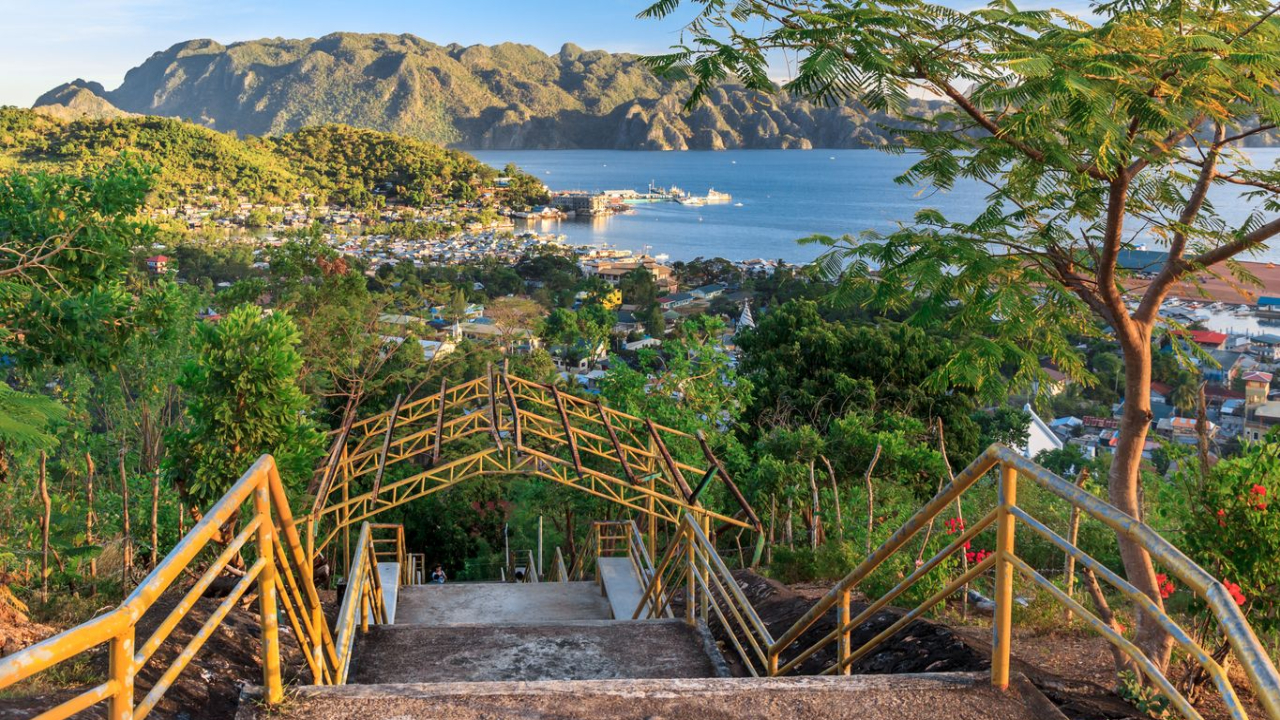
Coron is one of the most spectacular island destinations in the Philippines. Located in northern Palawan, this tropical region is famous for towering limestone cliffs, emerald-green lakes, turquoise lagoons, coral reefs and white-sand beaches surrounded by dramatic island scenery. Beneath the water, historic Japanese shipwrecks from the Second World War have transformed the area into one of Southeast Asia’s most remarkable diving destinations.
The most recognizable attraction is Kayangan Lake, where visitors climb a limestone ridge to reach one of the Philippines’ most photographed viewpoints before descending toward the clear water. Nearby Twin Lagoon offers a completely different experience, with steep rock walls surrounding enclosed blue-green water. Farther from the town, islands such as Malcapuya offer long sandy beaches, while Siete Pecados attracts snorkelers interested in colorful fish and coral habitats.
Coron is also a destination that requires careful planning. Most travelers stay in Coron Town on Busuanga Island, while many famous attractions are on Coron Island or scattered across the Calamian Islands. Reaching them requires boat transportation, and tour routes depend on weather, sea conditions, access rules and local conservation fees. Understanding the distinction between Coron Town, Coron Island and Busuanga is essential for choosing accommodation and avoiding unnecessary travel.
This complete Coron Palawan travel guide covers the best attractions, island-hopping tours, entrance fees, transportation from Manila and El Nido, genuine hotel recommendations, accommodation photographs, shipwreck diving, local food, seasonal weather, travel costs, a four-day itinerary, accessibility, safety precautions and frequently asked questions.


Photographs are credited to their creators and linked to the corresponding Wikimedia Commons license records. The images in this three-column row are displayed as cropped versions, with square corners.
Coron Palawan at a Glance
| Detail | Information |
|---|---|
| Country | Philippines |
| Province | Palawan |
| Island group | Calamian Islands |
| Main tourist base | Coron Town, Busuanga Island |
| Main airport | Francisco B. Reyes Airport, Busuanga (USU) |
| Recommended stay | 4–5 days |
| Currency | Philippine Peso (PHP / ₱) |
| Time zone | Philippine Standard Time, UTC+8 |
| Languages | Filipino, English and local languages |
| Main attractions | Kayangan Lake, Twin Lagoon, Barracuda Lake, island beaches and wreck diving |
| Ideal activities | Island hopping, snorkeling, diving, photography and hiking |
Where Is Coron, Palawan?
Coron is located in the northern part of Palawan Province in the Philippines, within the Calamian Islands.
The name Coron can refer to several related but different places, which is why visitors sometimes become confused when planning their first trip.
Coron Town is the principal tourism center on the southeastern part of Busuanga Island. Most hotels, restaurants, dive shops, island-tour companies and transportation services operate here.
Coron Island lies across the water from Coron Town. It is famous for limestone cliffs, Kayangan Lake, Barracuda Lake and Twin Lagoon. Much of the island is part of the ancestral domain of the Indigenous Tagbanwa people, whose rights and cultural connections should be respected.
Busuanga Island is the larger island containing Coron Town, the airport and much of the road network.
The wider Calamian group also includes islands such as Culion, with its own historical and cultural attractions.
For most first-time visitors, Coron Town provides the most practical base because island-hopping boats and dive operators organize excursions from its harbor area.
Coron Palawan Map
The map below shows the location of Coron Town and the surrounding islands of northern Palawan.
Before arriving, save Coron Town, Francisco B. Reyes Airport, the Coron boat departure area and your hotel’s exact address.
For island-hopping destinations, use the coordinates or route provided by your tour operator instead of assuming Google Maps can provide navigable water routes between attractions.
Why Is Coron Famous?
Coron’s international reputation comes from the unusual concentration of beautiful natural features above and below the water.
Its dramatic cliffs are formed from limestone, producing steep ridges and enclosed lagoons that create the distinctive appearance of Coron Island.
The region contains lakes with varying proportions of fresh and salt water, including unusual underwater temperature and salinity layers that attract experienced divers.
Coron Bay is also an important historical diving destination because several Japanese ships were sunk during American air attacks in September 1944.
Today, these wrecks support thriving marine communities and offer an opportunity to experience history through underwater exploration.
The region’s beaches provide another attraction. Some are compact coves beneath limestone cliffs, while others lie farther offshore and offer long stretches of white sand.
For travelers who love island landscapes, Coron combines several different types of scenery within a relatively small part of the Philippines.
Best Things to Do in Coron Palawan
1. Visit Kayangan Lake
Kayangan Lake is the best-known natural attraction in Coron and one of the most photographed locations in Palawan.
Visitors arrive by boat at the small coastal landing area, then climb a series of steps over a limestone ridge.
The famous viewpoint overlooks a sheltered bay with traditional outrigger boats floating beneath steep, forest-covered cliffs.
Although many photographs of this viewpoint are described as showing Kayangan Lake, they actually show the coastal bay beside the approach to the lake.
After visiting the viewpoint, travelers descend the opposite side of the ridge to reach the lake itself.
The lake is known for its clear water and enclosed limestone setting.
Swimming may be permitted in designated sections, subject to local rules and supervision. Life jackets are commonly required.
Practical advice: Wear footwear suitable for wet steps. The climb and descent may be slippery, especially after rainfall or when many people are using the same narrow route.
Most visitors spend around one to two hours at the combined viewpoint and lake area, depending on tour scheduling and crowd levels.

2. Swim Between the Twin Lagoons
Twin Lagoon is another major attraction on Coron Island.
The site contains two connected bodies of water surrounded by tall limestone cliffs and tropical vegetation.
One lagoon is reached directly by boat, while access to the second may involve swimming through a narrow opening or using a designated ladder depending on tide levels and current access arrangements.
The water can contain a mixture of fresh and salt water, resulting in noticeable temperature differences in certain sections.
The enclosed scenery makes Twin Lagoon a remarkable place for swimming and photography.
However, the narrow passages and rock walls require care.
Safety: Use a life jacket where required, follow your guide, and do not attempt to swim through a low opening if the tide or conditions make it unsafe.
The lagoons can become crowded when multiple tour boats arrive. A private tour may offer greater scheduling flexibility, although it cannot guarantee exclusive access.

3. Explore Barracuda Lake
Barracuda Lake is famous for its underwater environment and unusual water-temperature layers.
The lake is surrounded by towering limestone walls, giving it an enclosed and dramatic appearance.
It is particularly interesting to experienced scuba divers because temperature and salinity can vary significantly with depth.
These underwater changes create distinctive thermal layers known as thermoclines.
The lake is also included in some sightseeing and snorkeling itineraries, but the exact activities permitted can depend on access arrangements and local regulations.
Important: Diving at Barracuda Lake should be arranged with a qualified professional operator familiar with the site. Do not attempt deep breath-hold dives or enter underwater cave features independently.
Never assume scuba certification alone qualifies you for every type of diving environment.
4. Snorkel at Siete Pecados Marine Park
Siete Pecados is among Coron’s best-known snorkeling destinations.
The marine area contains coral habitats and tropical fish associated with the islands and reefs near Coron Town.
Snorkeling tours may include stops where visitors can observe fish from the surface in suitable conditions.
Water visibility varies with rainfall, tides, boat activity and seasonal conditions.
Coral reefs are fragile living habitats, so avoid touching or standing on them.
For beginners, a guide who explains safe entry areas and current conditions is especially useful.
Best for: Snorkeling, fish observation, coral photography and marine-life enthusiasts.
5. Discover Skeleton Wreck
Skeleton Wreck is one of Coron’s popular shallow-water wreck attractions.
It is known for the visible remains of a submerged vessel and its appeal to snorkelers and divers.
The wreck should not be confused with the much larger and deeper Japanese shipwrecks elsewhere in Coron Bay.
Because marine life occupies the structure, it is important to avoid touching the wreck or disturbing the surrounding corals.
Visibility and accessibility vary with weather and water conditions.
Visitors interested in diving should ask their operator which wreck they will visit, the actual depth and whether certification is required.
6. Relax at Malcapuya Island
Malcapuya Island is a popular destination for travelers seeking broad white-sand beaches and a more relaxed island atmosphere.
Unlike the enclosed lakes and lagoons of Coron Island, Malcapuya offers a beach-focused experience with views across open water.
It is commonly included in longer island-hopping itineraries, sometimes alongside Banana Island and Bulog Dos.
These more distant island excursions can involve longer boat journeys than the classic Coron Island route.
Visitors should ask how much time they will have on the beach and whether lunch, entrance fees and snorkeling equipment are included.
Best for: Beach relaxation, coastal photography and a full-day island excursion.
7. Visit Banana Island and Bulog Dos
Banana Island and Bulog Dos are frequently associated with Coron’s longer beach-hopping routes.
They offer white-sand scenery, shallow coastal waters in suitable areas and opportunities to relax between boat journeys.
Depending on tides, the appearance of sandbars and beach access can change.
Not every tour labeled an island escapade includes the same destinations.
Confirm the individual stops rather than booking solely from a package name.
8. Hike to Mount Tapyas
Mount Tapyas is one of the most recognizable viewpoints overlooking Coron Town.
The climb involves more than 700 steps, making it a demanding but manageable activity for many reasonably fit visitors.
From the upper viewpoint, you can see Coron Town, the harbor, scattered islands and surrounding hills.
Late afternoon is a popular time to climb because the light becomes softer and the temperature may be more comfortable.
However, the climb can still be strenuous in humid weather.
Bring drinking water, wear comfortable shoes and allow enough time to descend safely before darkness.
Entrance: The viewpoint is generally accessed without a standard admission charge, although current rules should be checked locally.
9. Relax at Maquinit Hot Springs
Maquinit Hot Springs is one of Coron’s best-known mainland attractions.
The hot springs are located outside the main town area and are surrounded by coastal vegetation and mangroves.
The natural hot saltwater provides a different experience from the freshwater lakes and open sea.
Many visitors combine Maquinit with Mount Tapyas as part of a relaxed afternoon or evening itinerary.
However, hot water may be uncomfortable or unsuitable for some visitors, particularly those with certain medical conditions.
Do not remain immersed for excessive periods, and avoid the pools if you feel dizzy, overheated or unwell.
Published admission example: The Philippines tourism guide lists around ₱200, but this must be reconfirmed locally before visiting.
10. Explore Coron Town
Although most travelers visit Coron for island hopping, Coron Town is worth exploring between boat excursions.
The town offers local restaurants, markets, cafés, dive shops and waterfront views.
Visiting the market can provide insight into the area’s fishing economy and everyday food culture.
Local restaurants serve seafood and Filipino dishes, while many businesses cater to visitors returning from long days on the water.
Coron Town is relatively compact in its central areas, although some accommodation properties are located farther along surrounding roads.
For travelers who want a more relaxed evening, dinner near the harbor followed by a short walk is a straightforward alternative to another scheduled activity.
The History of Coron and Its World War II Shipwrecks
Coron has a rich cultural and maritime history extending beyond modern tourism.
Long before its popularity as a travel destination, the Calamian Islands were home to Indigenous communities with deep connections to the surrounding land and sea.
Tagbanwa communities maintain important cultural and ancestral relationships with Coron Island and its natural resources.
Visitors should recognize that places such as Kayangan Lake are not simply tourist attractions but part of a living cultural landscape.
The Japanese Shipwrecks of 1944
Coron’s modern diving reputation is closely tied to events during the Second World War.
In September 1944, Japanese vessels sought shelter in the waters around Coron and Busuanga as American air operations intensified across the Philippines.
On September 24, 1944, carrier-based American aircraft attacked Japanese ships in the region.
Several vessels were sunk or severely damaged, leaving wrecks that remain underwater today.
The National Museum of the Philippines documented this history in February 2026 when it received scale models of six Japanese shipwrecks associated with Coron.
These included Olympia Maru, Irako, Okikawa Maru, Akitsushima, Ekkai Maru and Kogyo Maru.
The wrecks are important historical sites as well as marine habitats.
Over time, coral and other marine organisms have colonized many structures, attracting fish and creating distinctive underwater environments.
However, wrecks are not ordinary recreational playgrounds. Some have confined passages, unstable sections, poor visibility, entanglement hazards and potentially dangerous historic materials.
Advanced wreck penetration should never be attempted without appropriate training, equipment and professional guidance.
Historical source: National Museum of the Philippines — Coron Shipwrecks.
Coron Island-Hopping Tours: Which Should You Choose?
Island hopping is the main activity for most visitors.
Tour names and route combinations vary between operators, so there is no universally guaranteed itinerary for every package labeled Tour A, Tour B, Tour C or Ultimate Tour.
The most reliable way to compare excursions is by checking the exact attractions listed.
| Tour type | Common attractions | Best for |
|---|---|---|
| Classic Coron Island Tour | Kayangan Lake, Twin Lagoon, selected snorkeling areas | First-time visitors |
| Ultimate or Super Ultimate Tour | Combination of lakes, lagoons, reefs and sometimes wreck sites | Visitors seeking multiple major attractions |
| Island Escapade | Malcapuya, Banana Island, Bulog Dos or similar beach stops | Beach lovers |
| Reef and Wreck Tour | Selected coral gardens and shallow wreck sites | Snorkeling enthusiasts |
| Scuba Diving Trip | Dive sites selected according to training, conditions and experience | Certified divers |
How Much Do Coron Island-Hopping Tours Cost?
The Philippine tourism destination guide publishes a broad estimate of approximately ₱1,200–₱1,800 per person for shared island-hopping tours.
Private small-boat rental is listed at approximately ₱3,500–₱5,000 in the same destination guidance, although actual prices depend on the route, passenger numbers, boat size and inclusions.
These amounts are planning estimates rather than real-time quotations.
Additional charges may apply for:
- Individual attraction entrance fees.
- Environmental and conservation fees.
- Lunch and drinking water.
- Snorkeling mask and fins.
- Kayak rental.
- Private guide services.
- Special activity permits.
Before paying for a tour, request a clear breakdown showing which expenses are included and which must be paid separately.
Shared Tour vs Private Boat
A shared tour is generally the more economical choice for couples, solo travelers and small groups.
Passengers follow a scheduled route and share the boat with other visitors.
A private boat provides more flexibility, including greater control over the route and time spent at individual attractions.
However, private boats still operate under the same weather, access and environmental restrictions.
During peak periods, arriving early can improve the experience, but nobody can guarantee that popular destinations will be uncrowded.
Coron Entrance Fees and Activity Costs in 2026
Tourism charges in Coron can be confusing because some fees apply to individual attractions while others relate to tours or conservation arrangements.
The following figures are published planning references, not a complete guaranteed price list.
| Attraction or activity | Published cost guidance |
|---|---|
| Kayangan Lake | Approximately ₱300 entrance fee |
| Shared island-hopping tour | Around ₱1,200–₱1,800 per person |
| Private small-boat rental | Around ₱3,500–₱5,000, depending on arrangements |
| Maquinit Hot Springs | Approximately ₱200 admission |
| Mount Tapyas | Generally no standard entrance fee |
| Two-tank scuba diving | Tourism guide estimate of roughly ₱3,500–₱5,000 |
| Other lagoon or marine charges | Confirm current individual site fees and tour inclusions |
Coron Island is culturally important to the Tagbanwa people, and access arrangements may involve community-managed conservation and entrance charges.
Tour operators sometimes bundle fees into the total price, while others collect additional payments before visiting specific sites.
Keep receipts and ask whether the quoted amount includes all planned stops.
Reference: Philippines Tourism — Coron Visitor Guide.
How to Get to Coron Palawan
By Plane from Manila or Other Philippine Cities
The main airport serving Coron is Francisco B. Reyes Airport (USU), commonly called Busuanga Airport.
Travelers usually arrive by domestic flight from major Philippine airports such as Manila, subject to current airline schedules.
Direct routes and operating airlines may change seasonally, so check the airline’s booking calendar rather than assuming a particular daily flight.
After landing, travelers continue by road to Coron Town or their chosen resort transfer location.
Shared vans and private transfers are commonly arranged through hotels and airport transportation providers.
Typical planning time: Allow approximately 30–60 minutes for a road transfer to Coron Town, depending on the accommodation and traffic.
From El Nido to Coron by Ferry
Coron and El Nido are frequently combined in a northern Palawan itinerary.
Fast ferry services may operate between the two destinations, but schedules and sailing conditions are subject to change.
Plan for a journey of several hours and confirm the exact departure terminal, vessel and duration with your chosen operator.
The route crosses open water, so rough seas may result in delays or cancellations.
Two Seasons Resorts’ official transportation guidance specifically warns that ferry services between El Nido and Coron can be disrupted by weather.
For that reason, avoid scheduling a ferry arrival immediately before an international flight.
Allow an overnight buffer where possible.
From Puerto Princesa
Puerto Princesa lies much farther south on mainland Palawan.
Traveling from Puerto Princesa to Coron is not a simple short road transfer because the main tourist base of Coron is on Busuanga Island.
Travelers generally need a suitable flight or a combination of road and sea transport through connecting destinations.
Confirm that any advertised itinerary includes all required transport legs before booking.
Getting Around Coron Town
Tricycles are a familiar local transportation option in Coron Town.
They are useful for short journeys between hotels, restaurants, tour offices and selected local attractions.
Some hotels also arrange private vehicles or scheduled transfers.
Motorbike rental is possible through local businesses, but only suitable licensed and experienced drivers should consider it.
Remote island attractions cannot be reached by normal road transport and require boat arrangements.
Where to Stay in Coron Palawan
Coron offers accommodation ranging from simple guesthouses to luxury private-island resorts.
The most practical choice depends on whether you want convenient daily island tours or a secluded resort experience.
Staying in Coron Town gives you access to restaurants, dive operators, boat tours and local services.
Staying at an offshore resort provides more privacy but requires carefully arranged boat transfers.
The following three genuine properties have verified official accommodation information.
| Hotel | Location | Best for |
|---|---|---|
| Two Seasons Coron Bayside Hotel | Coron Town waterfront | Island tours and convenient town access |
| The Funny Lion Coron | Sitio Jolo, Coron Town | Boutique comfort and couples |
| Two Seasons Coron Island Resort | Malaroyroy Peninsula, Bulalacao Island | Luxury private-island holidays |
1. Two Seasons Coron Bayside Hotel — Best for Convenient Island Tours
Location: Coron Town waterfront, Palawan, Philippines.
Two Seasons Coron Bayside Hotel is a modern waterfront hotel offering views across Coron Bay.
Its official website describes 48 rooms and suites, with accommodation categories ranging from standard rooms to larger panoramic suites.
The property is practical for travelers who want a comfortable hotel close to Coron Town’s restaurants, boat-tour activities and transport services.
The hotel also provides dining and relaxation spaces, including the BAYA Resto Lounge and Skydeck Lounge.


Both images depict the actual Two Seasons Coron Bayside property. They were taken in 2017 and do not confirm current lobby décor or facilities.
Two Seasons Bayside Room Options
The official hotel accommodation listing includes:
| Room category | Approximate size | Features |
|---|---|---|
| Standard Room | 26 sqm | King or twin beds, private bathroom, verandah |
| Bayview King Room | 33 sqm | King bed and bay-facing verandah |
| Superior 2 Queen Room | 33 sqm | Two queen beds and partial bay view |
| Panorama Suite | 51 sqm | King bed, floor-to-ceiling windows, large bathroom with bathtub |
Published amenities include air conditioning, private bathrooms, hot and cold showers, televisions, in-room safes, Wi-Fi and tea and coffee facilities.
Best suited to: Couples and families wanting convenient access to Coron Town and daily boat excursions.
Room prices: Rates vary by date and room type. Check the official booking calendar for accurate prices.
Official website: Two Seasons Coron Bayside Hotel.
Actual current room photographs: Official Rooms and Suites Gallery.
2. The Funny Lion Coron — Best for Boutique Comfort
Address: Sitio Jolo, Poblacion 5, Coron, Palawan, Philippines.
The Funny Lion Coron is a contemporary boutique hotel located outside the busiest central part of Coron Town.
Its design combines modern accommodation with relaxed tropical styling.
The property’s official website describes a restaurant called Hunt, a swimming pool, comfortable guestrooms and hotel services designed for visitors exploring Coron.
It is particularly appealing for couples and travelers who want a quieter place to relax after a full day of island hopping.
The Funny Lion Room Categories
The hotel’s official accommodation information lists several room types.
- Cub Room: Approximately 25 sqm with two twin beds and a pull-out bed.
- King Room: Approximately 25 sqm with a king bed and pull-out bed.
- Pride Room: Approximately 25 sqm with a king bed and a lanai or veranda.
- Savanna Room: Approximately 36 sqm with a king bed and minibar.
- Mara Room: Approximately 36 sqm with a king bed and a pool-facing outlook.
- Tana Room: Approximately 40 sqm with a king bed and an outdoor tub.
All rooms are described as having air conditioning, television, Wi-Fi, a minibar or refrigerator, safe, hairdryer and private bathroom facilities.
The hotel’s restaurant provides an additional dining option for evenings when you prefer not to return to the town center.
Best suited to: Couples, honeymooners and visitors who prefer a modern boutique hotel.
Room prices: Confirm current rates on the official reservation website.
Official website: The Funny Lion Coron.
Actual hotel and room photographs: Official Room Gallery — Cub, King, Pride, Savanna, Mara and Tana.
The hotel’s actual room photography is available in the linked official gallery. Independent permission to reproduce those copyrighted photographs on another website was not established, so no unrelated hotel photo has been substituted.
3. Two Seasons Coron Island Resort — Best for a Luxury Island Stay
Location: Malaroyroy Peninsula, Bulalacao Island, Coron, Palawan.
Two Seasons Coron Island Resort is a luxury island accommodation property offering a more secluded environment than a hotel in Coron Town.
The resort’s official website describes tropical-style bungalows and casitas located among landscaped gardens, beaches and the surrounding island scenery.
The property is especially suitable for travelers who want to spend more time relaxing at the accommodation rather than taking a different boat excursion every day.

Two Seasons Coron Island Resort Room Options
The resort’s official accommodation information includes:
- Mountain Bungalow: Approximately 34 sqm, king bed, verandah and tropical garden setting.
- Seaview Bungalow: Approximately 34 sqm, positioned to face or partially overlook the sea.
- Beach Bungalow: Approximately 45 sqm with king bed, patio and access near the beach or pool.
- Hilltop Bungalow: Approximately 50 sqm with two queen beds and an elevated setting.
- Other premium bungalows and casitas: Different layouts and levels of privacy, subject to category availability.
Published in-room facilities include televisions, private bathrooms, hot showers, minibar facilities, safety deposit boxes, hairdryers and tea and coffee facilities.
Important accessibility detail: The official Hilltop Bungalow description warns that certain units require climbing more than 25 steps and may not be suitable for guests with physical limitations.
How to Reach the Resort
Two Seasons Coron Island Resort is not located in Coron Town.
The operator advises allowing approximately 45–60 minutes by road from Busuanga Airport to its docking area, followed by another 45–60 minutes by boat to the resort.
The complete airport-to-resort journey is therefore commonly around 1.5–2 hours, depending on weather and arrangements.
Because the boat transfer is an essential part of reaching the property, confirm arrival times and transfer availability before booking flights.
Best suited to: Couples, honeymooners and travelers seeking a luxury private-island experience.
Room prices: Check the official booking engine for your dates and selected bungalow category.
Official website: Two Seasons Coron Island Resort.
Actual current room photographs: Official Resort Accommodation Gallery.
Which Coron Hotel Should You Choose?
Choose Two Seasons Coron Bayside Hotel if convenient boat tours, restaurants and waterfront views are your priorities.
Choose The Funny Lion Coron if you prefer modern boutique accommodation and a relaxed hotel environment.
Choose Two Seasons Coron Island Resort if you want a luxury resort holiday with beach access and are comfortable arranging additional boat transportation.
Suggested 4-Day Coron Palawan Itinerary
Four days provide enough time to explore the most famous attractions without trying to visit every island in a single rushed excursion.
Day 1: Arrive in Coron and Explore the Town
Arrive at Francisco B. Reyes Airport and take your prearranged transfer to Coron Town.
Check into your hotel and spend time settling in.
Use the afternoon to explore the town center, visit local restaurants and confirm your next day’s island-hopping arrangements.
If you arrive early enough and feel comfortable with a stair climb, consider walking up Mount Tapyas before sunset.
Alternatively, arrange an evening visit to Maquinit Hot Springs.
Overnight: Coron Town.
Day 2: Kayangan Lake, Twin Lagoon and Snorkeling
Begin early and join a reputable Coron Island-hopping tour.
Visit Kayangan Lake and its famous coastal viewpoint.
Continue toward Twin Lagoon and additional stops depending on the tour’s confirmed route.
Some excursions include snorkeling areas such as Siete Pecados, Skeleton Wreck or selected coral gardens.
Enjoy lunch at the designated stop if included in the tour.
Return to Coron Town in the afternoon and rest after the full day on the water.
Overnight: Coron Town.
Day 3: Malcapuya and the Island Escapade Route
Choose a beach-focused excursion visiting islands such as Malcapuya, Banana Island or Bulog Dos.
These tours usually involve longer boat journeys than the classic Coron Island circuit.
Bring sun protection, sufficient drinking water and a dry bag for electronics.
Spend the day relaxing on sandy beaches and enjoying the scenery rather than trying to visit too many stops.
Return to town before evening and enjoy dinner at a local restaurant.
Overnight: Coron Town.
Day 4: Diving, Snorkeling or Departure
If you are a certified diver, consider a guided wreck-diving trip selected according to your experience.
Non-divers can choose another snorkeling excursion, a shorter boat trip or a relaxed day in Coron Town.
If departing by flight or ferry, do not schedule a long boat excursion immediately beforehand.
Weather-related cancellations and delays may affect the entire journey.
Travelers who want two days of diving should consider adding an extra night rather than trying to compress their activities into four days.
Best Time to Visit Coron Palawan
Coron has a tropical climate with wetter and relatively drier periods.
The Philippines tourism authority generally identifies the later part of the year through approximately May as a favorable period for visiting Coron, although conditions vary from month to month.
December to February
These months are popular for island holidays.
Temperatures are often more comfortable than during the hottest part of the year, although wind and rough-water conditions can still occur.
Christmas, New Year and other holiday periods can create increased demand for hotels and boat excursions.
March to May
March through May is often attractive for snorkeling, island tours and beach visits.
However, temperatures and humidity can become uncomfortable, particularly during long periods without shade.
Travelers should carry sufficient water, avoid excessive sun exposure and confirm sea conditions before every excursion.
June to November
The southwest monsoon and other weather systems can bring increased rainfall, changing winds and rough seas.
Tour cancellations may become more likely during unsettled periods.
The Philippine meteorological agency, PAGASA, confirms that tropical cyclones and monsoon conditions can affect marine travel in the country.
However, not every day during the wetter season is rainy, and a sunny forecast does not guarantee calm water.
For island hopping, the actual marine forecast is more useful than relying solely on a general month-by-month recommendation.
Official weather forecasts: PAGASA — Philippine Weather Agency.
What to Eat in Coron
Coron Town has a mixture of Filipino restaurants, seafood establishments, cafés and eateries serving visitors from different countries.
Fresh seafood is one of the main attractions, including fish, shrimp, crab and squid, depending on local availability.
Typical Filipino dishes worth exploring include grilled fish, sinigang, chicken or pork adobo and seafood-based meals.
Fresh fruit and rice dishes are widely available, while local cafés provide useful breakfast and refreshment options between tours.
Food quality and prices vary by establishment.
If you have food allergies, confirm ingredients and cross-contact precautions, particularly when ordering seafood.
For another tropical island destination with distinctive local cuisine, Aoqira’s Nusa Penida Island travel guide
Coron Travel Budget: How Much Money Do You Need?
Your total budget depends mainly on accommodation, the number of boat tours, diving activities and transportation.
A traveler staying in Coron Town and joining shared boat excursions will generally have a different cost structure from someone staying at a luxury offshore resort.
| Expense | Budget guidance |
|---|---|
| Flights to Busuanga | Use current airline fares for USU |
| Accommodation | Compare town hotels, boutique accommodation and offshore resorts |
| Shared boat tour | Approximately ₱1,200–₱1,800 published planning range |
| Private boat | Approximately ₱3,500–₱5,000 published starting comparison range |
| Individual attraction fees | Depends on site and whether included in tour |
| Scuba diving | Depends on dive sites, equipment, training and number of dives |
| Food and drinks | Local restaurant meals or hotel dining |
| Airport transfer | Shared van or private hotel transfer |
Ask every tour operator whether attraction fees, lunch, drinking water, guide services and snorkeling equipment are included.
Do not use outdated hotel advertisements or old social-media promotions as reliable current accommodation prices.
For lower-cost travel, stay in Coron Town, compare shared tours and avoid unnecessary repeated boat charters.
Safety Guide: Is Coron Palawan Safe for Tourists?
Coron is an established Philippine tourism destination, but several risks require special attention.
The most important concerns are marine weather, boat transportation, swimming hazards, steep terrain, diving safety and access to medical care from remote islands.
1. Boat Safety and Rough Seas
Island-hopping boats travel through coastal waters where conditions can change rapidly.
Strong wind, swell, thunderstorms and changing currents can make journeys unsafe.
The Philippine Coast Guard may suspend vessel departures when marine conditions become dangerous.
Before boarding:
- Use a reputable registered tour operator.
- Make sure a properly fitted life jacket is available.
- Do not board an overloaded vessel.
- Listen to the captain and crew.
- Keep important documents and electronics in a waterproof bag.
- Confirm whether your return trip can be affected by weather.
- Do not pressure boat crews to sail against official warnings.
In September 2025, Philippine authorities suspended selected voyages in Palawan, including areas associated with Coron, because of dangerous weather conditions.
Such suspensions are a legitimate safety measure and should never be ignored.
2. Swimming in Lakes and Lagoons
The extraordinary clarity of Coron’s lakes can create a false impression that all swimming areas are shallow or easy.
Some lakes and lagoons contain deep water, steep underwater walls and unusual temperature layers.
Always use required safety equipment and follow designated swimming zones.
Non-swimmers should not enter deep water without appropriate flotation and supervision.
Children must be closely supervised at all times.
3. Limestone Cliffs and Slippery Steps
Kayangan Lake and other attractions involve walking over limestone terrain.
Steps can become slippery after rain or when wet visitors move between swimming and walking areas.
Wear footwear with a good grip, use handrails and avoid rushing.
Do not climb unsafe rocks or cross barriers to obtain photographs.
4. Diving and Wreck Penetration
Coron offers outstanding scuba diving, but its wrecks can contain enclosed passages, unstable structures, sharp metal and hazardous entanglement areas.
Only dive sites suitable for your training and certification should be attempted.
Wreck penetration requires specialist training, appropriate lights, redundant safety equipment and qualified guidance.
Do not enter enclosed wreck spaces simply because they appear accessible.
Respect no-decompression limits, ascent requirements and post-dive flying guidance.
5. Coral Reef Protection and Marine Wildlife
Do not stand on coral reefs, collect shells from protected sites or touch marine animals.
Keep a suitable distance from wildlife and avoid feeding fish.
Some marine animals can sting or cause injuries when touched.
Responsible snorkeling protects both visitors and the reef ecosystem.
6. Heat, Sunburn and Dehydration
Long boat excursions can involve hours of direct sunlight, sometimes with limited shade.
Bring drinking water, a hat and suitable sun protection.
Take breaks from swimming and avoid excessive exposure during the hottest part of the day.
Heat illness can develop even when visitors spend part of their time in the water.
7. Drinking Water and Food Safety
Use potable drinking water from reliable sources.
Travelers should not assume that untreated tap water is safe for drinking.
Choose food establishments that handle ingredients hygienically and keep perishable food properly stored.
People with serious seafood allergies should communicate their needs clearly before dining.
8. Mosquitoes and Health Precautions
Mosquito-borne diseases occur in the Philippines.
Use insect repellent and consider appropriate clothing during periods of high mosquito activity.
Seek medical attention for significant fever or illness, particularly if symptoms appear during or shortly after travel.
Travel insurance should include emergency treatment and relevant water-based activities.
9. Transport Scams and Booking Problems
Confirm the complete price of informal transport before departure.
Use reputable booking channels and obtain written confirmation for private tours or hotel transfers.
Be cautious when sending advance payments to unverified individuals through social media.
Check the cancellation policy when booking activities during unsettled weather.
10. Emergency Assistance
The Philippines uses 911 as its national emergency hotline.
The government’s unified emergency response system was introduced in September 2025 to help coordinate police, fire and medical assistance.
However, mobile network coverage may be limited on remote islands.
Save your hotel’s contact information, tour operator details and the location of your nearest medical facility before traveling.
Official emergency directory: Philippine Government Emergency Hotlines.
Accessibility and Family Travel in Coron
Coron can be enjoyable for families, but not every major attraction is suitable for all ages or mobility levels.
Kayangan Lake involves steps over uneven limestone terrain, while some lagoons require swimming or moving through narrow access points.
Small outrigger boats can also be difficult to board for visitors with limited mobility.
Families should consider private tours if they need more control over the itinerary.
Ask operators whether suitable children’s life jackets, shaded seating and assistance with boat boarding are available.
Visitors with reduced mobility should select accommodation with accessible rooms and verify whether boat access, stairs or steep paths can be avoided.
Coron is not uniformly wheelchair accessible, particularly at its remote island attractions.
What to Pack for Coron Palawan
Most visitors spend significant time on boats and in the water, so packing should prioritize sun protection, comfortable clothing and keeping belongings dry.
- Lightweight tropical clothing.
- Swimwear and a quick-drying towel.
- Water shoes or sandals with good traction.
- Sunglasses and sun hat.
- High-SPF sunscreen.
- Reusable drinking-water bottle.
- Waterproof dry bag.
- Phone waterproof pouch.
- Snorkeling mask if you prefer personal equipment.
- Light rain jacket.
- Power bank.
- Insect repellent.
- Cash in Philippine Pesos.
- Passport and relevant travel documents.
- Tour confirmations.
- Personal medication and basic first-aid items.
If traveling during the wetter season, keep a flexible activity schedule and pack additional protection for electronics and luggage.
Responsible Tourism in Coron
Coron’s extraordinary scenery depends on healthy marine ecosystems, protected landscapes and the communities that manage them.
Visitors should respect environmental charges and understand that Coron Island is culturally important to Indigenous Tagbanwa communities.
Responsible travel includes:
- Using recognized tour operators.
- Respecting Indigenous community rules and sacred areas.
- Paying required conservation fees.
- Not touching or damaging coral reefs.
- Never removing protected natural materials.
- Keeping rubbish out of the sea.
- Avoiding wildlife feeding.
- Following marine-park regulations.
- Respecting temporary closures.
- Supporting locally operated businesses where possible.
These practices help protect the attractions that make Coron worth visiting.
Coron vs El Nido: Which Is Better?
Coron and El Nido are both famous for dramatic limestone scenery, beautiful water and island-hopping adventures.
However, the two destinations offer somewhat different experiences.
| Feature | Coron | El Nido |
|---|---|---|
| Main highlights | Lakes, lagoons, wreck diving and beaches | Lagoons, island scenery and beaches |
| Diving focus | Historic shipwrecks and marine habitats | Reefs, marine life and coastal dive sites |
| Main tourism base | Coron Town | El Nido and surrounding coastal areas |
| Typical trip length | 3–5 days | 3–5 days |
| Best for | Lakes, snorkeling and diving history | Lagoon-focused island hopping and beach scenery |
Coron is especially attractive if the combination of lakes, lagoons and World War II shipwrecks interests you.
El Nido may appeal more strongly if you prefer a wide choice of lagoon and beach-focused excursions.
If your itinerary permits, combining both destinations provides a broader introduction to northern Palawan.
More Island Travel Inspiration from Aoqira
If you enjoy Coron’s limestone cliffs and turquoise coastal scenery, Aoqira has several other island travel guides worth exploring.
For a different Indonesian island-hopping experience, see the Komodo Pink Beaches travel guide Travelers seeking a smaller island community may enjoy the Fulidhoo Island Maldives guide For an entirely different limestone landscape, Aoqira’s Khao Sok National Park guide Yes. Coron is one of the most remarkable destinations in the Philippines for travelers who enjoy island landscapes, swimming, snorkeling and diving. Its strongest attraction is the unusual combination of freshwater and brackish lakes, limestone cliffs, enclosed lagoons and historic underwater shipwrecks. Few destinations provide such a variety of marine and landscape experiences within one regional itinerary. The main challenges are boat transportation, variable weather and the cost of arranging several island excursions. These are easier to manage when you stay in Coron Town and give yourself several full days. For first-time visitors, three or four nights offer a practical starting point, while divers and travelers interested in more distant islands may prefer a longer stay. Coron is located in northern Palawan Province in the Philippines. Coron Town is on Busuanga Island, while many famous attractions are on Coron Island or surrounding islands. Most travelers fly to Francisco B. Reyes Airport on Busuanga Island and continue by road to Coron Town. Ferry services may also connect Coron with El Nido and other destinations, depending on operating schedules. Three to four full sightseeing days are a strong starting point. This allows time for Coron Island attractions, a beach excursion and snorkeling or diving activities. Kayangan Lake and its nearby limestone viewpoint are among the most recognizable attractions. Twin Lagoon and Barracuda Lake are also famous. Published tourism estimates place many shared tours around ₱1,200–₱1,800 per person. Actual prices depend on the route, operator and inclusions. Swimming may be permitted in designated areas under local rules. Visitors should follow instructions and wear required life jackets. Yes. Some shallow wreck sites, including Skeleton Wreck, are included in snorkeling itineraries. Larger, deeper wrecks require appropriate scuba equipment and training. Coron Town is usually the most practical choice because it has a concentration of hotels, restaurants, dive shops and island-tour operators. The relatively drier months from late November through May are frequently preferred for island tourism. However, conditions vary and marine forecasts should be checked before every boat excursion. Yes. Travelers can combine the two destinations using available transport services. Confirm current ferry or flight options and allow flexibility for weather-related disruptions. Coron can be suitable for families if activities are selected carefully. Check boat safety equipment, swimming supervision, travel distances and the difficulty of walking routes. Coron Town is located on Busuanga Island. Coron Island is a separate nearby island containing several famous lakes and lagoons. Cash is useful for smaller businesses, transport providers, market purchases and some attraction fees. Do not rely on every remote island operator accepting credit cards. Yes. Boat trips may be delayed or suspended when marine conditions become unsafe. Follow official Coast Guard advisories and your licensed operator’s instructions. Coron Palawan is one of the Philippines’ most distinctive travel destinations. Its extraordinary limestone landscapes, clear lakes, enclosed lagoons and tropical beaches make it a rewarding place for visitors interested in nature and island adventures. Its underwater history adds another dimension. The Second World War shipwrecks provide a rare opportunity to experience significant maritime heritage while observing the marine ecosystems that have developed around the submerged vessels. For a first visit, stay in Coron Town, spend a day exploring Kayangan Lake and Twin Lagoon, and reserve another day for offshore beaches. Allow additional time for diving, snorkeling or relaxed mainland activities if your schedule permits. Most importantly, arrange reliable boat transportation, respect Indigenous and environmental rules, and remain flexible when marine conditions change. With careful planning, Coron offers an exceptional combination of scenery, history and tropical adventure. The following official tourism agencies, Philippine government resources, accommodation operators and photography-license records were consulted. Prices, transport schedules and access conditions should be reconfirmed before traveling. Coron — Kayangan Lake Viewpoint — H.abanil, CC BY-SA 3.0. Kayangan Lake — Sepiorosario / Lakwatserong Frog, CC BY-SA 4.0. Twin Lagoon Photo 1 — Franz C. Trinidad, CC BY-SA 4.0. Twin Lagoon Photo 2 — Franz C. Trinidad, CC BY-SA 4.0. Coron Town and Harbor — lumoplank, CC0 1.0. Two Seasons Coron Bayside View — Mmichaels01, CC BY-SA 4.0. Two Seasons Coron Bayside Lobby — Mmichaels01, CC BY-SA 4.0. Two Seasons Coron Island Resort Beach — geLowfish, CC BY-SA 4.0. Creative Commons Attribution-ShareAlike photographs must retain appropriate credit, source and license links, including identifying edits where applicable. Photographs of Two Seasons properties are historical images and do not represent current room conditions. Current copyrighted hotel galleries are linked only and have not been reproduced without confirmed permission.Is Coron Palawan Worth Visiting?
Frequently Asked Questions About Coron Palawan
Where is Coron Palawan?
How do you get to Coron?
How many days do you need in Coron?
What is the most famous attraction in Coron?
How much does Coron island hopping cost?
Can you swim at Kayangan Lake?
Can non-divers see Coron shipwrecks?
Where should first-time visitors stay?
When is the best time to visit Coron?
Can you visit Coron and El Nido together?
Is Coron safe for children?
Are Coron and Busuanga the same island?
Do you need cash in Coron?
Are Coron island tours cancelled during bad weather?
Final Thoughts
Sources and Further Reading
Official destination overview, major attractions, lakes, wrecks, snorkeling and visitor experiences.
Planning information, attraction descriptions, tour-price estimates and accommodation guidance.
Island-hopping highlights, reef and wreck attractions, weather planning and environmental fee reminders.
Official 2026 documentation of historical Japanese shipwrecks associated with Coron.
Official seasonal climate and rainfall information.
Official seasonal-weather announcement.
Government information documenting weather-related vessel suspensions.
Philippine framework for recognition and protection of Indigenous ancestral domains.
National emergency and disaster-related contact information.
Property details, room categories, facilities and location.
Actual hotel room photographs and published accommodation details.
Hotel amenities, dining, accommodation and property information.
Actual room categories, photographs, sizes and guest amenities.
Official bungalow categories, room sizes and facilities.
Airport connections, private boat transfers and ferry-travel considerations.Photograph Credits and Licenses