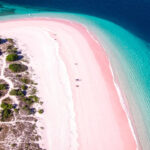
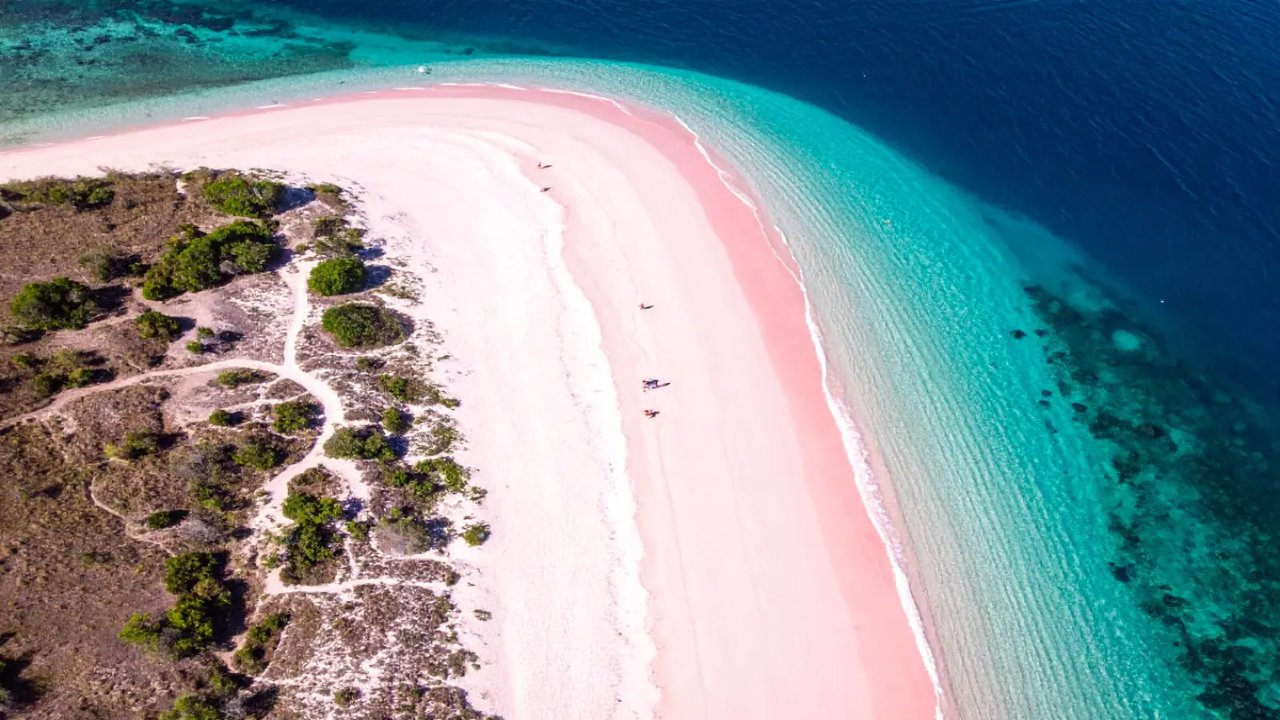
The boat engine cuts out, and for a moment, the silence is total. Then your eyes adjust to the glare of the tropical sun, and you see it. A crescent of sand that should not exist in nature. It is not white. It is not gold. It is a soft, blush pink, like the inside of a seashell, like strawberry ice cream melting into turquoise water, like a watercolor painting come to life. This is one of the Pink Beaches in Komodo, a natural phenomenon so rare and so impossibly beautiful that it feels like a secret the ocean has been keeping for millions of years. There are only a handful of truly pink sand beaches on the entire planet, and Komodo National Park, in the remote eastern islands of Indonesia, is blessed with not just one, but several of these cotton-candy shores.
A journey to the Pink Beaches in Komodo is not a simple fly-and-flop beach holiday. It is an expedition. It is bundled into a larger adventure that involves sailing through prehistoric-looking islands, coming face-to-face with the world’s largest lizard, the Komodo dragon, and snorkeling in some of the most biodiverse waters on Earth. This guide will take you deep into everything you need to know to plan your own pilgrimage to this rosy-hued wonder.
The Science and Magic Why Are the Beaches Pink?
The question everyone asks when they first step onto the sand is a simple one: Why is it pink? The answer lies in a tiny, extraordinary marine organism called Foraminifera. These microscopic, single-celled creatures live on the coral reefs that surround Komodo. They build bright pink or red shells, or tests, for themselves out of calcium carbonate. When the foraminifera die, their tiny pink shells are crushed by the relentless action of the waves and are washed ashore, where they mix with the white coral sand. Over thousands of years, this constant blending of white sand and pulverized pink shells creates the beach’s signature rosy hue.
The intensity of the pink changes depending on the light, the tide, and the season. At midday, under the blazing equatorial sun, the pink can be subtle, a blush whisper. But in the soft, golden light of early morning or late afternoon, especially where the wet sand meets the retreating waves, the pink becomes deep, vivid, and intensely romantic. If you pick up a handful of dry sand and look closely, you can actually see the tiny fragments of red and pink shells mixed in with the white grains. It is a beautiful, tactile reminder that the beach is a living, organic creation, not a static postcard.
The Most Famous Pink Beach Pantai Merah on Komodo Island
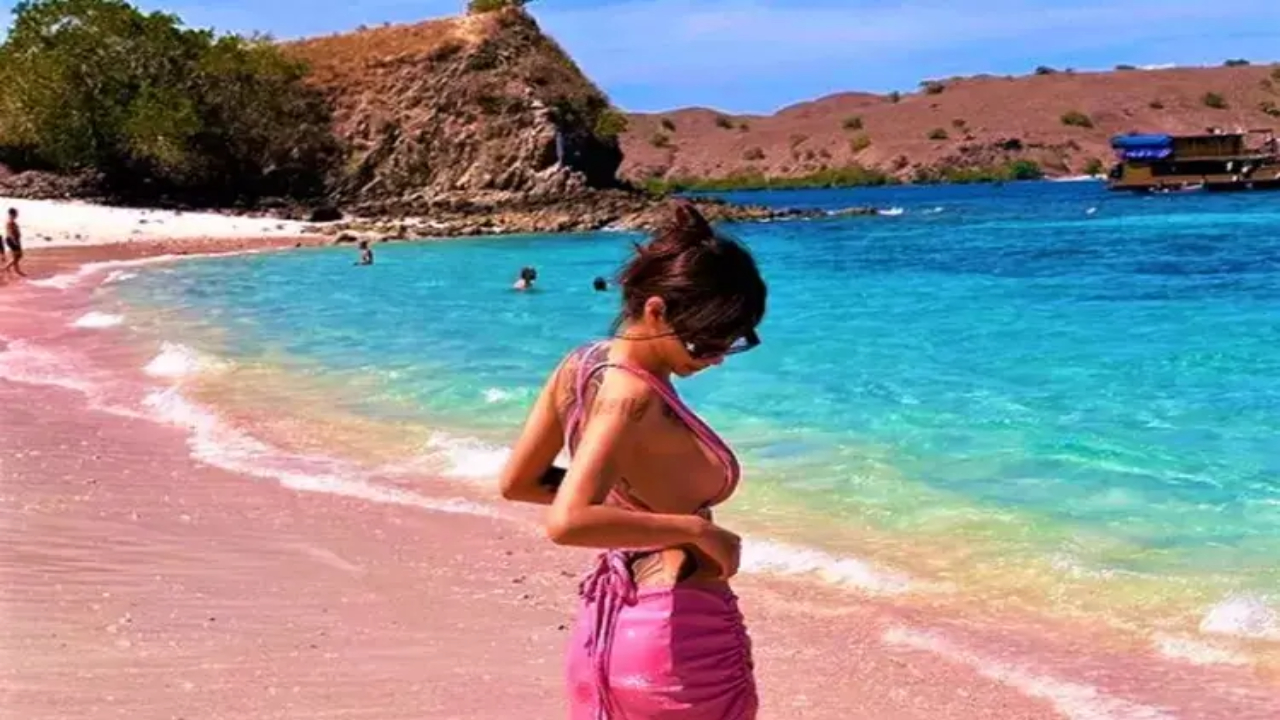
The most iconic and visited of the Pink Beaches in Komodo is Pantai Merah, which translates directly to Pink Beach. It is located on the southwest coast of Komodo Island itself, the largest island in the park and the primary home of the famous dragons. This beach is typically visited as part of a day trek on Komodo Island. You hike through the dry, savannah-like forest in the early morning, searching for dragons and other wildlife with a park ranger, and then, sweaty and exhilarated, you emerge onto the pink sand for a swim that feels absolutely earned.
Pantai Merah is a long, gentle curve of pink-tinged sand backed by green, rugged hills. The water here is shockingly clear and calm, making it perfect for swimming and floating. But the true magic of Pantai Merah lies just beneath the surface. The beach is directly adjacent to some of the most vibrant, healthy shallow coral reefs in the entire park. You can wade in from the shore with a mask and snorkel, and within seconds, you are drifting over a technicolor garden of branching corals, brain corals, and giant clams. Parrotfish in every shade of the rainbow nibble on the coral, angelfish drift past, and if you are lucky, you might spot a hawksbill turtle gliding gracefully over the reef. The contrast between the pink shore and the kaleidoscopic underwater world is almost overwhelming.
The Hidden Pink Beaches Padar Island and Beyond
While Pantai Merah gets most of the attention, a true Komodo adventure reveals that there are other, quieter pink shores to discover. The most spectacular of these is the Pink Beach on Padar Island. Padar is the island made famous by the iconic viewpoint where tourists hike up in the pre-dawn dark to watch the sunrise over three crescent-shaped bays, each a different color of sand. But the island’s pink beach, nestled in one of these secluded bays, is often visited only by those on multi-day sailing trips.
The sand here can appear even more intensely pink in certain lights, and because it is less trafficked, it feels incredibly private and wild. There are no facilities here, just the raw, untouched beauty of pink sand, vibrant coral, and the dramatic, jagged peaks of Padar rising all around you. Some liveaboard boat trips also access a small pink sand cove on the edge of a turquoise lagoon near the island of Kalong, where the added spectacle of thousands of flying foxes taking to the sky at sunset adds an extra layer of magic. These hidden spots are the reward for those who choose to explore the park over multiple days, by boat, rather than rushing in on a crowded day trip.
How to Visit the Pink Beaches In Komodo Tours and Logistics
The Pink Beaches in Komodo are only accessible by boat, as part of a tour of Komodo National Park. The gateway town is Labuan Bajo, a bustling fishing port on the western tip of the island of Flores. You fly into Labuan Bajo’s Komodo International Airport, which has direct flights from Bali, Jakarta, and several other Indonesian cities. From Labuan Bajo, you have two main options for visiting the pink beaches.
The most popular and budget-friendly choice is a shared or private day boat tour. A standard 1-day Komodo tour typically leaves at 6:00 AM and returns at sunset. It will take you to Padar Island for the sunrise hike, then to Komodo Island for dragon trekking and Pantai Merah, and often finishes with snorkeling at Manta Point or Taka Makassar. These tours are long, fast-paced, and an efficient way to see the highlights. A private boat tour gives you full control over your itinerary, allowing you to linger at the pink beach and avoid the midday crowds.
The far more immersive and recommended way to experience the Pink Beaches in Komodo is on a multi-day liveaboard boat trip. These trips, lasting two, three, or even four days, allow you to explore the far corners of the park at a relaxed pace. You sleep on the boat, eat freshly caught fish prepared by the crew, and wake up to sunrises over glassy water. You can visit the pink beaches in the soft, empty light of early morning or late afternoon, when the day-trippers are long gone. You have time to discover the hidden pink coves, to snorkel for hours on remote reefs, and to truly feel the wild, elemental spirit of Komodo.
The Best Time to Visit for Perfect Pink Sand
The ideal time for a trip to the Pink Beaches in Komodo is the dry season, from April to November. During these months, the seas are calm, the skies are an unbroken blue, and the underwater visibility for snorkeling is at its best. The pink color of the sand is most vivid when the sun is at a low angle, so early morning and late afternoon are not only the quietest times to visit but also the most beautiful. The months of July and August are peak season; the park is busier and prices are higher. The sweet spots for glorious weather and thinner crowds are April, May, September, and October.
The rainy season, from December to March, brings rough seas, heavy downpours, and reduced visibility. The park remains open, and the landscape is lush and green, but boat crossings can be very rough, and the pink sand is often dulled by cloud cover. The park closes for a short period, typically for a few weeks in January, for conservation and regeneration. Always check the exact closure dates before booking.
Practical Tips for Protecting the Pink Beaches
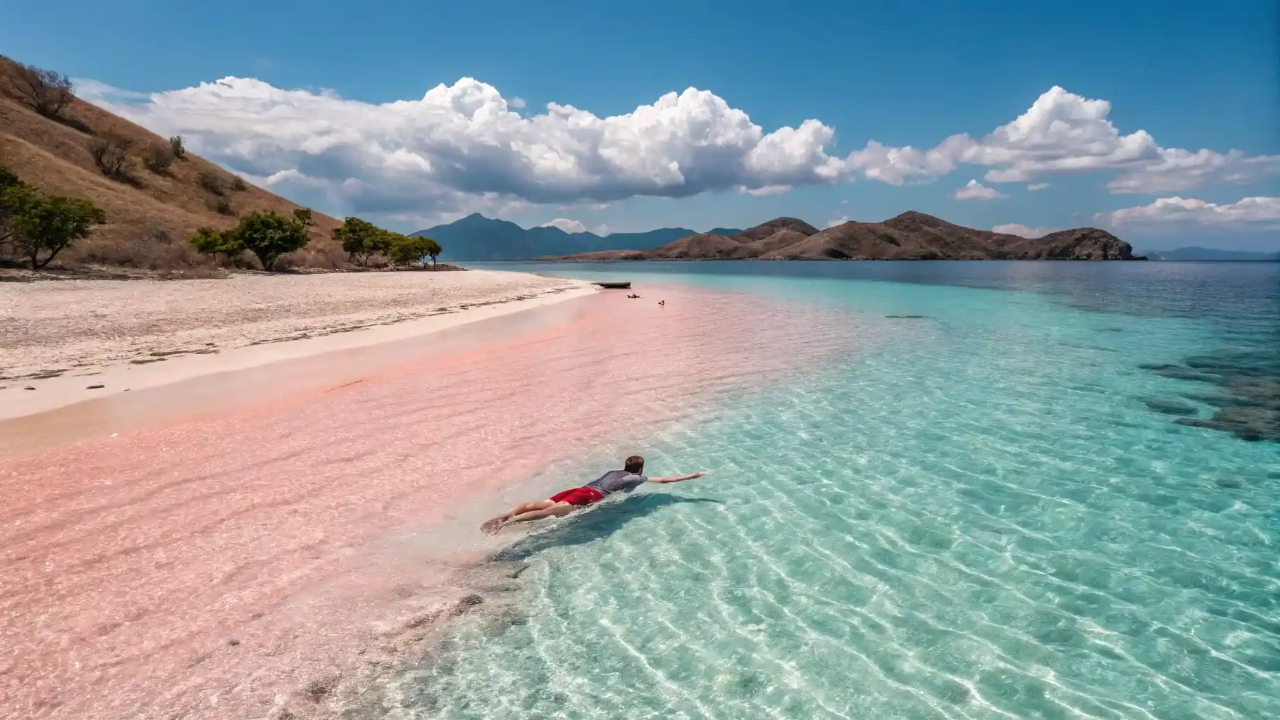
The Pink Beaches in Komodo are incredibly fragile. The very thing that makes them beautiful, the pink foraminifera shells, is a finite resource that can be damaged by careless human behavior. You can help protect these natural wonders. Never take the sand home as a souvenir. It might seem harmless, but if every visitor took a small bag, the beach would slowly disappear. Use only reef-safe, mineral-based sunscreen, as chemical sunscreens bleach coral and harm the tiny organisms that create the pink sand. Do not touch or stand on the coral when you are snorkeling. The reef directly offshore is a delicate, living nursery that feeds the beach. And of course, take all your trash back with you. Leave absolutely nothing on the sand except your footprints.
Frequently Asked Questions (FAQ) About The Pink Beaches In Komodo
Q1: Is the pink sand really that pink, or is it photoshopped in pictures?
It is genuinely pink, but it is a natural, earthy pink, not a fluorescent bubblegum color. The intensity varies enormously depending on the light. At high noon on an overcast day, it may look like very pale rosy sand. At sunrise or sunset, especially where the sand is wet, the pink becomes rich and deeply saturated. Many heavily filtered Instagram photos exaggerate the color, but the real thing, seen with your own eyes in the right light, is breathtakingly beautiful.
Q2: Can I stay overnight on a pink beach?
Overnight camping directly on the main Pink Beach (Pantai Merah) is generally not permitted because it is within Komodo National Park and also a Komodo dragon habitat. However, some liveaboard boat trips anchor in a secluded bay near a pink beach, and you sleep on the boat, falling asleep to the sound of lapping waves and waking up to the sand all to yourself. True beach camping is sometimes allowed on other, less drago-frequented islands within the park, but only with a licensed operator.
Q3: Are Komodo dragons a danger on the pink beaches?
Yes, Komodo dragons can be present on or near Pantai Merah on Komodo Island. This is why you must always visit the beach as part of a guided tour with a park ranger. The rangers carry long wooden poles and know the behavior of the dragons. Do not wander off alone into the bushes or the treeline behind the beach. Stay on the open sand where visibility is good. The dragons are generally lethargic during the heat of the day but are wild, dangerous predators. Swimming in the clear, shallow water is safe, but always be aware of your surroundings on land.
Q4: Is the snorkeling really that good right off the pink beach?
It is extraordinary. The coral gardens just offshore at Pantai Merah are some of the healthiest and most accessible in the entire park. You simply walk into the water from the beach, and the reef is right there. It is a protected area, and the diversity of fish and coral is world-class. Strong currents can occur, so it is important to stay with your guide and not drift too far from the boat. The water is warm and the visibility is usually excellent, especially in the dry season.
Q5: Can I do a day trip to the Pink Beach from Bali?
No, this is not possible. You must fly from Bali to Labuan Bajo, which takes about 1 hour and 10 minutes. The earliest flight arrives around 9:00 AM, by which time the day boats to Komodo have already departed. You need to spend at least one night in Labuan Bajo and join a full-day tour that departs early the following morning. A 2-night stay, allowing for a full-day tour and a recovery day, is the comfortable minimum.
Q6: What else should I bring for a day on the pink beach?
Pack a sturdy pair of walking shoes or hiking sandals for the dragon trek on Komodo Island, which is over rocky, uneven terrain. Bring your own snorkeling gear if you have it, though tour operators provide it. A dry bag is essential to protect your camera and phone from splashes on the boat. Wear a rash vest or a long-sleeved shirt for sun protection while snorkeling. Bring high-SPF reef-safe sunscreen, a hat, sunglasses, and a generous amount of drinking water. A small towel and a change of clothes are a luxury after a saltwater swim before the long boat ride back.
Q7: Is there a pink beach on the island of Lombok or other parts of Indonesia?
Yes, there are a few other pink sand beaches in Indonesia, most notably Tangsi Beach on the island of Lombok. It is also a naturally occurring pink beach, caused by the same foraminifera. However, the Pink Beaches in Komodo are widely considered more spectacular due to the intensity of the sand color, the pristine clarity of the water, the surrounding dramatic volcanic landscape, and the chance to combine a visit with seeing the Komodo dragons. Komodo offers the complete, once-in-a-lifetime package that a standalone beach cannot match.