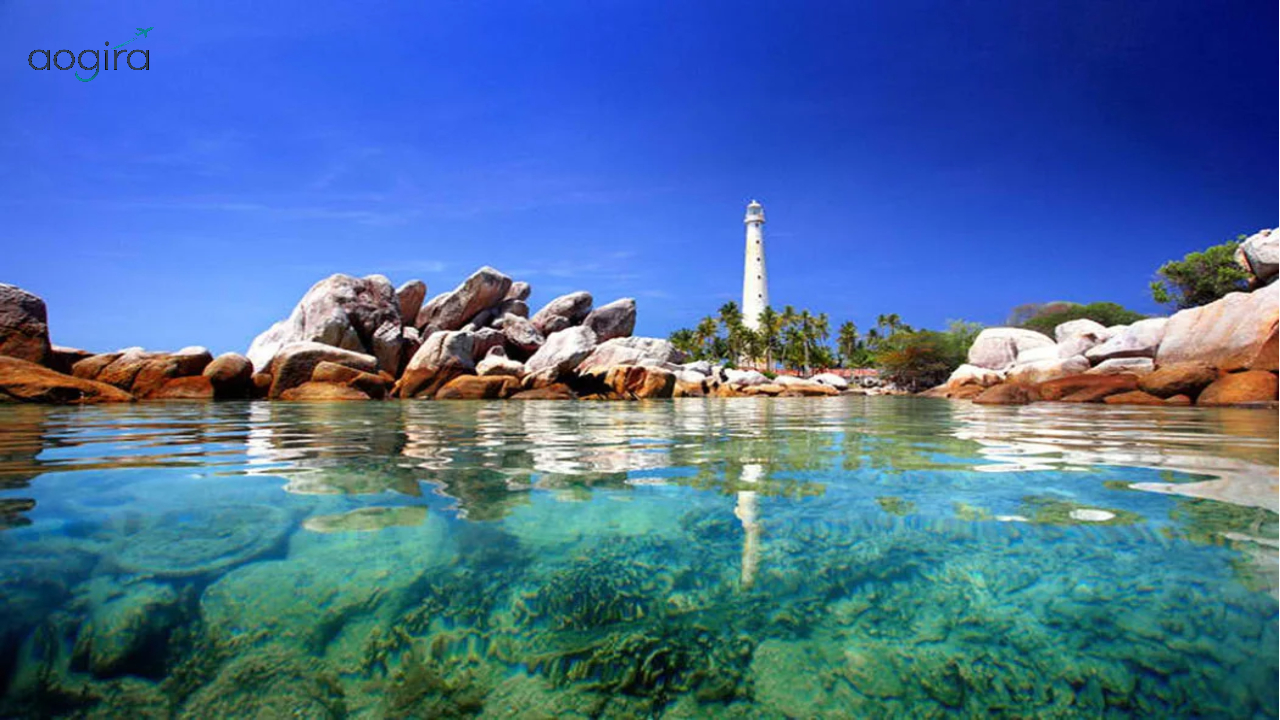
Bangka Island is one of Indonesia’s most appealing destinations for travelers looking beyond the country’s familiar tourist circuit. Situated off the eastern coast of Sumatra, Bangka combines long stretches of white sand, enormous granite boulders, tropical coastal scenery, historic tin-mining settlements and some of the most distinctive seafood dishes in the Indonesian archipelago. Its beaches can be spectacular without the extensive resort development found in more internationally famous island destinations.
Along the northeastern coastline, the beaches around Sungailiat are the main attraction. Matras Beach offers a broad sweep of pale sand, while Parai Tenggiri is known for clear-looking coastal water, smooth granite formations and resort-style facilities. Farther north, the rocky shores near Belinyu provide a different landscape, with enormous granite formations and quieter coastal communities. Inland, Pangkalpinang reveals another side of Bangka through its markets, traditional food, Chinese-Indonesian heritage and the history of tin extraction.
Bangka also has an important practical advantage: visitors can build a worthwhile itinerary around one arrival airport and a manageable number of regional bases. However, attractions are spread across a substantial island, public transport is not designed around international sightseeing, and weather or marine conditions can change beach plans. Choosing the right accommodation and arranging transport in advance makes a considerable difference.
This complete Bangka Island travel guide covers the island’s best beaches, cultural attractions, local food, how to get there by plane or ferry, where to stay, genuine hotel recommendations, sightseeing costs, seasonal weather, a three-day itinerary, packing advice, safety precautions and frequently asked questions.


Photographs are credited to their respective Wikimedia Commons contributors and used according to the linked Creative Commons licenses. These are documentary photographs, so beach appearance and facilities may have changed since they were taken.
Bangka Island at a Glance
| Detail | Information |
|---|---|
| Country | Indonesia |
| Province | Bangka Belitung Islands |
| Main city | Pangkalpinang |
| Main airport | Depati Amir Airport (PGK) |
| Best coastal base | Sungailiat |
| Recommended duration | 3–5 days |
| Currency | Indonesian Rupiah (IDR) |
| Time zone | Western Indonesian Time (WIB), UTC+7 |
| Language | Indonesian and local Bangka Malay varieties |
| Travel highlights | Beaches, granite boulders, seafood, tin heritage and coastal photography |
| Best transport | Private car with driver or suitable rental vehicle |
Where Is Bangka Island?
Bangka Island lies east of mainland Sumatra, separated from South Sumatra by the Bangka Strait. Together with Belitung and numerous smaller islands, it forms Indonesia’s Bangka Belitung Islands Province.
Pangkalpinang is the provincial capital and the principal gateway for most visitors arriving by plane. The surrounding urban area has hotels, restaurants, hospitals, banking facilities and the island’s main airport connection.
The northeastern coast around Sungailiat is particularly attractive for leisure visitors, while Belinyu and the northern coastline are better suited to longer road excursions. Mentok, also written Muntok or Muntok, is a historical port town in western Bangka and a gateway for ferry crossings toward Sumatra.
The island is larger than many visitors expect. A map may make several coastal attractions appear close together, but traveling between them can involve substantial road time.
Bangka Island Map
This map provides an overview of Bangka Island and its relationship to Sumatra and the surrounding sea.
For trip planning, save Depati Amir Airport, Pangkalpinang, Matras Beach, Parai Tenggiri Beach and Sungailiat before arrival. These give you a useful foundation for organizing the main coastal itinerary.
Why Visit Bangka Island?
Bangka is particularly appealing to travelers who enjoy beaches but do not want every day of their holiday to revolve around heavily developed tourist strips.
Its most recognizable natural feature is the granite shoreline. Large rounded boulders form clusters along several beaches, creating natural divisions between sandy coves and distinctive places to photograph.
The island also offers a connection with Indonesia’s industrial and multicultural history. Tin mining influenced settlement, transport, trade and economic development, while Malay and Chinese-Indonesian cultural influences remain visible in local food, temples, markets and urban architecture.
Bangka is less suited to travelers looking for a large nightlife district, frequent organized international tours or reliable public transportation to every beach. It rewards visitors who are willing to arrange independent excursions and take their time.
Best Things to Do on Bangka Island
1. Relax at Matras Beach
Matras Beach is one of Bangka’s best-known coastal attractions. Located near Sungailiat, it is recognized for its lengthy sandy shoreline and the granite formations that characterize much of the island’s northeastern coast.
Unlike a compact cove where everyone gathers around one viewpoint, Matras provides room to walk, explore different sections of the coast and photograph the meeting point between sand, rock and tropical vegetation.
It is particularly enjoyable for a relaxed morning or late-afternoon visit. Depending on the weather, you may see fishing boats or local families enjoying the shore.
The nearby Matras river area is another part of the local coastal landscape, although swimming conditions must be assessed separately from the beach itself.
Practical information: Matras lies about 7 kilometers from central Sungailiat, according to Bangka Regency’s tourism department. Government visitor information lists daytime access, but individual facilities and vendors may follow different hours.

Safety: Do not assume the entire beach is suitable for swimming. Check conditions on the day, avoid rough surf and remain away from slippery granite rocks during strong waves.
2. Explore Parai Tenggiri Beach
Parai Tenggiri Beach, near Sungailiat, is another signature destination on Bangka Island. It combines sandy stretches with large granite boulders and a more developed leisure setting than some of the island’s rural coastal areas.
The distinctive combination of rocks, palm trees and turquoise-looking water makes it a favorite destination for landscape photographs.
Parai is particularly attractive to travelers who want to stay near the coast rather than make every beach visit from Pangkalpinang.
Some accommodation and beach facilities in the area may operate controlled access or charge entry or facility fees. Check the applicable arrangements with the resort or local operator before traveling.
Water activities may be offered when conditions permit, but availability should never be assumed from an older tourism advertisement.
Best for: Beach relaxation, photography, couples, and visitors considering resort accommodation.
3. Visit Tanjung Pesona Beach
Tanjung Pesona is another coastal attraction near Sungailiat, known for its granite formations, sea views and natural scenery.
The area has long been associated with leisure visits and beach accommodation. Visitors can explore the coastline, relax in shaded areas and appreciate the distinctive rock formations that make Bangka’s beaches recognizable.
A visit combines naturally with other Sungailiat beaches, although it is better to choose two or three coastal stops rather than rush through every location on the same day.
Best for: Coastal photography, family outings and a slower beach-focused itinerary.
4. Discover Penyusuk Beach in Northern Bangka
Penyusuk Beach lies in the northern part of Bangka Island, in the Belinyu area. It is known for large granite rock formations, coastal vegetation and an attractive series of rocky shoreline views.
The northern coast is worth considering if you have extra time and enjoy discovering places beyond the most commonly visited resort beaches.
Some visitors arrange small boat outings around nearby offshore areas. These should be organized with reliable local operators and are dependent on sea conditions.
Because the journey from Pangkalpinang or Sungailiat is longer than a trip to Matras or Parai, Penyusuk is best treated as a dedicated northern-coast excursion.
Planning tip: Arrange your return transport before leaving for the northern coast, rather than assuming transport will be available on demand at a remote beach.
5. Explore Batu Dinding Beach
Batu Dinding, meaning “Stone Wall,” takes its name from an enormous granite formation resembling a natural wall.
The official Indonesian tourism authority identifies it as one of Bangka’s unusual scenic attractions, located in the Belinyu area.
The rock is especially interesting from a geological and photographic perspective. Unlike the rounded boulders scattered across other Bangka beaches, this formation presents a particularly imposing vertical appearance.
The attraction is suitable for visitors who enjoy unusual landscapes, but do not climb onto wet or unstable rock surfaces simply to recreate photographs seen online.
6. See Tanjung Kalian Lighthouse Near Mentok
Tanjung Kalian, near Mentok in western Bangka, is an important historical coastal location.
Its landmark lighthouse dates to 1862 and reflects the area’s historical importance to maritime traffic around the Bangka Strait.
The coast also has associations with events during the Second World War, making it worth exploring with attention to its history rather than viewing it only as another beach.
The lighthouse area is particularly atmospheric toward late afternoon when the light changes over the strait.
Important: Access to the lighthouse interior is not guaranteed. Confirm local rules before planning to climb it. The area is also close to an operating ferry-port environment, so follow signs and stay out of restricted zones.
7. Visit Pasir Padi Beach Near Pangkalpinang
Pasir Padi is a practical beach option for travelers staying in Pangkalpinang. It provides an easy coastal outing without requiring a journey to northern Bangka.
The beach has a wide, open appearance and attracts local visitors who come to enjoy the sea breeze, food stalls and informal recreation.
Compared with the granite-heavy beaches near Sungailiat, Pasir Padi is more convenient as a casual city-side stop.
It is a useful option for arrival day, especially if you reach the island too late for a longer excursion.

8. Discover Pangkalpinang’s Tin Museum
Bangka’s tin-mining heritage is central to understanding the island’s history.
Museum Timah Indonesia in Pangkalpinang contains exhibits relating to the development of tin mining, historical equipment, geological specimens and the economic importance of the industry.
Indonesia’s national tourism authority identifies the museum as an important place to understand the evolution of mining from traditional methods to industrial production.
For visitors who have only experienced Bangka through beaches, the museum provides valuable context about the settlements, infrastructure and commercial history of the island.
Location: Ahmad Yani Road, Pangkalpinang.
Visitor information: Pangkalpinang’s tourism office lists opening hours of 8:00 AM–4:00 PM and describes admission as free. Another national tourism listing publishes a small entry charge. Verify the current fee and opening day directly before visiting, particularly on weekends and public holidays.
Official Pangkalpinang tourism museum information →
9. Explore Pangkalpinang’s Cultural Heritage
Pangkalpinang is more than a transportation stop. Its history reflects Bangka’s commercial links, tin economy and multicultural population.
Places of interest include Chinese temples, older urban neighborhoods, local markets and public spaces where visitors can observe the city’s everyday life.
Rather than attempting to cover every landmark in a rushed tour, set aside a few hours for the city center and its food culture.
Try local coffee and traditional snacks, visit a market during its active hours and ask residents or your hotel about culturally important sites.
When visiting places of worship, dress respectfully and request permission before photographing people or religious ceremonies.
10. Learn About Bangka’s Tin-Mining Landscape
Tin extraction has profoundly shaped Bangka’s economy and environment. Former mining areas, including water-filled pits locally known as kolong, are a visible part of the island’s landscape.
Some former mining areas have become photography destinations because mineral-rich ground and water can create striking colors.
However, a colorful lake should not automatically be treated as a safe recreational swimming area. Former mine pits may have unstable edges, deep water, contamination or restricted access.
Explore only sites that are officially open to visitors and avoid abandoned or actively operated mining areas without permission.
The History and Culture of Bangka Island
Bangka’s identity has been shaped by its maritime position, natural resources and connections with surrounding parts of Southeast Asia.
The island’s most important economic story is tin. Bangka has long been associated with tin deposits, and mining attracted investment, labor migration and commercial activity over successive centuries.
Historical connections with the Palembang Sultanate, European colonial powers and later Indonesian national development all contributed to its present character.
Chinese migration associated with mining and trade helped create distinctive Chinese-Indonesian communities, alongside Bangka’s Malay population and other groups.
That cultural mixture remains visible in architecture, local religious sites, markets and cuisine.
Visitors interested in history should not limit themselves to the beaches. The Tin Museum, Pangkalpinang’s heritage landmarks and western Bangka’s historical sites reveal how closely the island’s development has been connected with trade and natural resources.
How to Get to Bangka Island
Most travelers reach Bangka by air through Pangkalpinang or use the ferry connection from mainland Sumatra.
By Plane: Depati Amir Airport
Depati Amir Airport, officially coded PGK, is the principal air gateway for Bangka Island.
Indonesia’s Directorate General of Civil Aviation confirms that it is a domestic airport located in Pangkalan Baru, Central Bangka Regency, serving the Pangkalpinang area.
Official airport route information identifies Jakarta Soekarno-Hatta and Palembang among its domestic connections. The airline and frequency listings can change, so check the flight schedule for your exact dates.
For international visitors, a common itinerary is to arrive in Jakarta, complete immigration formalities and take a domestic connection to Pangkalpinang.
From the airport, arrange a taxi or hotel transfer to your accommodation. Pangkalpinang hotels are generally more convenient for a late arrival, while Sungailiat accommodation requires a longer road transfer.
Official airport information: Indonesia Ministry of Transportation — Depati Amir Airport.
By Ferry from Sumatra
Travelers already in South Sumatra can consider the ferry crossing connecting the Palembang-side coastal transport network with western Bangka.
Tanjung Kalian Port, near Mentok, is a major gateway for movements between Bangka and mainland Sumatra. The ferry system is operated within the Indonesian inter-island transportation network, including services associated with ASDP Indonesia Ferry.
ASDP’s June 2026 announcement describes ongoing infrastructure work to improve capacity at Tanjung Kalian Port.
Do not assume a fixed ferry departure interval or crossing duration from an older online article. Sailing arrangements depend on vessel operations, weather, passenger demand and port conditions.
Confirm the operating route, current ticket price, terminal, and vehicle requirements before traveling.
Operator information: ASDP Indonesia Ferry and Ferizy booking platform.
Getting to Bangka from Belitung
Although Bangka and Belitung are in the same province, they are separate islands with different airports and visitor destinations.
Do not book a flight to Tanjungpandan expecting to arrive near Sungailiat or Pangkalpinang.
Travel between the islands may be possible through available air or sea connections, but operating schedules should be checked for the intended date. A practical itinerary should not rely on an unverified daily departure.
How to Get Around Bangka Island
Public transportation is not the easiest way to organize a multi-beach holiday on Bangka. While local transport exists, many scenic areas are more conveniently reached by a private vehicle.
| Transportation | Advantages | Limitations |
|---|---|---|
| Private car with driver | Flexible routes and easier rural access | Costs more than shared transport |
| Rental car | Freedom to explore independently | Requires suitable license, navigation and driving confidence |
| Motorbike | Flexible for short trips | Greater exposure to rain, road hazards and injury |
| Taxi or ride-hailing | Useful around urban areas where available | Availability may be limited in remote coastal areas |
| Local transport | Can reduce some travel expenses | Less convenient for multiple dispersed attractions |
My suggested approach: Use a prearranged car and driver for at least one full sightseeing day. This is particularly helpful if you plan to explore the Belinyu area or several Sungailiat beaches.
Agree on the itinerary, waiting time, fuel, parking charges and total cost before departing. Carry the driver’s contact details in case you become separated at a beach or attraction.
Where to Stay on Bangka Island
The two most practical accommodation areas are Pangkalpinang and Sungailiat.
Pangkalpinang is the best base for airport access, restaurants, markets, urban attractions and business-style hotel facilities.
Sungailiat is more convenient if the main purpose of your trip is visiting beaches such as Matras and Parai Tenggiri.
The three properties below represent different accommodation styles. Prices vary by date, occupancy and booking conditions; no unverified live room prices are included.
| Hotel | Area | Best for |
|---|---|---|
| Swiss-Belhotel Pangkalpinang | Central Pangkalpinang | City comfort and restaurants |
| Novotel Bangka | Pangkalpinang airport corridor | Families and full-service facilities |
| Parai Beach Resort | Parai Tenggiri, Sungailiat | Beach-focused stays |
1. Swiss-Belhotel Pangkalpinang — Best for City Comfort
Address: Jalan Jenderal Sudirman No. 65, Pangkalpinang, Bangka Belitung, Indonesia.
Swiss-Belhotel Pangkalpinang is a four-star international-brand hotel in central Pangkalpinang.
Its official hotel information describes 144 contemporary guestrooms and suites, an outdoor swimming pool, fitness center, spa facilities, on-site dining, room service and a 24-hour front desk.
The central location is practical for visitors who want access to city restaurants, urban landmarks and the Tin Museum rather than a beachfront stay.

Swiss-Belhotel Room Options
The official hotel gallery identifies Deluxe Rooms, Grand Deluxe Rooms and suites. Room facilities vary by category, so guests should compare the exact room selected during booking.
Hotel-wide amenities include:
- Outdoor swimming pool.
- Fitness center.
- Spa and wellness facilities.
- Swiss-Café restaurant.
- Lobby lounge.
- Room service.
- Air-conditioned guestrooms.
- Family-room options.
Best suited to: Couples, families and travelers who want an urban hotel base with reliable services.
Current prices: Check the official booking calendar for your dates.
Official hotel website: Swiss-Belhotel Pangkalpinang.
Actual room photographs: Official Deluxe Room, Suite, Pool and Facilities Gallery.
2. Novotel Bangka — Best for Families and Airport Convenience
Address: Jalan Soekarno Hatta Km. 5, Pangkalpinang, Bangka Belitung, Indonesia.
Novotel Bangka Hotel & Convention Centre is a four-star property operated under the Accor hotel group.
According to its official website, it is located within convenient driving distance of Depati Amir Airport and Pangkalpinang’s city center.
The property combines accommodation with leisure and conference facilities, including an outdoor swimming pool, fitness center, spa and restaurant services.
Novotel Bangka Rooms and Amenities
The hotel offers contemporary guest rooms with different bed configurations, including Standard Rooms with king or twin beds.
Specific facilities and additional room categories should be checked in the official booking system, particularly when requesting interconnected accommodation or family arrangements.
Important hotel features include:
- Outdoor swimming pool.
- Fitness center.
- Spa facilities.
- On-site dining.
- Convention and meeting facilities.
- Air-conditioned accommodation.
- Airport-area convenience.
Best suited to: Families, business travelers and visitors who want a comfortable hotel close to airport and city services.
Current prices: Check Accor’s live booking calendar.
Official hotel website and actual hotel photographs: Novotel Bangka — Official Accor Gallery, Rooms and Booking.
Novotel’s property and room photographs are available on its official website. No independently reusable hotel-specific photograph was verified for embedding here, so copyrighted photographs have not been copied into the article.
3. Parai Beach Resort — Best for a Beach Holiday
Location: Parai Tenggiri Beach, near Sungailiat, Bangka Island.
Parai Beach Resort is a coastal accommodation property associated with one of Bangka’s most recognizable beaches.
The Bangka Regency Tourism Department describes resort accommodation, swimming-pool facilities, dining, and leisure services at the property.
Historical official tourism information identifies room categories including Standard, Deluxe, Suite and Pool Villa accommodation. However, that room information was published in 2022, and travelers should confirm which categories are currently available.

Parai Resort Rooms and Facilities
The resort appeals to travelers whose priority is staying close to the sea and spending more time at the beaches around Sungailiat.
Facilities historically described by government tourism sources include:
- Different room and villa categories.
- Swimming pool.
- On-site dining.
- Beachfront leisure areas.
- Spa facilities.
- Recreation and water-activity arrangements, subject to availability.
Confirm the current room condition, air conditioning, private bathroom arrangements, breakfast inclusions and access to leisure facilities before booking.
Best suited to: Beach lovers, couples and families wanting to spend most of their time near Parai Tenggiri.
Current prices: Obtain a direct quotation for your stay. Historic promotional rates should not be treated as current prices.
Official local government accommodation listing: Bangka Regency Tourism Department — Parai Beach Resort.
The government listing includes resort information, property photographs and contact details. A current independently verified official resort booking website was not established for this guide.
Which Bangka Hotel Is the Most Practical?
Choose Swiss-Belhotel Pangkalpinang if restaurants, cultural attractions and central-city convenience matter most.
Choose Novotel Bangka if airport access, swimming-pool facilities and an established full-service hotel are priorities.
Choose Parai Beach Resort if you primarily want a beach stay near Sungailiat and the resort’s present facilities meet your requirements.
What to Eat on Bangka Island
Food is one of Bangka’s most rewarding attractions. Seafood, spice-rich soups, noodles and traditional snacks reflect the island’s maritime economy and multicultural history.
Lempah Kuning
Lempah Kuning is one of Bangka’s signature dishes. This tangy, aromatic fish soup uses turmeric and other seasonings to produce its characteristic yellow broth.
Ingredients and cooking styles vary by household and restaurant. The dish is often eaten with rice and makes an excellent introduction to traditional Bangka cooking.
Mie Bangka
Mie Bangka is a regional noodle specialty influenced by local Chinese-Indonesian culinary traditions.
Different versions may include minced meat, fish-based accompaniments, vegetables or savory broth. Ask about the ingredients if you have dietary restrictions.
Otak-Otak
Otak-otak is a popular fish-based snack made with seasoned fish paste and commonly associated with coastal Indonesian food culture.
In Bangka, you can find versions served with local sauces and seasonings. It is particularly suitable for sampling during a beach or market visit.
Kemplang and Getas
Kemplang and getas are traditional savory snacks, commonly associated with fish-based cracker products.
They are popular souvenirs because packaged versions can be easier to carry than fresh seafood dishes.
Check packaging dates and storage guidance before purchasing food to bring home.
Local Coffee Shops
Traditional coffee shops are useful places to experience ordinary life in Pangkalpinang and Sungailiat.
Instead of searching only for tourist-oriented cafés, consider visiting a busy local establishment where residents gather for breakfast or afternoon refreshments.
If you enjoy comparing Indonesian islands through their food and everyday culture, Aoqira’s Buton Island travel guide explores another region with distinctive coastal cuisine and historical traditions.
Suggested 3-Day Bangka Island Itinerary
This itinerary is designed for first-time visitors arriving at Depati Amir Airport and staying in Pangkalpinang or Sungailiat.
Day 1: Pangkalpinang, Local History and Food
Arrive at Depati Amir Airport and travel to your hotel.
After checking in, begin with Pangkalpinang’s historical and cultural attractions. Visit the Tin Museum if it is open and learn about the mining industry that played such an important role in Bangka’s development.
Spend some time exploring the city, stopping at a traditional market or coffee shop.
If your flight arrives early enough, consider visiting Pasir Padi Beach later in the afternoon.
Finish the day with a local seafood meal or a restaurant serving lempah kuning.
Overnight: Pangkalpinang.
Day 2: Sungailiat’s Best Beaches
Depart Pangkalpinang in the morning and travel toward Sungailiat.
Start at Matras Beach, allowing time to walk along the sand and photograph the surrounding coastal landscape.
Continue to Parai Tenggiri Beach. Check the current access arrangements if entering through resort-managed facilities.
Spend the middle of the day enjoying the coast, with a break for lunch and rest away from the strongest afternoon sun.
If time and weather permit, add Tanjung Pesona or another nearby beach for late-afternoon scenery.
Return to Pangkalpinang or check into accommodation near Sungailiat.
Overnight: Pangkalpinang or Sungailiat.
Day 3: Northern Bangka or a Relaxed Departure
If your departure is late or you have an additional night, consider a longer northern-coast excursion.
Travel toward Belinyu to explore the landscapes around Penyusuk Beach and Batu Dinding.
Arrange a driver for the day and carry water, snacks and sun protection, particularly when exploring quieter coastal areas.
If you have an early flight, skip the northern excursion and spend the morning near Pangkalpinang instead.
Return to the airport with sufficient time for check-in and security procedures.
Planning principle: Do not schedule a distant northern-coast trip immediately before an important flight.
How to Spend 5 Days on Bangka Island
With five days available, you can explore more comfortably and include places beyond the main Sungailiat coastal cluster.
| Day | Suggested plan |
|---|---|
| 1 | Arrive in Pangkalpinang, visit the Tin Museum, explore local food. |
| 2 | Matras Beach, Parai Tenggiri Beach and Sungailiat. |
| 3 | Northern-coast excursion to Penyusuk and Batu Dinding. |
| 4 | Choose either a western Bangka historical outing to Mentok or a relaxed beach day. |
| 5 | Breakfast, souvenir shopping and departure. |
The western and northern excursions should be scheduled on separate days if you want to avoid spending most of your holiday in a vehicle.
Best Time to Visit Bangka Island
Bangka has a tropical climate, with warm temperatures and the possibility of rainfall throughout the year.
For planning purposes, the relatively drier part of the year is often a more convenient starting point for beach trips. However, seasonal conditions vary, and a particular month does not guarantee calm seas or cloud-free skies.
Drier Period: Approximately June to September
These months can be suitable for beach sightseeing and longer road trips, although showers remain possible.
Indonesia’s meteorological agency, BMKG, published regional seasonal information for 2026 placing the dry-season period across Bangka Belitung in this general part of the year, with differences between local climate zones.
Always check updated forecasts rather than treating a broad seasonal pattern as an exact prediction.
Wetter Period: Often Late Year into Early Year
Late-year and early-year weather can bring heavier rainfall and more difficult conditions for some coastal activities.
BMKG’s October 2026 outlook identified parts of Bangka Belitung among areas expected to experience the rainy-season peak around January 2027.
That is a seasonal forecast, not a rule applying identically every year.
On rainy days, consider visiting the city, local markets or museums rather than making long journeys to exposed coastal attractions.
Best Time of Day for Beaches
Early morning and late afternoon are often more comfortable for walking and photography because of the lower sun angle.
Midday visits can still be enjoyable, but heat exposure is greater and natural shade may be limited in open sandy areas.
Weather conditions matter more than the clock when deciding whether swimming or boating is appropriate.
Bangka Island Travel Costs and Budget Planning
Bangka can be an economical destination compared with some major Indonesian resort areas, but the actual cost depends heavily on transportation and accommodation choices.
Flights and private car arrangements may form a substantial part of the overall budget. Travelers visiting several remote beaches should compare the cost of hiring a driver against repeatedly arranging individual transfers.
| Expense | Budget guidance |
|---|---|
| Flights | Check current airline quotations for PGK and your arrival city. |
| Hotels | Compare city hotels, coastal stays and selected room categories. |
| Private driver | Request a total daily quote including fuel, driver hours and parking. |
| Food | Local restaurants and markets offer alternatives to hotel dining. |
| Beach entry | Varies by attraction and whether the beach is resort-managed. |
| Museums and activities | Confirm posted entrance and activity fees locally. |
| Boat excursions | Ask about boat hire, safety equipment, duration and fuel. |
Published beach and hotel prices are not always consistent across sources, and promotions can quickly become outdated. For that reason, a single invented “average daily budget” would be less useful than obtaining current prices for your specific itinerary.
To reduce costs, spend consecutive days in the same region and avoid unnecessary backtracking between Pangkalpinang and distant northern beaches.
Safety Guide: Is Bangka Island Safe for Tourists?
Bangka is an established Indonesian destination for domestic tourism, but visitors still need to manage ordinary travel risks and several hazards specific to its geography and industrial history.
The most important precautions concern the sea, granite shorelines, former mining areas, road travel and changing weather.
1. Beach Swimming and Ocean Safety
Do not assume a beach is safe to swim in simply because the water looks calm or clear in photographs.
Currents, underwater rocks, changing tides and wave conditions may create hazards. Some coastal areas may not have professional lifeguards.
Before swimming:
- Check local warnings and the conditions on arrival.
- Ask local operators where swimming is considered appropriate.
- Avoid swimming alone.
- Keep children under close supervision.
- Avoid entering rough or unfamiliar water.
- Stay away from boat routes and fishing equipment.
Do not enter the water if local authorities or beach operators advise against it.
2. Slippery Granite Rocks
Bangka’s granite formations are visually impressive but can be dangerous when wet.
Wave splash, algae and polished rock surfaces can reduce traction. Some gaps between boulders may also be deeper than they appear.
Wear suitable footwear, avoid jumping between rocks and do not stand on exposed boulders during rough seas.
3. Former Tin-Mining Pits
Abandoned or disused mining pits deserve particular caution.
Water-filled pits may have unexpectedly deep sections, unstable slopes or water-quality concerns. Their unusual colors are not an indication that they are safe for recreation.
Do not swim in abandoned mine lakes or enter restricted mining areas.
4. Boat and Ferry Safety
For any island or coastal boat excursion, ask whether properly sized life jackets are provided and whether the vessel is suitable for the expected sea conditions.
Check weather forecasts, passenger limits and return arrangements before boarding.
Indonesia’s BMKG publishes maritime weather information and warnings for high waves. In October 2026, its marine warning system identified moderate-wave conditions in some waters around the wider Bangka Belitung region, illustrating why conditions should be checked immediately before departure.
Check BMKG’s official high-wave warnings →
5. Road Safety
If renting a motorbike or car, ensure that you hold the correct driving entitlement for Indonesia.
Use a helmet on motorcycles, wear seat belts in cars and avoid driving unfamiliar rural roads at night unless necessary.
Road conditions, lighting, traffic behavior and mobile coverage may vary between urban and rural areas.
6. Heat, Sun and Dehydration
Tropical heat and humidity can become tiring, especially when walking on beaches with limited shade.
Carry drinking water, use sunscreen and take breaks during the hottest part of the day.
People undertaking long outdoor excursions should watch for dizziness, weakness or other symptoms of heat illness.
7. Mosquitoes and General Health
Mosquito-borne illnesses occur in Indonesia. Use mosquito repellent, particularly around dawn and dusk or in areas with standing water.
Choose accommodation with appropriate mosquito protection and seek medical advice if you develop significant fever or illness during or after travel.
Travel insurance should cover medical care and any activities you intend to undertake.
8. Tourist Payments and Personal Security
Agree on transport prices before beginning an informal taxi or driver arrangement.
Use reputable booking channels when possible, confirm hotel reservations directly and avoid transferring money to unverified contacts.
Keep passports and valuables secure, and carry enough cash for smaller businesses that may not accept international cards.
9. Emergency Assistance
Indonesia’s general emergency service number is 112 where implemented. Service coverage and routing may vary by location.
For emergencies, contacting your hotel, the nearest hospital or the local police may also be necessary.
Save the address of your accommodation and the nearest medical facility before traveling into remote areas.
What to Pack for Bangka Island
For a normal beach and sightseeing itinerary, you do not need specialist trekking equipment, but a few practical items can make the trip substantially more comfortable.
- Lightweight breathable clothing.
- Swimwear and a quick-drying towel.
- Comfortable sandals and shoes suitable for uneven surfaces.
- High-SPF sunscreen.
- Sun hat and sunglasses.
- Mosquito repellent.
- Reusable water bottle.
- Lightweight rain jacket.
- Waterproof bag for electronics.
- Power bank.
- Passport and relevant travel documents.
- Cash in Indonesian Rupiah.
- Personal medication and basic first-aid supplies.
- Offline maps and accommodation contact information.
If you plan to visit remote beaches or travel by boat, ask the operator what additional safety equipment is provided.
Bangka Island or Belitung Island: Which Should You Visit?
Travelers planning a holiday in Bangka Belitung often compare the province’s two principal islands.
| Feature | Bangka Island | Belitung Island |
|---|---|---|
| Main airport | Depati Amir (PGK) | H. A. S. Hanandjoeddin (TJQ) |
| Main travel base | Pangkalpinang or Sungailiat | Tanjungpandan and nearby coastal areas |
| Famous attractions | Matras, Parai Tenggiri, Penyusuk, Tin Museum | Tanjung Tinggi, Tanjung Kelayang, Lengkuas Island |
| Cultural focus | Tin history, Malay and Chinese-Indonesian heritage | Maritime heritage and Laskar Pelangi connections |
| Trip style | Beaches, city culture and road trips | Beaches, granite scenery and organized island outings |
Neither island is automatically the better choice. Bangka is appealing for travelers who want a combination of beaches, food and urban history, while Belitung is particularly well known for coastal granite formations and island-hopping excursions.
For another Indonesian island destination, see Aoqira’s Muna Island travel guide, which covers caves, local culture and natural attractions in Southeast Sulawesi.
More Indonesian Island Travel Inspiration
If you enjoy discovering places beyond Indonesia’s best-known resort areas, consider pairing Bangka research with other island destinations.
Aoqira’s Komodo Pink Beaches guide focuses on a strikingly different coastal landscape, with unusual sand colors and marine activities around Komodo National Park.
For volcanic scenery and historical sites, the Ternate Island travel guide covers an Indonesian island shaped by spice-trade history and volcanic geography.
Nature lovers may also enjoy the Tangkoko National Park guide for wildlife experiences in North Sulawesi.
These destinations are not direct day trips from Bangka. They are additional options for planning future travel across Indonesia’s varied island regions.
Is Bangka Island Worth Visiting?
Yes, particularly for travelers who value coastal scenery, local culture and a more independent style of travel.
Bangka’s strongest attractions are not concentrated in one large resort district. They are distributed across beaches, markets, historical sites and towns that still function as ordinary Indonesian communities.
That makes the island rewarding for visitors who want variety rather than spending an entire holiday inside one accommodation complex.
The main disadvantages are the need for road transport between attractions, variable levels of tourism infrastructure and the effect of weather on sea activities.
For a first trip, three to five days provide enough time to experience the island’s coastal highlights without excessive rushing.
Frequently Asked Questions About Bangka Island
Where is Bangka Island?
Bangka Island is located east of Sumatra in Indonesia. It is one of the two principal islands of Bangka Belitung Islands Province.
What is Bangka Island famous for?
Bangka is known for its granite-boulder beaches, tin-mining heritage, seafood dishes, Malay and Chinese-Indonesian culture, and coastal attractions around Sungailiat.
What is the best beach on Bangka Island?
Matras and Parai Tenggiri are two of the island’s best-known beaches. Matras appeals to visitors seeking a broad sandy shoreline, while Parai is associated with granite scenery and resort facilities.
How do I get to Bangka Island?
Most visitors fly to Depati Amir Airport near Pangkalpinang. Ferry connections between western Bangka and mainland Sumatra provide another option.
How many days do I need on Bangka Island?
Three days allow a practical introduction to Pangkalpinang and the main Sungailiat beaches. Four or five days provide more time for the northern and western parts of the island.
Is Bangka Island the same as Belitung?
No. Bangka and Belitung are separate islands in the same province. They have different airports and distinct attractions.
Where should I stay on Bangka Island?
Pangkalpinang is the most convenient base for flights, restaurants and city attractions. Sungailiat is more suitable if your priority is spending time on the northeastern beaches.
Is Bangka suitable for families?
Yes, provided accommodation and activities are selected carefully. Families should pay particular attention to swimming conditions, heat exposure and long road transfers.
Can you swim at Bangka’s beaches?
Swimming may be possible at suitable locations when conditions permit. However, not all beaches have lifeguards, and currents, waves or underwater rocks can create hazards. Follow local advice.
When is the best time to visit Bangka?
The comparatively drier part of the year, often around June to September, can be convenient for beach visits. Local weather varies, and marine conditions should always be checked before water activities.
Can I visit Bangka without renting a car?
Yes, especially if staying in Pangkalpinang and using taxis or booked transfers. However, a driver or rental vehicle makes dispersed beach attractions considerably easier to reach.
What food should I try?
Local specialties worth exploring include lempah kuning, mie Bangka, otak-otak, kemplang and other seafood-based dishes.
Is Bangka a good destination for international tourists?
Yes, particularly for independent travelers interested in beaches, local culture and regional Indonesian destinations. Some advance planning is useful because English-language services and organized tourist transport may be limited outside major hotels.
Final Thoughts
Bangka Island offers a rewarding combination of tropical coastline, striking granite formations, local cuisine and industrial history. Its appeal comes from experiencing several different aspects of the island rather than relying on one famous landmark.
For first-time visitors, Pangkalpinang provides a convenient arrival and cultural base, while the beaches around Sungailiat are the natural focus of a coastal holiday.
Allowing three to five days makes it easier to enjoy both regions, with optional excursions to Belinyu or western Bangka for travelers who have additional time.
Choose accommodation according to your itinerary, arrange reliable road transport, remain flexible around weather conditions and treat the island’s beaches and historical areas with care.
Bangka may not have the same international profile as Bali or Komodo, but for travelers interested in seeing a different side of Indonesia, it has plenty to offer.
Sources and Further Reading
The following government tourism departments, transportation authorities, accommodation operators and image-license records were consulted. Published information may change after this article is updated.
- Indonesia Travel — Bangka Belitung Islands
Official destination overview, island geography, attractions and traditional food. - Indonesia Travel — Destinations on Bangka Island
Official information about beaches, granite formations and regional attractions. - Indonesia Travel — Scenic Places in Bangka
Additional destination descriptions and geographical context. - Bangka Regency Tourism and Culture Department — Coastal Attractions
Local government information on Matras, Parai, Penyusuk and other beaches. - Indonesia Ministry of Transportation — Depati Amir Airport
Official airport location, code, transport facilities and published domestic route information. - ASDP Indonesia Ferry — Tanjung Kalian Port Update
Official June 2026 information about the port’s role and infrastructure development. - Pangkalpinang City Tourism Office — Tin Museum
Local museum background, operating information and visitor facilities. - Indonesia Travel — Tin Museum History
Heritage background and collections relating to the tin industry. - BMKG — Maritime High-Wave Warnings
Official Indonesian marine-weather alerts. - BMKG — 2026/2027 Rainy-Season Forecast
Seasonal rainfall guidance for Indonesia and its regions. - Swiss-Belhotel Pangkalpinang — Official Hotel Website
Hotel rooms, facilities, location and booking information. - Novotel Bangka — Official Accor Website
Verified accommodation details, services and official room photography. - Bangka Regency Tourism Department — Parai Beach Resort
Government-published property information and historical facilities; current availability must be confirmed.
Photograph Credits and Licensing
The images in this article are credited individually in their captions. The sources include Wikimedia Commons photographs by 02Wahyudi (CC BY-SA 3.0), Ferry Alayn (CC BY 2.0), Cun Cun (CC BY 4.0 and CC BY-SA 4.0), Cliffano Subagio (CC BY-SA 2.0), and other named Commons contributors. See each linked photograph page for the authoritative credit and license details.
Where hotel photography is copyrighted and independent reuse permission could not be verified, links are provided to original property or government galleries instead of copying their photographs without permission.