Wadi Rum Desert Guide to Jordan’s Mars on Earth
There is a place in southern Jordan where the ground glows crimson at sunset and the mountains rise out of the sand like the backbone of a sleeping giant. The silence is so complete that you can hear your own heartbeat, and the night sky is so thick with stars that it looks like spilled milk across a black canvas. This place is the Wadi Rum Desert, a protected wilderness area of dramatic sandstone canyons, towering rock arches, and sweeping valleys of red and gold sand. Known to many as the Valley of the Moon, Wadi Rum feels less like a destination on Earth and more like a landscape from another planet entirely. In fact, it has stood in for the surface of Mars in multiple Hollywood films, but no movie screen can truly capture what it feels like to stand in the middle of it, with the wind brushing your face and the sheer scale of the desert humbling you into silence.
Wadi Rum is not just a place to look at. It is a place to experience with every sense. You smell the smoke of a Bedouin campfire before you see it. You taste the impossibly sweet, sticky tea poured from a blackened kettle by a man in a flowing robe who welcomes you like a long-lost cousin. You run your fingers over ancient inscriptions carved into the rock thousands of years ago. And you listen to the silence, broken only occasionally by the distant bray of a camel or the whisper of wind moving through a narrow siq. This guide will walk you through everything you need to know to plan your own journey into this timeless desert.
The Landscape Why Wadi Rum Feels Like Another Planet
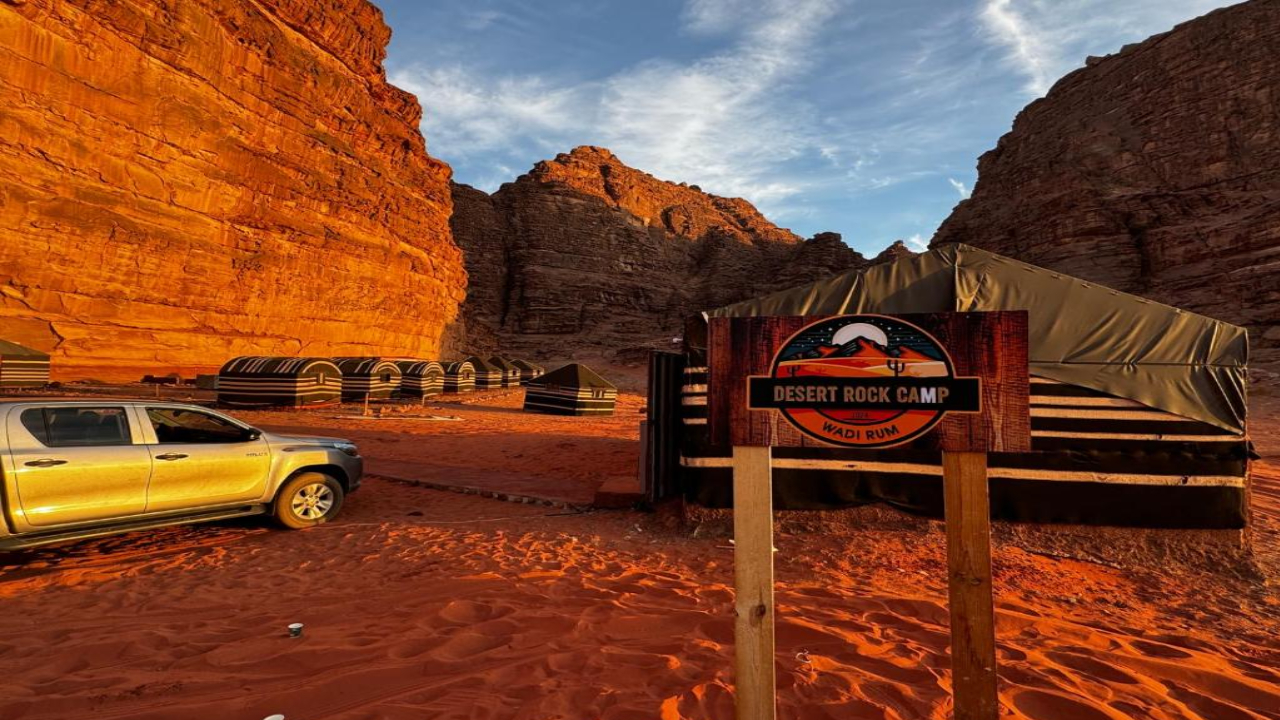
The moment you leave the main road and turn onto the desert track, the transformation is immediate. The small town of Rum, with its modest visitor center, disappears in your rearview mirror, and suddenly you are driving on sand. The monochromatic beige of the paved highway gives way to a symphony of reds, oranges, pinks, and deep purples. Massive monoliths of sandstone and granite, carved by wind and water over millions of years, rise vertically from the desert floor. Some look like giant mushrooms, others like massive ocean liners turned to stone. The most famous of these is the Seven Pillars of Wisdom, a towering rock formation named after T.E. Lawrence’s famous book.
The sand itself is a character in the story. It shifts from fine, silky red powder that slips through your fingers like liquid, to rough, rocky terrain that requires a skilled driver behind the wheel of a 4×4. The scale is almost impossible to comprehend. You can stand on top of a sand dune, spin around three hundred and sixty degrees, and see nothing but desert, rock, and sky in every single direction. There are no power lines, no buildings, and no roads. It is a landscape that makes you feel impossibly small and completely free at the same time. It’s no wonder that filmmakers chose this location for movies like The Martian, Rogue One: A Star Wars Story, Dune, and Lawrence of Arabia.
A Land with a Story Lawrence of Arabia and the Bedouin People
Wadi Rum is not an empty, abandoned place. It has been home to Bedouin tribes for thousands of years, and their presence is woven into the very fabric of the desert. The Bedouin are nomadic Arab people known for their legendary hospitality, their deep knowledge of the land, and their ability to survive in one of the harshest environments on Earth. When you visit Wadi Rum, you are not just visiting a national park; you are a guest in their ancestral home.
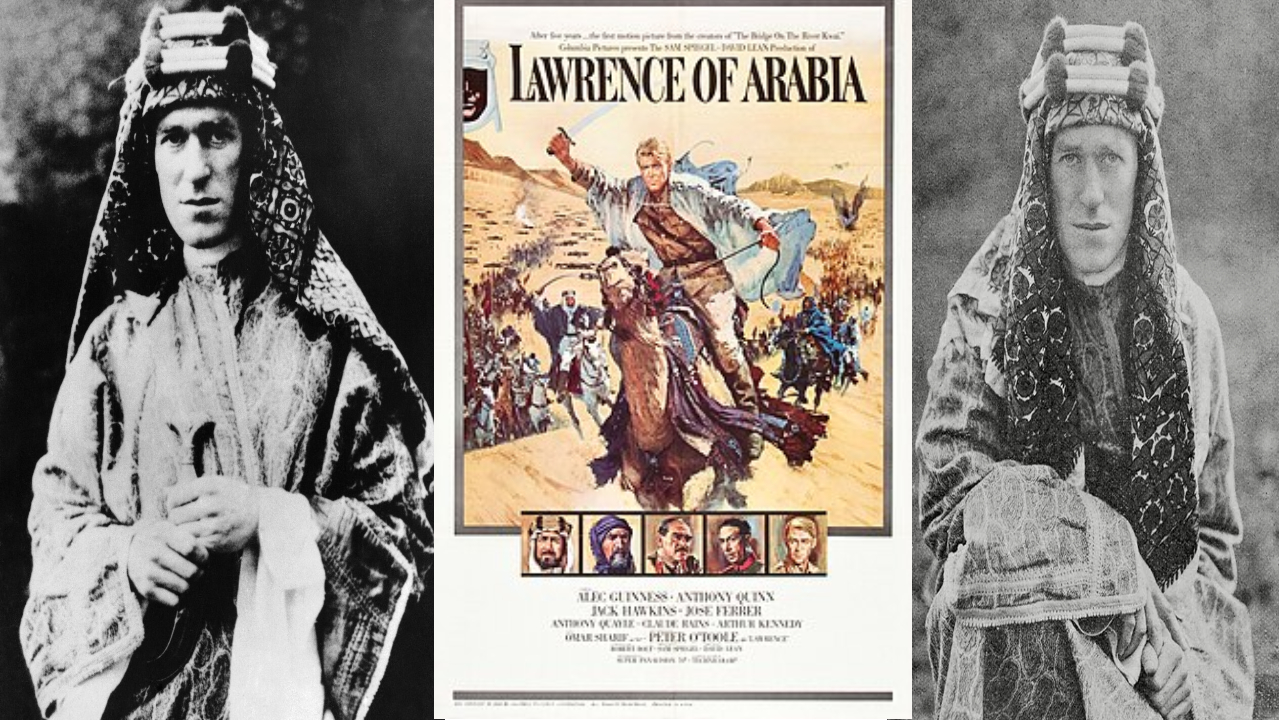
The desert’s modern fame is closely tied to one man: T.E. Lawrence, the British officer who fought alongside the Arab Revolt against the Ottoman Empire during World War I. Lawrence based his operations out of Wadi Rum and wrote about it with poetic reverence in his book, Seven Pillars of Wisdom. He described the desert as vast, echoing, and godlike. Today, you can see inscriptions of his likeness carved into the rock and visit spots named after him, but the true story of Wadi Rum is far older and deeper than any one foreigner. Petroglyphs and Thamudic inscriptions etched into the rock faces date back thousands of years, showing human figures, camels, and hunting scenes, proving that this harsh landscape has been a cradle of human life since prehistoric times.
A core part of the Wadi Rum experience is sitting down with a Bedouin host. You will be invited into a goat-hair tent, offered a tiny cup of sweet, sage-scented tea, and made to feel like family. You will eat a traditional meal called zarb, where chicken and lamb are slow-cooked for hours in an underground sand oven. When the meat is lifted from the sand, steaming and fragrant, you eat it with your hands, sitting cross-legged on a carpet under a sky that is slowly filling up with stars. This is not a performance put on for tourists. It is a genuine expression of a culture that treats the stranger as a sacred trust.
Adventure in the Sand Things to Do in Wadi Rum
The desert is a giant natural playground, and the best way to explore it is with a local Bedouin guide who knows every hidden canyon and secret viewpoint. The classic way to see Wadi Rum is by jeep tour. You pile into the back of a battered but capable 4×4 pickup truck, and your guide drives you deep into the protected area, stopping at the major sights. You will scramble up a massive red sand dune just for the thrill of running down it. You will walk through Khazali Canyon, a narrow fissure in the rock where you can see ancient inscriptions and feel the cool, shadowy air after the heat of the sun. You will climb up to natural rock bridges, including the dramatic Burdah Rock Bridge, one of the highest in the desert, which offers a heart-pounding scramble and a jaw-dropping view from the top.
For those who want to slow down and travel at the pace of the ancients, a camel trek is an unforgettable experience. Camels are not just a tourist gimmick; they are the traditional vessel of the desert, and riding one across the open sand, swaying gently with their long, deliberate stride, connects you to a mode of travel that has barely changed in a thousand years. The camels in Wadi Rum are well-cared for and loved by their owners, and a ride at sunset, when the whole desert turns pink and gold, is pure magic.
Hiking is another wonderful way to immerse yourself in the landscape. There are routes ranging from short, one-hour walks through narrow canyons to full-day scrambles up to the highest peaks. The desert reveals itself slowly to the hiker. You notice the tiny, hardy plants clinging to life, the lizards skittering over hot rocks, and the way the color of the stone changes as clouds pass in front of the sun. You cannot get truly lost if you stay within the main valleys, but a guide is essential for any serious off-trail hiking.
Sleeping Under a Billion Stars The Bedouin Camp Experience
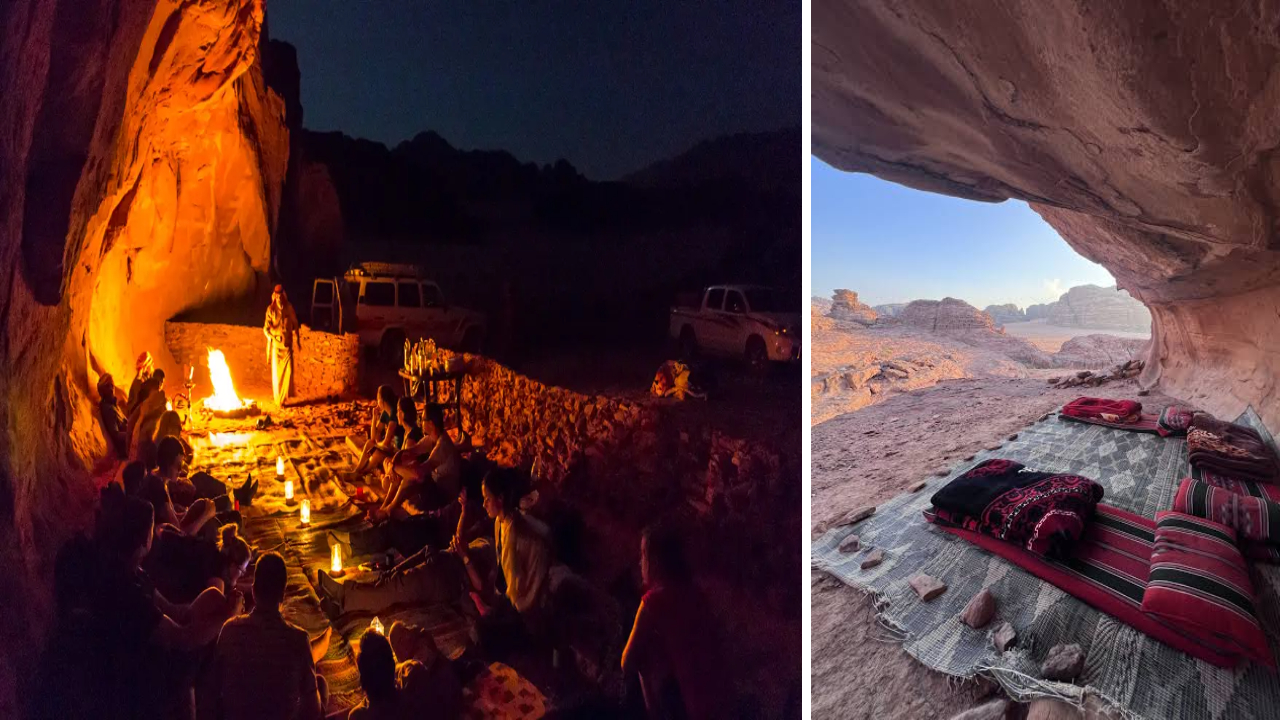
Staying overnight in Wadi Rum is not optional; it is an essential part of the experience. The desert transforms at night into something truly otherworldly. There are accommodation options for every comfort level. The traditional experience is a basic Bedouin camp, where you sleep in a tent made of thick goat hair, with mattresses on the floor and heavy blankets to keep you warm. Some camps have become more luxurious over the years, offering comfortable beds, private bathrooms, and even glass-domed bubble tents that let you watch the Milky Way from your pillow without any light pollution whatsoever.
After the zarb dinner, the camp settles into a quiet rhythm. Your host will likely light a fire, and you will sit around it, drinking more sweet tea and listening to stories. Someone might pull out a traditional single-stringed instrument called a rababa and sing old Bedouin songs. The real show, however, is above you. Because Wadi Rum is so far from any city lights, the stargazing is simply breathtaking. The Milky Way stretches across the sky like a river of diamonds. Shooting stars streak by so frequently you will lose count. You can lie on a carpet laid out on the sand, wrapped in a blanket, and just stare upwards, feeling the deep, ancient peace of the desert settle into your bones. The wind drops, the fire crackles, and you fall asleep to a silence so deep and complete it feels like a form of meditation.
Practical Tips When to Go, What to Wear, and How to Get There
The best time to visit the Wadi Rum Desert is during the spring months of March, April, and May, and the autumn months of September, October, and November. During these periods, the daytime temperatures are warm and very pleasant, and the nights are cool but not bitterly cold. Summer, from June to August, can be brutally hot, with temperatures easily exceeding 40 degrees Celsius, making midday hiking dangerous. Winter, from December to February, brings cold desert nights that can drop to freezing, but the days are crisp, clear, and beautiful, and you will have the desert almost entirely to yourself.
Getting to Wadi Rum is straightforward. The nearest major town is Aqaba on the Red Sea coast, about an hour’s drive away. Many travelers arrive from the ancient city of Petra, which is about a two-hour drive north. The most common way is to hire a private taxi or book a transfer through your camp. There is also a daily bus from Petra, but it is slow and schedules can be loose. A 4×4 is not necessary to reach the village, as the main road is paved. Once you arrive at the Wadi Rum Visitor Center, you park your car, pay your entrance fee, and your Bedouin host will meet you and drive you into the protected area in their own jeep.
Packing for the desert is all about layers and protection. The sun is relentless, so a wide-brimmed hat, sunglasses, and high-SPF sunscreen are non-negotiable. Loose, light-colored clothing that covers your arms and legs is far more comfortable than shorts and tank tops, both for sun protection and out of respect for the local conservative culture. You will want a warm fleece or jacket for the evenings, even in summer, and a good windbreaker. Sturdy, closed-toe shoes are essential for hiking and scrambling on rocks. Do not forget a head torch, a power bank for your phone, and a small backpack for water. The camps provide all meals and bedding, so you do not need to pack camping gear unless you are on a specialized trek.
FAQ About Wadi Rum Desert
Q1: Do I need a guide to enter Wadi Rum, or can I explore on my own?
You cannot enter the Wadi Rum Protected Area independently with your own vehicle. The terrain is trackless, unmarked, and very easy to get lost in. It is also a protected area, and independent driving damages the fragile desert ecosystem. You must enter with a licensed Bedouin guide who has a 4×4. You can book a jeep tour for a few hours, a full day, or an overnight trip that includes a stay in a camp. This supports the local Bedouin community directly and ensures you have a safe and informed experience.
Q2: Is it safe to visit Wadi Rum, considering the political situation in the Middle East?
Yes, Wadi Rum and the whole of Jordan are very safe for tourists. Jordan is a peaceful and stable country that relies heavily on tourism, and the government takes the safety of visitors extremely seriously. The Bedouin community in Wadi Rum is deeply committed to hospitality and the protection of their guests. The Jordanian people are famously welcoming, and violent crime against tourists is extremely rare. The situation in neighboring countries does not affect the safety of traveling in Jordan.
Q3: What is the toilet and shower situation in a Bedouin camp?
This varies depending on the camp you choose. The most basic traditional camps have simple shared toilet blocks with squat or Western-style toilets and no running water for showers. You wash using a bucket and a jug. Many mid-range camps now offer clean, tiled shared bathrooms with hot water showers. Luxury camps have private en-suite bathrooms attached to each tent, with flushing toilets and solar-powered hot showers. When you book your camp, check the facilities carefully so you know exactly what to expect.
Q4: Can I visit Wadi Rum as a day trip from Petra or Aqaba?
Yes, you can visit as a day trip, but it is a very long day and you will only scratch the surface of the desert. A typical day trip arrives around mid-morning, does a three- to four-hour jeep tour hitting the main highlights, and leaves before sunset. You will see the beauty of the landscape, but you will miss the most magical part of Wadi Rum: the sunset, the silence of the evening, the zarb dinner, the music around the fire, and the incredible canopy of stars. If your schedule allows, staying at least one night is highly and wholeheartedly recommended.
Q5: Is there mobile phone signal in Wadi Rum?
Mobile signal in the deep desert is very limited and patchy. In the village of Rum, you will have a signal. Once you drive into the protected area, your phone will likely lose service completely, which is honestly a blessing. Some camps have a weak Wi-Fi signal in a common area, but you should not rely on it. Download any maps, tickets, and important information before you arrive. Tell your family back home that you will be off-grid for the night. The forced digital detox is one of the greatest gifts the Wadi Rum Desert can offer you.