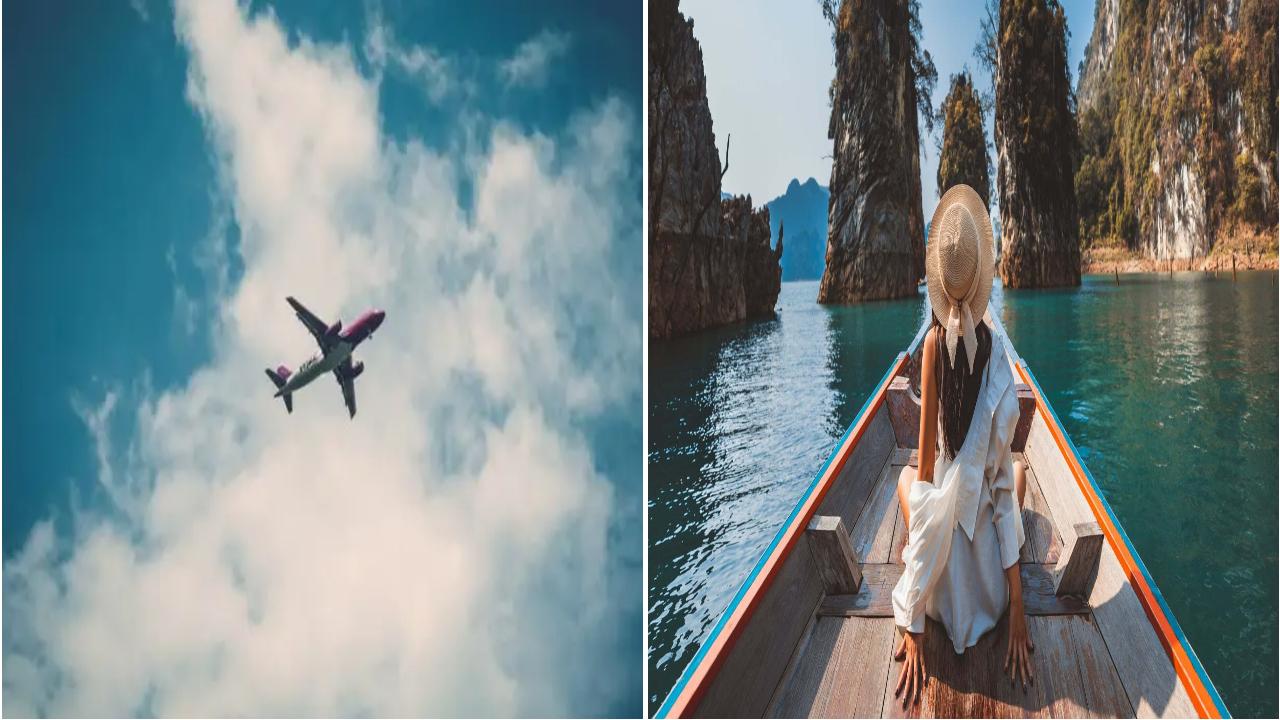
The Transformative Power of Travel Why Leaving Home is the Best Education You Will Ever Get
There is a particular kind of silence that falls over a house at three in the morning, just before a family leaves for a long journey. The suitcases stand by the door like patient, overstuffed sentinels. The taxi is still an hour away. Outside, the street is dark and empty, but inside, a low hum of electricity runs through every room. This is not stress; this is anticipation in its purest form. That quiet moment, before the engine starts and the wheels begin to turn, holds within it the entire promise of travel. It is the promise of a blank page, a day without a to-do list, and a version of yourself who is not yet tired, not yet bored, and not yet defined by the four walls of a daily routine.
Why We Leave The Human Urge to Wander
For thousands of years, human beings have been moving. Our ancestors did not stay in one place; they followed the herds, the seasons, the rivers, and the stars. This urge to move is not a modern luxury; it is embedded in our DNA. In today’s world, we often call this urge “wanderlust,” a word that beautifully combines a deep desire with a hint of restlessness. But the reason we leave home goes far deeper than just wanting a change of scenery. We leave because we are naturally curious creatures. We want to know what is on the other side of the mountain, what food tastes like when cooked by a grandmother in a village ten thousand miles away, and what the ocean sounds like on a coastline we have only seen in photographs.
At its core, travel is a rebellion against monotony. Our brains are wired for efficiency, which means they often put daily life on autopilot. You drive the same roads, see the same faces, and eat at the same table. There is comfort in this, but there is also stagnation. Travel is the antidote. When you land in a new place, your brain snaps to attention. Every sight, sound, and smell is new data that must be processed. This sharpening of the senses is why time seems to slow down when you are traveling. A single week on the road can feel more memorable, more packed with life, than three months of the same old routine.
Education Beyond the Four Walls of a Classroom
If you want to study history, you can read a textbook and memorize dates. But if you stand inside the Colosseum in Rome and place your hand on a stone wall scarred by chariot races and the passage of two thousand years, that history becomes something you feel in your bones. If you want to learn a language, you can download an app and repeat phrases into your phone’s microphone. But if you get lost in a neighborhood in Mexico City and have to ask a shopkeeper for directions using the ten Spanish words you actually remember, those words will stick with you forever. This is the kind of education that travel provides.
Travel is a masterclass in geography, sociology, economics, and art, all rolled into one seamless, unscripted experience. You learn about the logistics of a city by navigating its bus system. You learn about its economy by seeing which goods are sold on the street and which are sold in the high-end malls. You learn about its values by observing what people eat, how they treat their elders, and what time of day the city truly comes alive. There are no exams, but the lessons are permanent. You return home not just with a tan and a suitcase full of souvenirs, but with a more nuanced understanding of how the world works and where your own small life fits into the grander tapestry.
The Art of Getting Lost and Being Uncomfortable
One of the most valuable skills that travel teaches is something no school curriculum can deliver: the ability to be comfortable with discomfort. At home, you control almost everything. You set the thermostat, you know exactly which aisle has the peanut butter, and you can predict, almost to the minute, how long your commute will take. Travel shatters this illusion of control in the kindest possible way.
Buses break down. It rains unexpectedly on the one day you planned a hike. You take a wrong turn and suddenly find yourself in a part of town that isn’t on any tourist map. In the moment, these events feel like disasters. Your heart might race, and a small voice in your head might whisper, “This is why I should have just stayed home.” But push through that moment. The broken-down bus forces you to sit on a roadside curb and watch a sunset you would have missed entirely. The rain leads you to take shelter in a tiny café where the owner teaches you a local board game. The wrong turn reveals a hidden courtyard, a hidden garden, a hidden piece of a city’s soul that you can’t find on a guided tour.
Learning to handle these moments with grace, or even with a frustrated laugh, builds a deep and quiet resilience. It teaches you that most problems are solvable, and that the kindness of strangers is a very real and powerful force. This is not just a travel skill; it is a life skill. The ability to adapt, to stay calm when plans fall apart, and to find the silver lining in a seemingly ruined day is something that will serve you in your career, in your relationships, and in every unexpected turn life takes.
The Beautiful Language of Food

To travel without eating adventurously is to listen to a symphony with your ears plugged. Food is a universal language, and a country’s cuisine is a direct line to its soul. Every dish is a story. A bowl of spicy, warming curry tells you about the climate and the spices that grow in the region. A simple plate of fresh fish, grilled with just lemon and herbs, tells you about a coastline and a tradition of respecting the ocean’s daily gifts.
Eating street food in a crowded market is one of the most immersive experiences you can have. You sit on a tiny plastic stool, your knees bumping against a metal table, while the vendor hands you something you can’t even identify. You take a bite, and your mouth is flooded with flavors you didn’t know existed. You are not thinking about your inbox. You are not worrying about a deadline. You are one hundred percent present, focused entirely on that complex, delicious bite. It is a form of meditation. Furthermore, sharing a meal with locals breaks down walls faster than any spoken language ever could. Sitting at a communal table, raising your glass for a toast you don’t quite understand, and laughing over a shared love of good bread creates a bond that transcends cultural and linguistic barriers.
The Journey Home Finding a Stranger in the Mirror
All trips end, and that final journey back to your own front door is a strange, often melancholy experience. You walk into your house, and everything is exactly as you left it. Your coffee mug is in the same spot. Your bed is made. But you are not the same. This is perhaps the most profound gift of travel: you return home as a slightly different version of yourself. The person who left was perhaps a little more timid, a little more stressed, or a little more closed off. The person who returns has navigated foreign metro systems, tasted strange fruits, and shared a sunset with someone whose name they couldn’t pronounce.
You see your own life with fresh eyes. The quirks of your hometown that you once found annoying now seem charming. The daily routine that felt like a trap now feels like a privilege. You’ve learned to appreciate the quiet order of home, but you’ve also brought back a piece of the road’s beautiful chaos. You unpack your clothes, wash the dust from your shoes, and slowly fold away your travel jacket. But you never unpack the memories; those become a permanent part of your internal landscape. You realize that the ultimate goal of travel isn’t to escape your life, but to make sure your life doesn’t escape you. It’s a reminder that the world is vast and full of wonder, and that wonder exists not just on a faraway mountaintop, but right outside your own door, waiting to be seen through the eyes of a traveler.
Frequently Asked Questions FAQ About Travel
Q1: I have a full-time job and limited vacation days. How can I travel more?
The secret is to shift your mindset from “I need a two-week vacation” to “I can have a micro-adventure.” A micro-adventure is a short, simple, and affordable trip close to home. It could be a weekend camping trip an hour away, a day trip to a neighboring town you’ve never explored, or even an overnight stay at a local bed and breakfast. Use your weekends strategically. Take a Friday evening flight and a Sunday evening return. These short bursts of travel can feel just as refreshing as a long holiday if you fully disconnect from work and immerse yourself in the experience. Also, check if your company offers remote work flexibility. A “workcation,” where you work your regular hours from a new location and explore in the evenings, can be a game-changer.
Q2: Is solo travel safe, especially for women?
Safety is the number one concern for anyone considering traveling alone, and it’s important to address it honestly. Solo travel can be incredibly safe and empowering, but it requires more proactive planning. The key is research and awareness, not fear. Before booking, research safe neighborhoods for accommodation. Read recent reviews from other solo travelers, especially women. Share your itinerary with a trusted friend or family member back home and check in regularly. Trust your intuition above all else. If a situation or a person makes you feel uncomfortable, remove yourself immediately without worrying about being polite. Simple practices like arriving in a new city during daylight hours, dressing to blend in with local customs, and avoiding walking alone in deserted areas at night go a long way. Many destinations have thriving solo female travel communities online where you can ask specific questions and even meet up with other travelers.
Q3: How can I travel on a very tight budget?
Travel does not have to be expensive. The two biggest costs are usually flights and accommodation, and both can be drastically reduced. Be flexible with your dates and destination. Flying mid-week instead of on a weekend, or being open to whatever destination has a flight sale, can save hundreds of dollars. Use fare comparison websites and set up price alerts. For accommodation, hostels are the classic budget-friendly option, and many now offer private rooms, not just dorms. House-sitting and pet-sitting platforms let you stay in someone’s home for free in exchange for looking after their property or pets. Cooking your own meals a few times a day, even just buying breakfast from a local grocery store instead of a café, saves a surprising amount of money. Walk as much as possible to save on transport costs and see the city from street level. The best experiences in a new place, like hiking, visiting free museums, and watching a sunset from a public park, often cost nothing at all.
Q4: What should I pack for a two-week trip using only a carry-on?
Packing light is a skill that frees you from baggage fees, lost luggage stress, and the physical burden of hauling a heavy suitcase. The golden rule is to pack for one week and plan to do laundry. Choose a color palette of neutral, versatile clothing that all matches each other, like black, white, beige, and denim. This means every top goes with every bottom. Roll your clothes tightly instead of folding them to save space and minimize wrinkles. Shoes are the biggest space hogs; you really only need two or three pairs maximum: one comfortable pair for walking, one slightly dressier but still walkable pair, and perhaps flip-flops or sandals. All your liquids and toiletries should be in travel-sized, leak-proof containers. Wear your bulkiest items, like your jacket and boots, on the plane. A lightweight, foldable duffel bag packed inside can be a lifesaver for bringing back souvenirs.
Q5: I’m afraid of flying. Can I still travel?
A fear of flying, or aviophobia, is very common and absolutely should not stop you from seeing the world. The first step is to acknowledge the fear without judgment. There are many strategies to manage it. Start by choosing an aisle seat, which can feel less claustrophobic, or a seat over the wing, where turbulence is felt less acutely. Learn about how airplanes work; understanding what the different noises and sensations mean can demystify the experience. Turbulence, for example, is uncomfortable but not dangerous for the aircraft. Breathing exercises and meditation apps with guided sessions for nervous flyers can be incredibly grounding. Many airports and airlines also offer fear-of-flying courses run by pilots and psychologists. Beyond this, remember that you can design incredible trips using trains, buses, and ferries. Travel overland is slower, more scenic, and a beautiful way to watch the landscape change gradually, providing a deeper connection to the journey itself.
Q6: How do I overcome the language barrier in a country where I don’t speak the language?
A language barrier is not a solid wall; it’s a fun puzzle to solve. Start with the basics: learn how to say “hello,” “thank you,” “please,” and “sorry” in the local language. This small effort shows respect and instantly warms up any interaction. A translation app on your phone is an indispensable tool; download the local language pack offline before you go so you can use it without a data connection. Communication goes far beyond words. A smile is universal. Pointing, hand gestures, and drawing pictures on a napkin all work perfectly. When you need to ask for something, speak slowly and use simple words, not because the person is hard of hearing, but because it’s easier to pick out clear, individual words. Most importantly, be patient, have a sense of humor about your mistakes, and remember that the goal is connection, not perfect grammar.