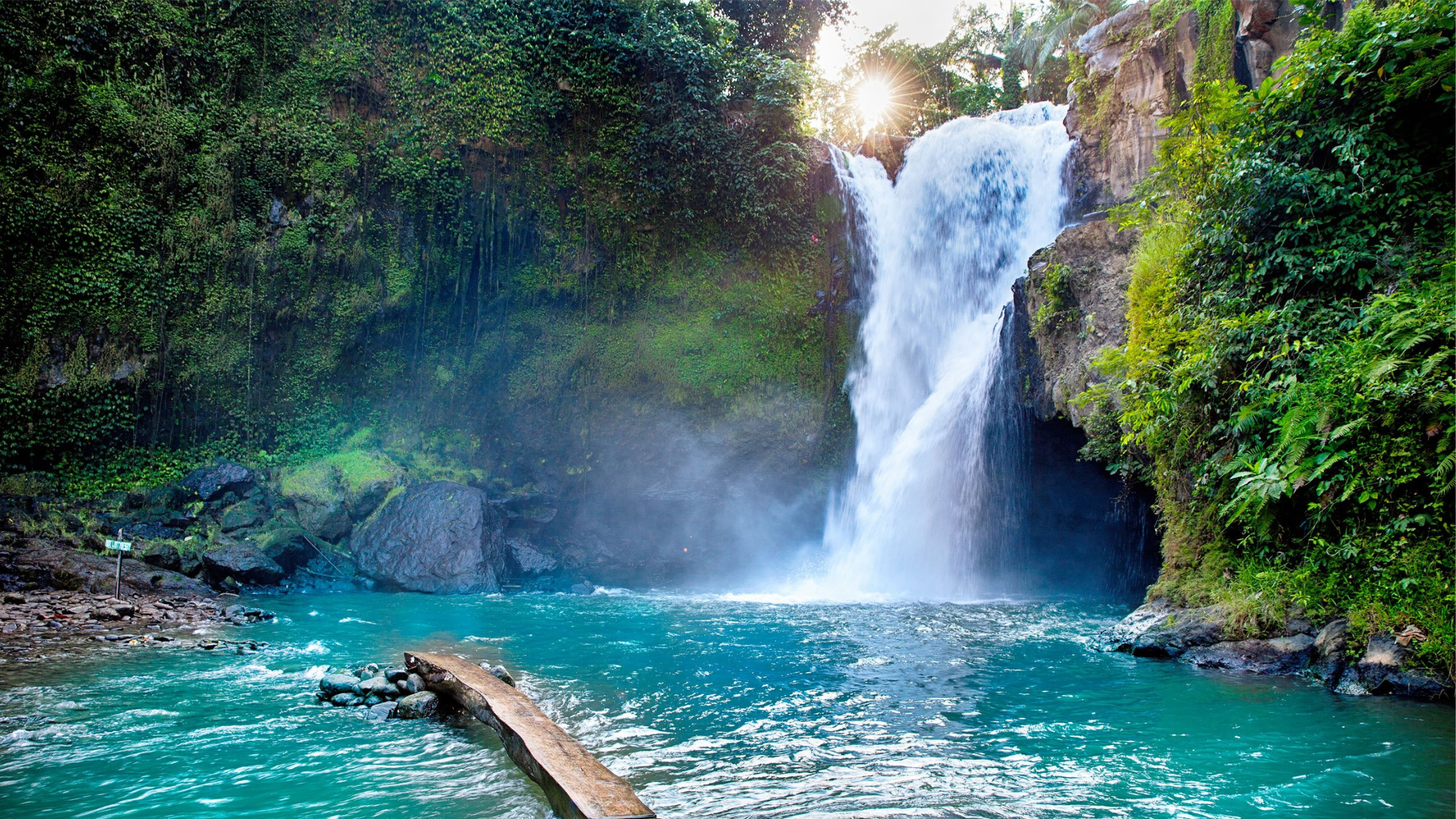

Bali’s volcanic highlands, deep river valleys and tropical rainfall create an extraordinary collection of waterfalls. Some are reached in minutes, while others involve steep stairs, river crossings or full jungle treks.
This guide brings together 40 of the best waterfalls in Bali, organized by region so you can plan realistic waterfall days instead of spending most of your trip crossing the island in traffic.
Where To Stay
The best base depends on which group of waterfalls you want to explore. Bali looks small on a map, but mountain roads and traffic mean that planning by region is much more efficient than trying to visit waterfalls from opposite sides of the island in one day.
| Base | Best For | Why Stay Here |
|---|---|---|
| Ubud | Central Bali waterfalls | Convenient for Tegenungan, Kanto Lampo, Tibumana, Suwat, Goa Rang Reng and Bangli-area trips. |
| Munduk / Wanagiri | North Bali waterfalls | Much closer to Banyumala, Munduk, Banyu Wana Amertha and other highland waterfalls. |
| Lovina / Singaraja | Buleleng and Sambangan | A useful northern base for Gitgit, Aling-Aling, Jembong and surrounding falls. |
| Sidemen | East Bali | Excellent for Gembleng, Jagasatru and a slower countryside stay. |
| Nusa Penida | Cliff springs and island scenery | Needed if you want to see places such as Peguyangan without rushing a same-day Bali itinerary. |

How Many Waterfalls Are There In Bali?
There is no official island-wide total for the number of waterfalls in Bali. The number depends on whether small cascades, seasonal falls, sacred springs and different waterfalls in the same river system are counted separately.
Large travel directories document 40 or more named waterfalls, while other local guides say the island has more than 50 mapped falls. There are also remote cascades that receive little tourism and can change considerably between the wet and dry seasons.
For this guide, the list is deliberately limited to 40 named waterfalls that give travelers a useful mix of famous landmarks, swimming spots, short walks and more adventurous waterfall hikes.
Map Of Bali Waterfalls
The map below is useful for understanding the island’s waterfall geography. Do not choose a route only by straight-line distance: mountain roads, traffic and steep access roads can make a short-looking journey take much longer.
North Bali Waterfalls
North Bali contains some of the island’s largest and most dramatic waterfalls. Buleleng, Munduk, Wanagiri and Sambangan receive plenty of rainfall and are filled with steep jungle valleys. These waterfalls often require more driving from Ubud or South Bali, so an early start or overnight stay in the north is worthwhile.


1. Sekumpul Waterfall
Sekumpul is a huge multi-cascade waterfall complex in the green hills of Buleleng. The viewpoint alone is impressive, but reaching the lower canyon involves a much more demanding descent, steps and sections around the river.
Allow enough time rather than treating Sekumpul as a quick photo stop. Many visitors combine it with nearby Fiji Waterfall.
2. Fiji Waterfall
Fiji Waterfall sits in the same wider trekking area as Sekumpul and is known for several streams dropping beside each other into a green valley. It makes most sense as part of a longer Sekumpul-area trek rather than a separate cross-island trip.
3. Tirta Buana Waterfall
Tirta Buana offers a broad natural setting and a pool beneath the cascade. The path is shorter than the full Sekumpul experience but can still become slippery, especially after rain.
4. Banyumala Twin Waterfalls
Banyumala is one of North Bali’s most attractive swimming waterfalls. Multiple streams descend across a wide green cliff into a natural pool, giving it a softer appearance than Bali’s single-drop waterfalls.
The descent is manageable for many visitors, but good footwear is useful when the path is wet.
5. Gitgit Waterfall
Gitgit is one of Bali’s long-established waterfall attractions and is easier to incorporate into a North Bali road trip than some of the more remote jungle falls. The path passes tropical vegetation before reaching the main cascade.
6. Colek Pamor Waterfall
Colek Pamor shares the wider Gitgit river system but receives fewer casual visitors. It is better suited to travelers interested in a quieter nature stop than those looking for extensive visitor facilities.
7. Campuhan Waterfall
Campuhan is another waterfall in the Gitgit area and can be combined with other nearby falls. Because multiple attractions share similar names in Bali, confirm the correct map pin before starting the drive.
8. Aling-Aling Waterfall
Aling-Aling is the centerpiece of a waterfall area near Sambangan that is well known for adventure activities. The main waterfall is primarily a scenic attraction, while nearby cascades are used for managed jumping and sliding experiences.
9. Kroya Waterfall
Kroya is part of the same Sambangan waterfall circuit. It is associated with a natural rock slide and jumping activity, but conditions should always be checked with local guides on the day of your visit.
10. Kembar Waterfall
Kembar means “twin,” which suits the paired waterfall formation. It is part of the adventure circuit rather than a simple roadside swimming stop, so use the local safety system instead of exploring jump points independently.
11. Pucak Waterfall
Pucak rounds out the better-known Sambangan waterfall group. It is generally approached as part of a multi-waterfall route and offers a calmer setting than the area’s main jumping locations.
12. Jembong Waterfall
Jembong flows over a series of dark rocks rather than dropping in one straight column. Its stepped appearance gives it a different character from Sekumpul or Gitgit.
13. Munduk Waterfall
Munduk village is surrounded by coffee, clove and forested hills, and its waterfall trails are especially useful if you want to see several natural attractions without driving between every stop.

14. Golden Valley Waterfall
Golden Valley is part of the wider Munduk waterfall network. It works well for travelers who prefer a walking circuit through the highlands instead of treating each waterfall as a separate attraction.
15. Banyu Wana Amertha Waterfall
Banyu Wana Amertha is especially rewarding because the site contains several waterfall formations within the same area. The broad, leafy cascades are very different from the tall single-drop falls elsewhere in Bali.
16. Bhuana Sari Waterfall
Bhuana Sari can be visited as part of the Banyu Wana Amertha complex. Many small streams spread across the cliff, creating a curtain-like effect that photographs especially well in good water flow.
17. Banyuatis Waterfall
Banyuatis is a quieter highland waterfall reached through local countryside and forest. Trail signage and conditions can be less developed than at Bali’s headline attractions, so allow extra time.
18. Santhipala Waterfall
Santhipala rewards travelers willing to take a less polished local trail. The amount of water can change dramatically between seasons, so the experience after heavy rain can be very different from late dry season.
19. Umejero Waterfall
Umejero is a smaller, secluded waterfall with orange-toned rock and a pool in a forest setting. It is best for travelers who have extra time in Munduk rather than visitors attempting North Bali in a rushed half-day.
East Bali Waterfalls
East Bali has fewer famous waterfall clusters than Buleleng, but the waterfalls around Bangli, Sidemen and Karangasem offer some of the island’s most unusual settings. These work especially well if you are staying around Sidemen or combining waterfalls with East Bali temples and countryside.


20. Tukad Cepung Waterfall
Tukad Cepung is known for its unusual canyon setting. Visitors descend through the forest and continue between rock walls to reach the cascade.
The famous shaft of sunlight is highly dependent on the sun, cloud cover and time of day. After very heavy rain, canyon conditions deserve extra caution because water levels can rise quickly.
21. Goa Raja Waterfall
Goa Raja combines a waterfall, cave-like surroundings and a natural pool. It is close enough to Tukad Cepung to make the two a sensible pair on the same East/Central Bali route.
22. Yeh Bulan Waterfall
Yeh Bulan involves stairs, a bridge and shallow-water sections before reaching its larger cascade. Wear shoes that can handle wet surfaces rather than footwear chosen only for photos.
23. Gembleng Waterfall
Gembleng is better known for its stepped rock pools and wide valley views than for one enormous vertical drop. The climb leads past several water features and viewpoints.
The area has spiritual importance locally, so treat the pools and surroundings respectfully and follow temporary closures when ceremonies are taking place.
24. Jagasatru Waterfall
Jagasatru is a quieter Karangasem waterfall reached by a substantial set of stairs. It is a good choice if you want a less commercial nature stop and are comfortable with the uphill return.
Central Bali Waterfalls
Central Bali is the most convenient area for travelers based in Ubud. Many of these waterfalls are within Gianyar or Bangli, making it possible to visit two or three on the same well-planned day without spending every hour in a vehicle.


25. Kanto Lampo Waterfall
Kanto Lampo spreads over dark, stepped rocks rather than falling as a single vertical stream. Visitors often stand in the water for photographs, so mornings are generally more comfortable than peak daytime.
The rocks are wet and polished by constant water flow. Move slowly even if other visitors appear to be climbing easily.
26. Nungnung Waterfall
Nungnung is a powerful waterfall deep in a ravine. The main challenge is not finding the waterfall but climbing the long staircase back out afterward.
Expect significant spray around the base and protect cameras or phones accordingly.
27. Tegenungan Waterfall
Tegenungan is one of Bali’s most developed and frequently visited waterfalls. Its advantage is convenience: restaurants, viewing areas and straightforward access make it easy to include on a first Ubud itinerary.
After intense rain the river can become brown and powerful, so swimming conditions should be judged on the day rather than assumed.
28. Layana Waterfall
Layana is a small two-stage waterfall that is unusually simple to reach compared with waterfalls at the bottom of deep ravines. It is more of a relaxed local stop than a major trekking destination.
29. Uma Anyar Waterfall
Uma Anyar has upper and lower cascades and a relatively approachable trail. Calm-water conditions can allow visitors to enjoy the lower river area, but avoid entering fast water during or soon after heavy rain.
30. Sumampan Waterfall
Sumampan combines a jungle river setting with carved rock surfaces along the water. A short walk and stair descent make it practical to pair with other Gianyar attractions.
31. Beji Griya Waterfall
Beji Griya is not simply a swimming waterfall. It is connected with a temple and purification setting, with rock carvings and ceremonial experiences.
Dress and behave appropriately, and understand that access fees and ritual packages may differ from ordinary waterfall tickets.
32. Pengempu Waterfall
Pengempu is a smaller waterfall reached after a brief walk. It makes sense for travelers prioritizing easy access or building a relaxed half-day itinerary around Ubud.
33. Manuaba Waterfalls
Manuaba is a short countryside trek with more than one waterfall along the route. The less-developed trail atmosphere is part of the appeal, but navigation can be less obvious than at large commercial sites.
34. Suwat Waterfall
Suwat is reached through tropical vegetation and has a broad pool below the falls. Its relatively short approach makes it useful for groups that do not want a major hike.
35. Goa Giri Campuhan Waterfall
Goa Giri Campuhan combines a waterfall visit with narrow cave-like passages. Wet rock and changing river conditions make sensible footwear particularly important.
36. Tibumana Waterfall
Tibumana is one of the most approachable waterfall experiences close to Ubud. A scenic village road and relatively short walk lead to a single curtain of water and pool surrounded by greenery.
It is popular, so arriving earlier can make the experience much calmer.
37. Taman Sari Waterfall
Taman Sari, also called Pengibul in some listings, is close enough to Tibumana to visit on the same outing. It is a smaller two-level cascade rather than a huge destination waterfall.
38. Goa Rang Reng Waterfall
Goa Rang Reng flows across a broad sloping rock surface. The shape is striking, but that same rock can become extremely slippery, so avoid treating the waterfall like an uncontrolled natural slide.
39. Kuning Waterfall
Kuning Waterfall requires a somewhat steeper jungle approach than the easiest Ubud-area falls. It is best for visitors who want a quieter walk and are comfortable on uneven terrain.
40. Leke Leke Waterfall
Leke Leke drops through a narrow green cleft and is one of Bali’s most photogenic single-stream waterfalls. The downhill approach is not exceptionally long, but mud and wet ground can make the return more tiring than expected.
Nusa Penida Waterfalls

Nusa Penida deserves a separate explanation because locations labeled as “waterfalls” on maps are not comparable with Sekumpul, Gitgit or Tibumana.
Peguyangan / Guyangan
Peguyangan is primarily a dramatic cliff staircase, sacred spring and temple area. The long blue staircase descends the cliff toward the water source and ocean. It should not be visited expecting a giant vertical waterfall.
Seganing
Seganing is another remote cliff-side location where the adventure of the descent and the coastal setting are more significant than the small amount of falling water. The path can be exposed and is not a casual beach walk.
These two stops are presented as bonus Nusa Penida experiences and are not counted inside the numbered 40 above, because describing them as traditional large waterfalls would create the wrong expectation.
Bali Waterfalls With Easy Access
“Easy” is relative in Bali. Even short-access waterfalls may involve wet steps, uneven stone or slippery paths. However, the following are generally more manageable than demanding waterfalls such as Sekumpul or Nungnung.
| Waterfall | Access | Good For |
|---|---|---|
| Layana | Very short access | Travelers avoiding long hikes |
| Suwat | Short walk | Swimming and a relaxed visit |
| Tibumana | Short walk and steps | First-time waterfall visitors |
| Tegenungan | Established stairs and facilities | Convenience near Ubud |
| Gitgit | Established visitor trail | North Bali road trips |
| Pengempu | Brief walk | A quieter small waterfall |
When To See Waterfalls In Bali
Bali has a tropical climate with a broadly wetter part of the year and a drier part of the year. Waterfall conditions therefore change significantly through the seasons.
After some rain: waterfalls usually have stronger flow and the surrounding forest looks extremely green.
Immediately after very heavy rain: water may become brown, rivers can rise rapidly and swimming or canyon access may become unsafe.
Late dry season: access is often easier and paths may be less muddy, but smaller waterfalls can have noticeably reduced flow.
Is It Safe To Swim In Bali Waterfalls?
Swimming is possible at some Bali waterfalls, but it should never be assumed that every natural pool is safe every day.
- Do not enter fast, brown or rapidly rising water after heavy rainfall.
- Respect ropes, warning signs and instructions from local staff.
- Stay away from the strongest impact zone directly beneath powerful falls.
- Do not jump from cliffs unless it is an actively managed activity with a local guide.
- Wet volcanic rock can be much more slippery than it looks.
- Do not leave children unattended around natural pools or rivers.
- Avoid entering sacred water areas unless visitors are explicitly allowed to do so.
Banyumala, Tibumana and Suwat are widely visited for their pools when conditions are calm, while waterfalls such as Nungnung are better approached with much more caution around the powerful base.
Best Bali Waterfall Day Routes
Ubud Easy Waterfall Day
Tibumana → Taman Sari → Kanto Lampo → Suwat
This route keeps the driving concentrated around Bangli and Gianyar. Start early at the most popular stop and avoid trying to add a North Bali waterfall on the same day.
North Bali Waterfall Day
Banyumala → Banyu Wana Amertha → Munduk
This is a strong option for travelers staying in Munduk or Wanagiri. From Ubud, start very early and expect a long day.
Sekumpul Adventure Day
Sekumpul → Fiji Waterfall
Do not overload this itinerary. The main value is spending enough time trekking the valley rather than rushing onward to multiple distant attractions.
East Bali Waterfall Day
Tukad Cepung → Goa Raja → Gembleng
This route combines two Bangli waterfall environments with the Sidemen countryside. It works particularly well if you finish the day or stay overnight around Sidemen.
What To Pack For Bali Waterfalls
- Shoes with grip: more useful than fashion footwear on muddy or wet paths.
- Water: especially important for stair-heavy waterfalls such as Nungnung.
- Small cash: many locally managed sites charge entrance or parking fees.
- Quick-dry clothing: mist alone can soak you at large waterfalls.
- Dry bag or waterproof phone pouch: useful around spray and river crossings.
- Swimwear: for waterfalls where swimming is permitted.
- Towel: a compact microfiber towel is easier to carry.
- Insect repellent: useful on forest trails.
- Sun protection: needed during exposed scooter rides and walks.
- Respectful clothing: especially important at sacred waterfall and temple sites.
More Bali Waterfalls
The 40 waterfalls above are not the end of Bali’s waterfall network. Travelers with extra time can research additional waterfalls including:
- Campuhan Antapan Waterfall
- Cemara Waterfall
- Dedari Waterfall
- Canging Waterfall
- Melanting Waterfall
- Red Coral Waterfall
- Yeh Hoo Waterfall near Jatiluwih
- Ulu Petanu Waterfall
- Yeh Mampeh / Les Waterfall
- Other local cascades around Munduk and Buleleng
Smaller waterfalls can be much more seasonal and may have limited signage. Ask locally about current access rather than assuming an old map pin still represents a maintained visitor trail.
Bali Private Driver & Motorbike Rental
A private driver is often the simplest way to explore waterfalls because many trailheads are separated by winding mountain roads and parking access can be confusing. A driver also allows you to concentrate on the hikes instead of riding a scooter for several hours before and after them.
Before agreeing to a driver, confirm:
- total hours included;
- whether fuel is included;
- which waterfalls are included in the route;
- whether entrance fees are separate;
- pickup and return location;
- extra charges for North Bali or Nusa Penida.
Using a Motorbike
A scooter can provide flexibility, but Bali’s mountain roads can be steep, wet and busy. Only rent one if you are already confident riding and legally permitted to drive the vehicle category.
Always wear a proper helmet and make sure your travel insurance covers the type of vehicle you are riding.
Ubud Hotels
Ubud remains one of the most useful bases for a first Bali waterfall trip because it puts several Gianyar and Bangli waterfalls within practical driving distance while still offering a large choice of restaurants, accommodation and transport.
The Kayon Resort Ubud
A nature-focused resort in the Ubud hills near the Petanu River. It suits travelers looking for a quieter resort atmosphere outside the busiest town streets.
Official website →Adiwana Unagi Suites
An Ubud resort offering rooms and suites with a contemporary Balinese style and access to the central Ubud area.
Official website →Bisma Eight
A boutique hotel on Jalan Bisma, within walking distance of central Ubud and useful for travelers who want restaurants and town facilities close by.
Official website →If your main goal is Sekumpul, Banyumala or Munduk, however, consider spending at least one night in North Bali. Starting from Munduk or Wanagiri can save several hours of driving compared with repeatedly returning to Ubud.
Bali Waterfalls FAQ
What is the most famous waterfall in Bali?
Sekumpul, Tegenungan, Gitgit, Kanto Lampo and Tegenungan are among the names most frequently encountered by visitors. Sekumpul stands out for scale and the surrounding North Bali valley, while Tegenungan is popular largely because it is convenient from Ubud.
Which Bali waterfall is best for swimming?
Banyumala is one of the best-known options for a natural swimming pool. Tibumana and Suwat are also regularly visited for swimming when local water conditions are calm.
Which waterfalls are closest to Ubud?
Kanto Lampo, Tegenungan, Tibumana, Suwat, Sumampan and several smaller Gianyar/Bangli waterfalls are practical from Ubud.
Can I visit Sekumpul from Ubud in one day?
Yes, but it is a long day. Start early and make Sekumpul the main objective rather than trying to add several Central Bali waterfalls afterward.
Do Bali waterfalls charge entrance fees?
Many do. Fees are commonly collected by local villages or site operators and can change without much notice. Larger trekking experiences such as Sekumpul can cost considerably more than a simple short-access waterfall.
Should I visit waterfalls during Bali’s rainy season?
Rain produces impressive water flow, but heavy storms can also create muddy water, slippery trails, flash-flood risk and temporary closures. Check conditions locally and do not enter dangerous water simply because you have already paid for transport.
What time should I visit Bali waterfalls?
Early morning is a good general strategy for popular waterfalls. Temperatures are cooler, crowds are often lighter, and you leave more time for unexpected traffic or trail delays.
Final Thoughts
The best Bali waterfall itinerary is not the one with the highest number of stops. The island’s waterfalls are far more enjoyable when you organize them by region and leave enough time to walk, swim where appropriate and enjoy the surrounding landscape.
Choose Sekumpul for a major jungle adventure, Banyumala for a beautiful natural pool, Tukad Cepung for an unusual canyon setting, Kanto Lampo for a short photogenic stop, or Tibumana for an easy waterfall day from Ubud.
Whichever waterfalls you choose, check recent weather, respect local rules and remember that conditions in a tropical river can change much faster than an old photograph or travel article.
- Visit North Bali – Buleleng tourism information
- Visit Bali – Weather and climate
- Consulate General of India, Bali – Guidance for Indian tourists
- Visit Penida – Peguyangan information
- Gembleng Waterfall – Local information
- Wikimedia Commons – Bali waterfall media
Note: Opening hours, ticket prices, trail access, swimming conditions and local rules may change. Confirm current information shortly before visiting.
Explore more: Visit the Aoqira Travel Guides, read our Buton Island travel guide, or explore our Hobbiton Movie Set guide.